




French Brass Coat Hooks
French brass coat hooks bring practical hanging space to a hallway, combining cast metalwork with period charm from the nineteenth and early twentieth centuries.
French Brass Coat Hooks
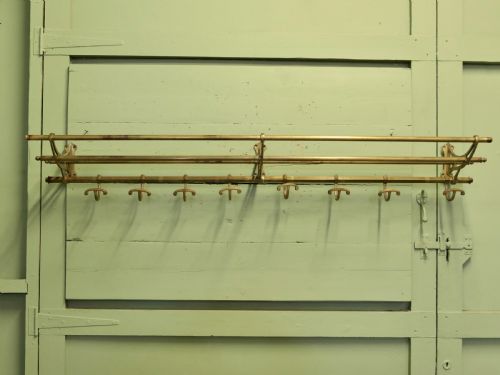
French brass coat hooks encompass individual wall-mounted hooks, matched sets of three or four, and long hall stands or portmanteaus incorporating mirrors and hat shelves. These pieces originate from periods spanning the late nineteenth century through the Art Deco era, reflecting regional aesthetics from provincial chateaux to urban bistros.
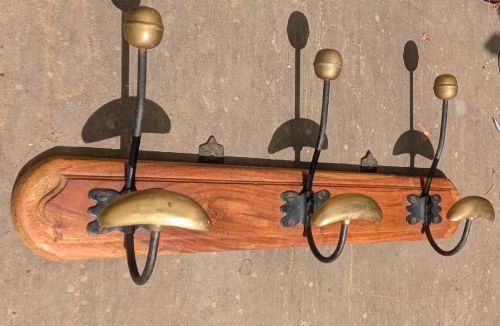
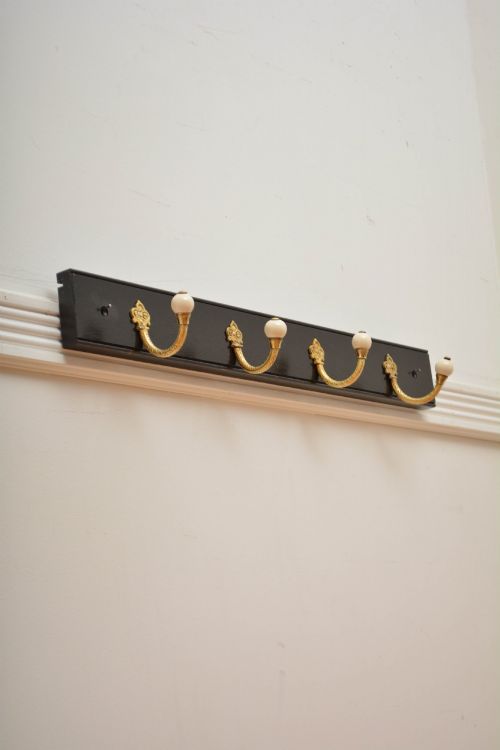
The most common formats on this page are mounted sets and single hooks fashioned from robust cast or chased brass, often paired with mahogany, ebonised wood, or ceramic and glass elements. Buyers frequently select these fixtures to add functional utility and period character to narrow corridors or boot rooms.
How they were made
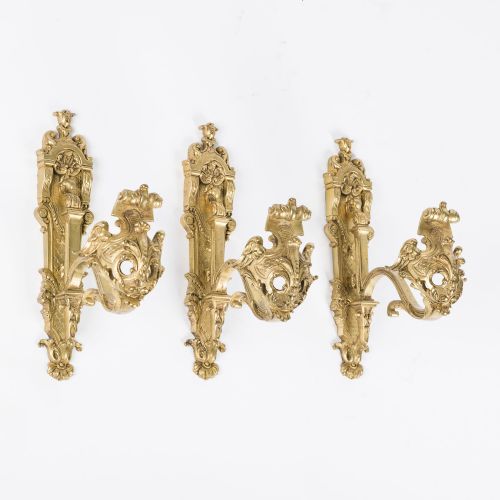
Makers utilised casting and chasing techniques to form solid brass hooks with mounting plates, scoring the metal with decorative motifs or leaving surfaces polished and heavy. Bronze and gilt brass also appear, shaped into scalloped brackets and robust arms designed to bear significant weight.
Wooden backplates in polished mahogany, oak, or ebonised wood provide a contrasting base for the metal hooks, secured with original screws and brackets. Details such as porcelain knobs, cut glass inserts, and ceramic buttons are integrated into the brass frameworks to soften the industrial profile.
Several items include porcelain knobs and ceramic inserts designed to keep heavy woollen winter coats from catching on bare metal.
What varies in quality
The distinction between standard utility items and finer examples lies in the weight of the metal and the crispness of the casting on the mounting plates. Heavy, gutsy brass castings with deep chasing and well-defined decorative borders demonstrate superior craftsmanship compared to simpler, thinner stampings.
Completeness also dictates quality, with matching sets retaining their original porcelain or glass inserts, undamaged wooden backplates, and original mirrored plates holding more interest for collectors. Evidence of artisan hand-finishing, such as hand-cut screws and clean chasing lines, elevates a piece above standard factory output.
The French Brass Coat Hooks Glossary
- Portmanteau
- A wall-mounted rack combining coat hooks, a hat shelf, and frequently an integrated mirror. These pieces served as the central organising unit in nineteenth-century entrance halls.
- Chased brass
- Metal decorated by hammering or indenting patterns into the surface from the front. This technique adds texture and definition to the mounting plates and hook arms.
- Ebonised wood
- Timber treated with a dark stain or finish to imitate ebony. It provides a sharp, dark contrast against polished brass fittings.
- Gilt brass
- Brass coated with a thin layer of gold or gilt finish. This treatment imparts a brighter, more reflective surface to the metalwork.
French Brass Coat Hooks: Frequently Asked Questions
How do I install french brass coat hooks securely?
Most wall-mounted racks and hook sets require solid fixings directly into wall studs or masonry using appropriate plugs and screws. Given the heavy nature of cast brass and wooden backplates, adequate support ensures the hardware can bear the weight of heavy coats and hats.
Position the rack at a height that accommodates daily use while allowing sufficient clearance for hangers and garments. Checking the spacing of the original mounting holes helps align the piece evenly on the wall.
Can I use these hooks in a modern bathroom?
Solid brass withstands humid environments well, making these hooks suitable for bathrooms or kitchens when mounted properly. The natural patina of the metal often deepens with exposure to moisture over time.
Ensure that any attached wooden backplates or mirrors are treated with care to prevent water damage. Regular gentle cleaning maintains the metal surface without stripping the aged finish.
How do I date a brass coat rack?
Dating relies on stylistic clues, manufacturing methods, and accompanying materials such as ebonised wood or cut glass. Pieces from the late nineteenth century often feature ornate cast mounting plates and hand-finished details, while 1920s examples lean towards geometric Art Deco lines.
Hardware screws and the construction of the backplate also offer chronological clues. Machine-made uniform screws typically point to later periods, whereas hand-turned elements suggest earlier nineteenth-century origins.
How should I clean antique brass hooks?
Dust the surface regularly with a soft cloth to prevent grime accumulation in the chased recesses of the brass. Avoid harsh chemical polishes that strip away the aged patina valued in antique hardware.
If cleaning is necessary, mild soap and warm water applied with a soft brush removes surface dirt without harming the metal. Dry the piece thoroughly after cleaning to prevent spotting.