



Cast Brass Coat Hooks
These cast brass coat hooks combine robust utility with period charm, offering a practical way to anchor hallway storage with genuine antique character.
Cast Brass Coat Hooks
When searching for cast brass coat hooks, buyers encounter functional hardware designed for hallways, cloakrooms, and boot rooms. The selection ranges from single wall hooks to sets mounted on timber boards and larger coat racks.
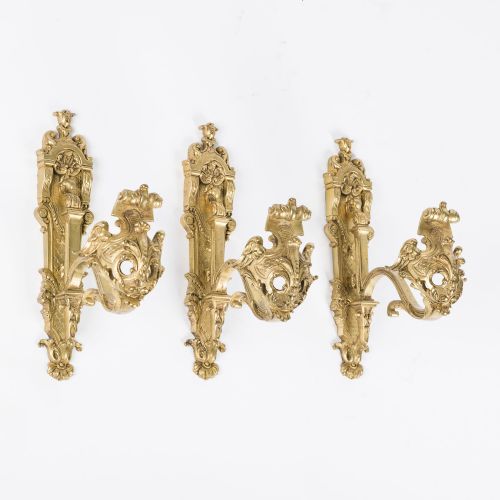
Most examples date from the Victorian era up to 1910, spanning periods such as 1880, 1890, 1900, and 1910. Styles vary from standard Victorian designs to French Rococo Revival, French Art Nouveau, and Victorian Equestrian themes.
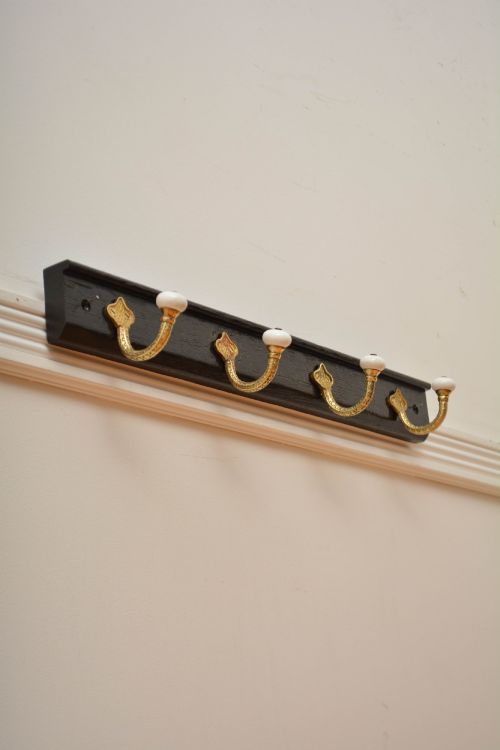
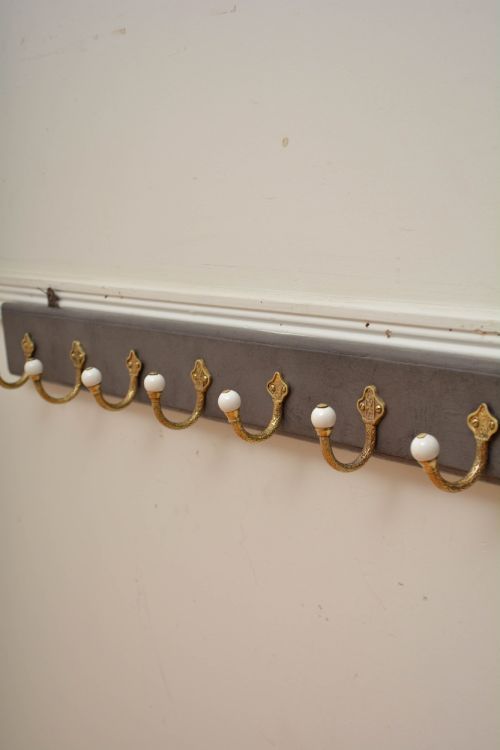
The assortment includes single hooks, pairs, sets of three, and sets of six. Backplates and mounts often feature decorative casting, sometimes incorporating ceramic elements or mounted on ebonised solid oak and mahogany boards.
How they were made
The primary material is cast brass, alongside bronze and gilt brass variations. Metal components are frequently paired with wooden backings such as ebonised solid oak, mahogany, and standard wood.
Many hooks incorporate ceramic elements alongside the metal work to provide contrasting textures and colours. Mounting plates are often heavily cast with decorative motifs, while equestrian pieces utilise horse head designs paired with crop hooks.
Listings feature items from the Victorian period, 1880, 1890, 1900, and 1910, incorporating brass, bronze, gilt brass, ceramic, ebonised oak, mahogany, and wood.
What varies in quality
Quality reveals itself in the crispness of the casting on the mounting plates and hooks. Finer pieces display sharply defined decorative details, whereas lower-tier examples appear softer and less articulated.
The choice of backing timber also dictates quality, with dense hardwoods like ebonised solid oak and mahogany outlasting simpler woods. Furthermore, intact ceramic inserts and original mounting hardware elevate the overall integrity of a piece.
The Cast Brass Coat Hooks Glossary
- Cast brass
- Metal shaped by pouring molten alloy into a mould. This method allows for intricate relief patterns on mounting plates and hook arms.
- Ebonised oak
- Timber treated to resemble ebony, providing a dark, uniform background that highlights bright brass metalwork.
- Gilt brass
- Brass coated with a thin layer of gold or gilt finish. This treatment gives a warmer, reflective surface compared to standard polished brass.
- Equestrian hook
- Hardware shaped around horse themes, such as horse heads and riding crops. These pieces reflect Victorian sporting interests.
- Wall mounted
- Designed to be fixed directly onto vertical surfaces rather than freestanding furniture. This format saves space in narrow hallways.
Cast Brass Coat Hooks: Frequently Asked Questions
How do I mount antique coat hooks securely?
Use appropriate wall anchors that match the weight of the metal and the backing wood. Solid timber boards require standard wood screws into wall studs for optimal support.
Ensure the mounting holes align correctly before tightening. Taking time during installation prevents strain on antique brass fixings.
Are these hooks suitable for heavy winter coats?
Many Victorian and Edwardian hooks were built to hold heavy garments and hats daily. Chunky cast designs offer substantial strength for robust outerwear.
Check the backplate attachment points to confirm stability. Solid brass and bronze variants handle substantial weight easily.
How should I clean antique brass hooks?
Remove surface dust with a dry, soft cloth to protect the metal finish. Avoid harsh chemical polishes that strip away age-appropriate patination.
Gentle wiping preserves the darker recessed areas while keeping raised highlights clean. Natural ageing adds character to period brass.
What is the difference between single hooks and racks?
Single hooks and pairs function as individual wall attachments placed independently. Coat racks feature multiple hooks pre-mounted onto a wooden backing board.
Board-mounted racks distribute weight across a wider area and simplify wall installation. They also showcase contrasting woods like ebonised oak or mahogany.