
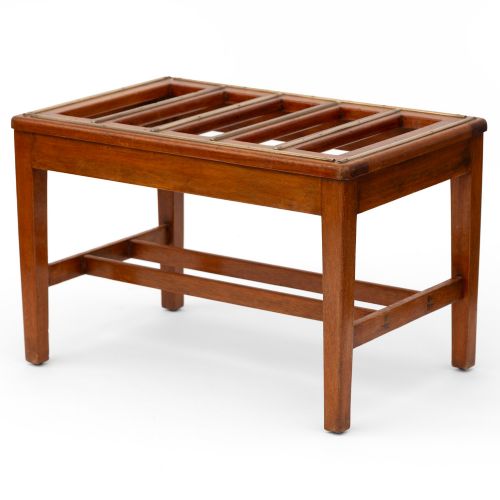
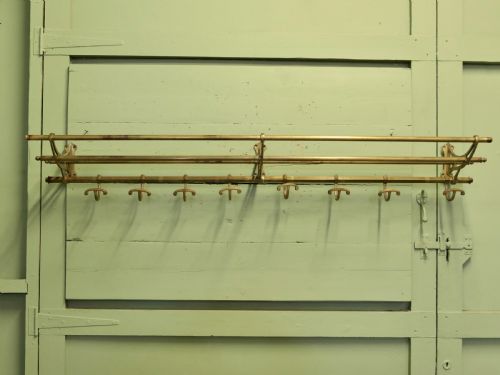


Brass Luggage Rack
These brass luggage rack examples combine heavy metal frameworks with slatted wood or wire mesh to hold bags and coats in style.
Brass Luggage Rack
When you search for a brass luggage rack, you encounter robust wall-mounted shelves, coat racks, and folding luggage stands designed for heavy daily use. The most common forms on this page include French portmanteaus, hotel luggage stands, and combined hat and coat racks originating from the late nineteenth and early twentieth centuries.
These items frequently incorporate architectural brackets, scalloped hooks, and mirrors alongside the primary metal framework. Origins span Edwardian Britain and various French regional styles such as Art Deco, Art Nouveau, and Bistro aesthetics.
Makers tailored these objects for hotels, railway Pullman cars, and domestic hallways. The primary function remains holding suitcases, hats, and coats while presenting a distinct period appearance.
How they were made
Construction relies heavily on cast and tubular brass paired with solid timbers like mahogany, oak, and polished wood. Manufacturers utilised wire mesh and metal strips to form the main storage surfaces on luggage stands and wall shelves.
Casting methods produced ornate mounting plates and structural brackets with detailed relief work. Assembly often involved visible screw fixings, original mirror plates, and robust wooden frames designed to bear significant weight.
Listings feature items dated across the late nineteenth and early twentieth centuries, utilising brass, mahogany, oak, and wire mesh.
What varies in quality
Quality separates through the substance of the casting and the density of the timber framework. Heavier brass brackets and thicker gauge metal tubes denote superior construction compared to lighter commercial alternatives.
The Brass Luggage Rack Glossary
- Portmanteau
- A combined wall-mounted rack featuring hanging hooks and a top shelf for luggage and hats. These units served domestic hallways and hotel rooms alike.
- Pullman
- A style associated with luxury railway carriage fittings, often characterised by robust metalwork and slatted shelving. These pieces reflect transit-inspired design.
- Edwardian
- A period spanning the early twentieth century known for refined mahogany and brass combinations. Pieces from this era often show clean lines paired with traditional joinery.
- Art Nouveau
- A decorative style featuring organic curves and flowing natural motifs. Cast brass brackets from this movement display characteristic floral or sinuous elements.
- Bistro
- A French provincial aesthetic focused on utilitarian hospitality items. Such pieces emphasise practical metal frames suited for busy commercial environments.
Brass Luggage Rack: Frequently Asked Questions
Where were brass luggage racks used?
These racks originally served in railway carriages, grand hotels, and private domestic hallways to keep luggage and outerwear off the floor.
Today, homeowners repurpose them in bathrooms for towels or in entryways for everyday coats and bags.
How do I mount a wall rack?
Wall-mounted versions require secure fixing into wall studs or masonry due to the substantial weight of the cast brass brackets and timber frames.
Using appropriate wall plugs and screws ensures the bracket supports the load of heavy suitcases and winter coats safely.
What woods appear with the brass?
Makers most frequently paired brass framework with solid mahogany, golden oak, and general polished hardwoods. These timbers provided a sturdy structural base that contrasted with the bright metallic finish.
Some examples also incorporate wire mesh or glass components depending on the specific continental style.
How do I date a luggage rack?
Dating relies on stylistic markers such as Art Nouveau curves, Edwardian timber choices, or the heavier cast iron and brass combinations from around nineteen hundred.
Examining the screw types, casting quality, and backplate designs helps narrow the period of manufacture.
Are folding stands meant for travel?
Folding luggage stands were originally designed for guest bedrooms to hold visitor suitcases at a convenient height.
Their folding mechanism allowed for easy storage when not in use, making them practical accessories for modern guest spaces.