


French Boulle Writing Desk
A French boulle writing desk brings dramatic tortoiseshell and brass marquetry into a room, offering both a striking surface and a tangible piece of period craftsmanship.
French Boulle Writing Desk
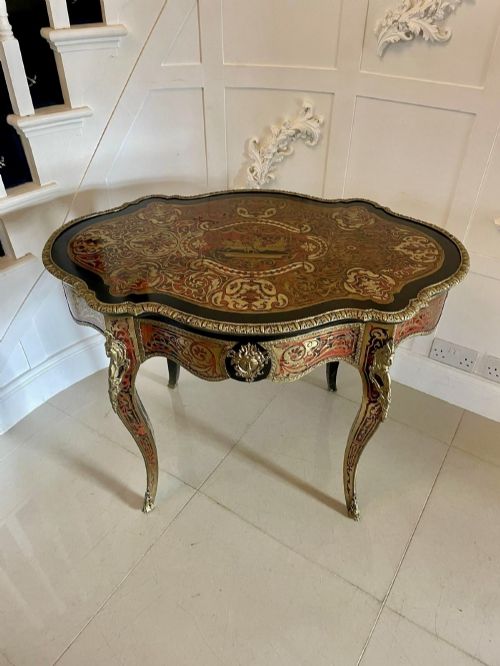
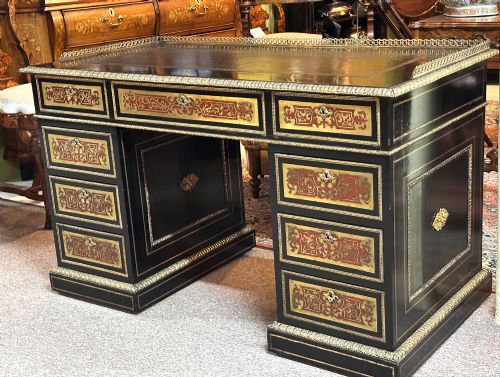
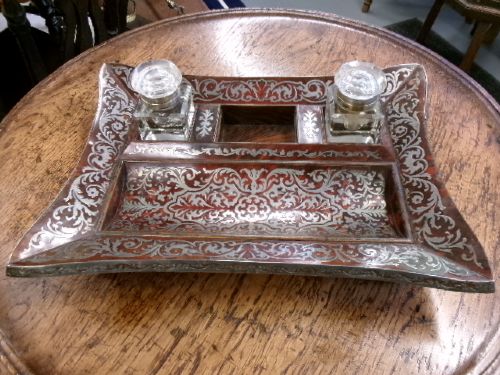
A French boulle writing desk is defined by its distinct application of tortoiseshell and brass inlay, often set against a dark wooden ground. Buyers exploring this phrase will frequently encounter nineteenth-century interpretations, particularly from the Victorian era and the Napoleon III period, alongside occasional eighteenth-century examples.
The forms vary across this category, ranging from grand bureau plat tables and freestanding centre tables to smaller bonheur du jour writing cabinets, lap desks, and desk stands. Many pieces reflect French Rococo Revival or Louis XV styles, showing sweeping contours and ornate mounts.
Originating primarily from French workshops, these items also appear in English adaptations influenced by continental aesthetics. The surviving examples demonstrate how writing furniture evolved from simple functional objects into opulent decorative centrepieces.
Assessing quality and finish
The fineness of the engraved brass work and the depth of the tortoiseshell set the superior examples apart from simpler productions. Tighter joints in the marquetry and crispness in the cast ormolu mounts indicate a higher standard of workshop execution.
Proportions also dictate the desirability of the piece, with smaller scaled desks and symmetrical centre tables commanding particular attention. The integration of secondary woods and the preservation of the original ebonised finish contribute heavily to the overall integrity.
Current listings feature pieces primarily from the nineteenth century, including Victorian interpretations and Napoleon III styles utilising brass, tortoiseshell, and ormolu.
Maison Millet
The French Boulle Writing Desk Glossary
- Boulle marquetry
- A decorative technique involving cut brass and tortoiseshell inlaid into wood, named after the famous cabinetmaker André-Charles Boulle. It creates a rich, patterned surface that reflects light differently depending on the angle.
- Ormolu
- Gilded bronze used for decorative mounts and furniture feet. The process involves applying a mercury-gold amalgam to cast bronze, yielding a lasting metallic lustre.
- Bureau plat
- A freestanding writing table with drawers, finished on all sides to allow placement in the centre of a room. This form became popular during the reign of Louis XV.
- Bonheur du jour
- A small ladies' writing desk featuring a cabinet or super-structure with shelves and drawers above the main writing surface. It represents a lighter, more refined style of nineteenth-century furniture.
- Ebonised wood
- Timber treated to resemble ebony, providing a deep black background that enhances the bright metallic and amber tones of the brass and tortoiseshell inlay.
French Boulle Writing Desk: Frequently Asked Questions
What is a French boulle writing desk?
A French boulle writing desk is a piece of antique furniture decorated with contrasting brass and tortoiseshell marquetry, typically produced during the nineteenth century in the Napoleon III or Louis XV styles.
These desks often feature gilt bronze ormolu mounts and ebonised wood frames, serving as both functional writing surfaces and ornate decorative focal points for a room.
How do I care for tortoiseshell and brass?
Tortoiseshell and brass require stable indoor humidity and protection from direct sunlight to prevent warping and discolouration. Gentle dusting with a dry, soft cloth is usually sufficient for routine maintenance.
Avoid harsh chemical polishes, particularly around the delicate marquetry lines and ormolu mounts, as moisture can loosen the historic adhesives holding the inlay in place.
Are these desks suitable for daily use?
While originally built for correspondence and paperwork, antique boulle desks demand careful consideration if used heavily today. Leather writing inserts can handle writing tasks, but the historic marquetry surfaces are susceptible to scratches from modern stationery.
Many owners choose to use a protective blotter or place the desk in a low-traffic area to preserve the fragile tortoiseshell and brass veneer.
How do I tell Victorian from eighteenth-century pieces?
Eighteenth-century originals generally exhibit hand-cut marquetry irregularities and construction methods specific to period French guild workshops. Nineteenth-century revival pieces, such as those from the 1850s and 1860s, often incorporate machine assistance or show Victorian interpretations of earlier Louis XV aesthetics.
Examining the secondary woods, screw types, and the style of the ormolu casting helps establish whether a piece is a later Napoleon III revival or an earlier antique.