


French Art Nouveau Medallion
A french art nouveau medallion carries organic fluidity and meticulous metalwork, offering wearable history that collectors prize for its sculptural grace.
French Art Nouveau Medallion
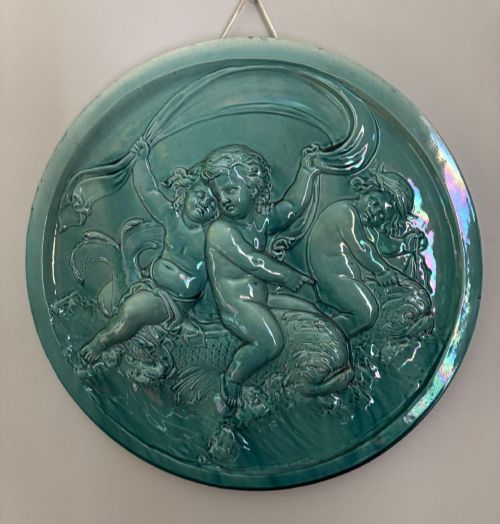
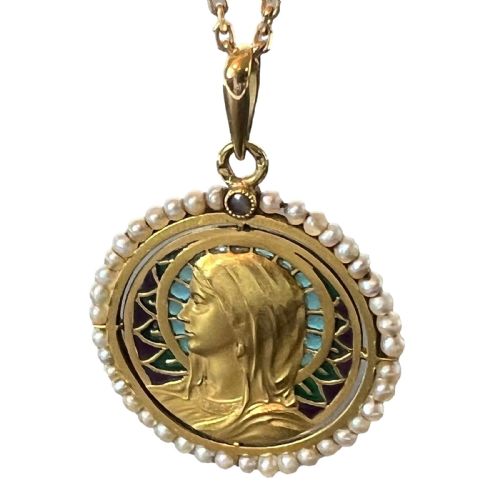
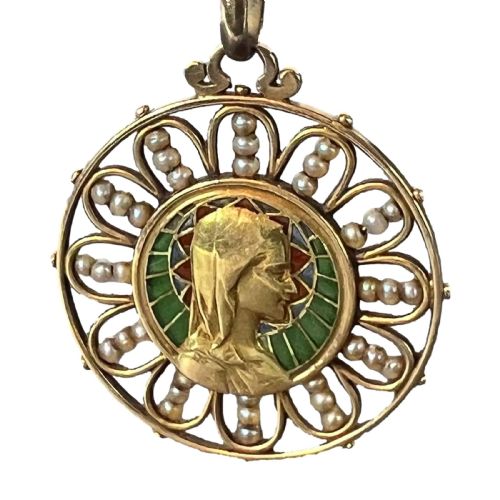
When you search for a french art nouveau medallion, you are looking at small sculptural works designed to be worn or displayed, ranging from pendants and charms to wall plaques and brooches. The most common form you will meet on this page is the gold pendant medal, frequently cast with religious iconography such as the Virgin Mary, Madonna and Child, or secular motifs like deer and griffons.
These pieces primarily emerge from the late nineteenth and early twentieth centuries, spanning periods from the eighteen-eighties through the nineteen-fifties, with a strong concentration of early twentieth-century examples. Alongside gold medals, you will encounter earthenware wall plaques and silver locket pendants that capture the characteristic sinuous lines of the movement.
Materials and construction
The makers of these items relied heavily on yellow gold, predominantly eighteen carat, shaped into detailed reliefs and frames. Seed pearls frequently accompany the metalwork as delicate accents, adding texture and contrast to the borders of the pendants.
Enamel work, specifically plique-a-jour, appears across numerous pieces to create translucent, stained-glass-like effects within the gold cells. Earthenware and pate de verre glass also serve as primary materials for sculptural wall plaques and specialised pendants.
Deer hunting horns and chimera griffons slip quietly among the sea of saints and Madonnas.
Distinctions in craftsmanship
The degree of refinement in the chased and engraved details separates standard production pieces from finer examples. Crispness in the facial expressions of figural medallions and the delicacy of the surrounding flora or halo motifs indicate the maker's skill.
The complexity of the enamelling technique also dictates the standard of the piece, particularly where plique-a-jour allows light to pass through suspended coloured glass without backing. Integration of precious stones like rubies and the weight of the gold further distinguish the hierarchy of these works.
Clement Messier·Emile Monier·Emile Dropsy·Rasumny·Sellier·Ovide Yencesse·Amalric Walter
The French Art Nouveau Medallion Glossary
- Plique-a-jour
- An enamelling technique where the enamel is applied without a backing, allowing light to shine through the transparent or translucent cells much like miniature stained glass. This method requires immense skill to prevent the enamel from cracking during firing.
- Medallion
- A circular or oval piece of metal resembling a medal, often created to commemorate a person, event, or religious figure and designed to be worn or displayed. In this selection, they frequently take the form of pendants or charms.
- Pate de verre
- A glass-working method where finely crushed glass is packed into a mould and fused in a kiln, producing rich textures and subtle colour variations. It was utilised by notable artisans for sculptural pendants.
- Seed pearl
- Very small, naturally occurring pearls, often undrilled or half-drilled, used to edge or accent the borders of jewellery. They provide a soft, luminous contrast to polished yellow gold.
French Art Nouveau Medallion: Frequently Asked Questions
What is a french art nouveau medallion?
It is a small, decorative metalwork piece originating from France during the late nineteenth and early twentieth centuries, featuring the flowing lines and natural motifs characteristic of the movement. These items often double as religious medals or artistic pendants.
They combine sculptural relief work with materials like eighteen-carat yellow gold, enamel, and seed pearls, serving both decorative and devotional purposes.
How were these pendants worn?
Most examples are fitted with loops or rings designed to accommodate a chain, allowing them to be worn around the neck as a pendant necklace or attached to a bracelet as a charm.
Heavier iterations, such as wall plaques or large cast medals, were alternatively intended for interior display or kept as pocket keepsakes rather than worn on the body.
What materials are most common?
Eighteen-carat yellow gold is the predominant metal found across these listings, providing a warm, rich tone that complements the artistic designs. Enamel, particularly the translucent plique-a-jour variety, and seed pearls are also frequently employed.
Selected items incorporate alternative mediums such as earthenware and pate de verre glass, broadening the sculptural range of the category beyond standard metalwork.
How do I identify the maker?
Many pieces bear signatures, stamps, or artist names stamped directly into the metal surface, pointing to prominent designers and medallists of the period. Examining the reverse or the edge of the medallion typically reveals these maker marks.
Referencing the specific names recorded on individual pieces helps connect the artwork to established workshops and individual sculptors active in France during the era.