



French Art Nouveau Lighting
French art nouveau lighting brings sinuous organic forms into interiors, offering collectors striking bronze and glass illumination from the early twentieth century.
What French Art Nouveau Lighting Is
When you search for french art nouveau lighting, you encounter distinctive lamps and candelabras that capture the fluid aesthetic of the turn of the twentieth century. These pieces emerge primarily from around nineteen hundred and nineteen ten, representing the height of the movement.
The selections on this page encompass table lamps and multi-branched candelabras. These domestic objects illuminate spaces while serving as sculptural centrepieces in their own right.
How They Were Made
Artisans constructed these items using cast bronze and silver metal as structural foundations. Molten metal was shaped into flowing botanical motifs characteristic of the period.
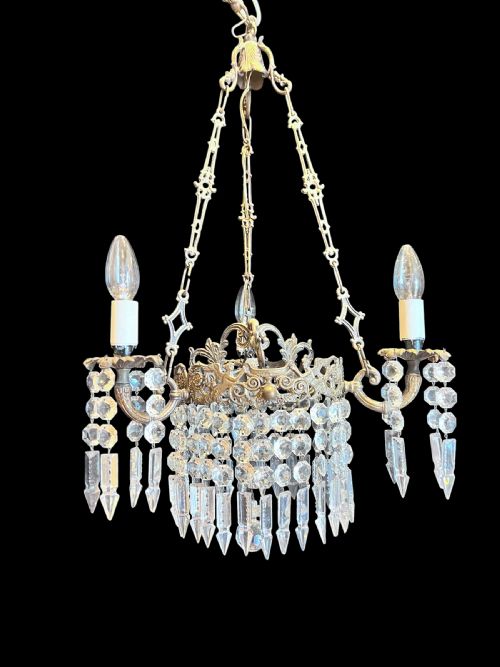
Manufacturers incorporated delicate glass elements, including glass cabochons and crystal components, to soften and refract the light. Textile elements occasionally complemented the metal and glass structures.
Early twentieth-century makers thoughtfully embedded colourful glass cabochons into bronze stems to mimic dewdrops clinging to plant stems.
What Varies in Quality
Distinction across these works lies in the fluidity of the metal casting and the intricacy of the naturalistic detailing. Superior pieces display crisp, purposeful lines that capture organic movement without stiffness.
The integration of decorative glass cabochons and crystal distinguishes finer examples from simpler production. Master makers such as Georges Leleu achieved a higher degree of sculptural harmony in their luminaires.
Georges Leleu
The French Art Nouveau Lighting Glossary
- Cabochon
- A smoothly rounded, unfaceted gemstone or piece of polished glass set into metalwork. These decorative elements add vibrant spots of colour and texture to lamp bases.
- Candelabra
- A branched candlestick holder designed to support multiple taper candles. In this period, they shared aesthetic space with newly electrified domestic lighting.
- Bronze
- An alloy consisting primarily of copper, traditionally used for durable and finely detailed metal casting. It forms the heavy structural backbone of many period lamps.
- Crystal
- Highly transparent, brilliant glass utilised for decorative hanging prisms and structural components. It catches and disperses light effectively.
Frequently Asked Questions
How do I date these pieces?
Dating relies on stylistic markers, materials, and documented maker attributions typical of the period around nineteen hundred. Pieces often combine bronze casting with glass cabochons characteristic of that exact era.
Comparing construction techniques with known examples from the same timeframe helps confirm their age and authenticity.
Where were these lamps used?
Original owners placed these table lamps and candelabras in formal reception rooms, drawing rooms, and studies of wealthy homes. They provided both ambient illumination and a sophisticated decorative statement.
Their presence signalled an appreciation for modern artistic design and fine craftsmanship in domestic interiors.
How do I clean bronze lamps?
Maintenance requires gentle dusting with a soft, dry cloth to protect the metal patina and delicate glass cabochons. Avoid abrasive cleaners or harsh chemical polishes that strip away historical surfaces.
Consulting a professional restorer is advisable if the wiring or structural metalwork requires detailed attention.