


French Porcelain China
French antique porcelain china brings together delicate biscuit figures, hand-painted cabinet plates, and grand display vitrines spanning the eighteenth and nineteenth centuries.
French Porcelain China
French antique porcelain china encompasses delicate decorative objects, tableware, and furniture housing them, originating from periods spanning the eighteenth century through to the early twentieth century.
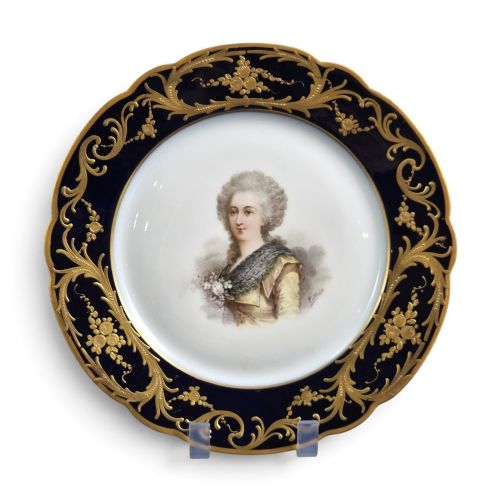
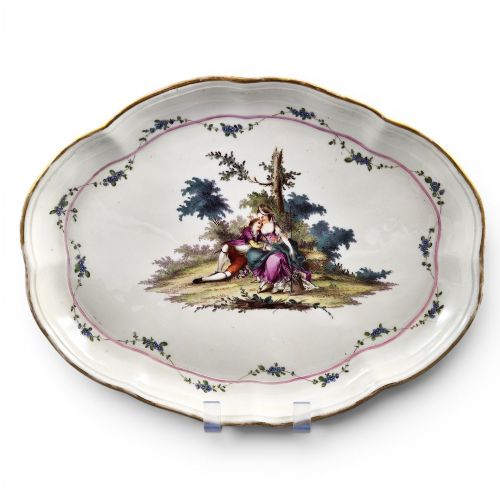
Buyers commonly encounter cabinet plates, tea sets, and dessert services featuring floral or portrait hand-painted designs alongside biscuit porcelain figures and glazed display vitrines.
The selection ranges from early soft-paste production associated with Chantilly and Marseille through to later nineteenth-century Paris porcelain, Sevres-style pieces, and Limoges dining wares.
Materials and Manufacture
Potters utilised hard-paste and soft-paste porcelain bodies, shaping them into plates, bowls, vases, and figurines that frequently incorporated hand-painted floral motifs and portrait details.
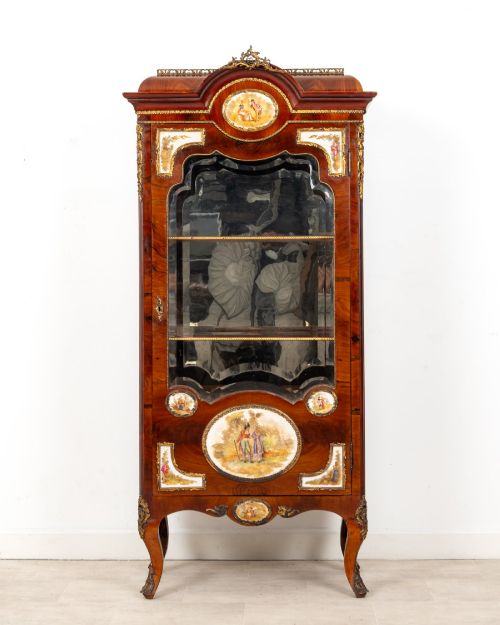
Metalwork mounts in ormolu, gilt, and gilded brass complemented the ceramic bodies, particularly in table lamps, door handles, and display vitrines constructed from walnut, satinwood, and kingwood.
Listings feature porcelain pieces spanning the eighteenth century, Georgian era, Victorian period, and early twentieth century up to nineteen-twenty.
Judging Quality
Quality rests upon the precision of the hand-painted brushwork and the clarity of the enamel and gold leaf applied to the porcelain surface.
The sophistication of the underlying ceramic body, whether soft-paste or hard-paste, alongside the craftsmanship of associated ormolu mounts and cabinetry, defines the upper tier of pieces.
Joseph Gaspard Robert·Pucher Deroche·Letu Mauger·Jacob Petit·Samson
The French Porcelain China Glossary
- Soft-paste porcelain
- An artificial ceramic composition fired at lower temperatures than hard-paste porcelain, developed in European factories during the eighteenth century. It produces a warm texture and distinct glaze pooling.
- Biscuit porcelain
- Unglazed porcelain fired to a matte, white finish that resembles marble. It gained popularity for sculptural figures and portrait items.
- Ormolu
- Gilded bronze used for decorative mounts on furniture, lamps, and porcelain bases. The technique involves applying a gold amalgam to bronze.
- Vitrine
- A glass-fronted cabinet designed to display porcelain plates, figures, and decorative objects. These pieces often feature marquetry and gilt-metal mounts.
- Enamel
- Vitreous material fused to a ceramic or metal surface through firing, used to add permanent colour and glossy detail to painted scenes.
French Porcelain China: Frequently Asked Questions
What is the difference between hard and soft paste?
Soft-paste porcelain contains glass and clay mixtures fired at lower temperatures, producing a slightly warmer tone and softer glaze. Hard-paste porcelain uses kaolin and petuntse fired at higher temperatures for a harder, whiter body.
Examination under magnification or checking light translucency helps identify the paste type used in eighteenth-century pieces.
How do I display antique porcelain safely?
Place plates in fitted stands or secure them inside glazed display cabinets to protect them from dust and accidental knocks. Keep pieces away from direct sunlight to preserve the enameled colours and gold leaf.
Ensure table lamps and heavier items sit on stable surfaces away from high-traffic areas and vibrations.
Are nineteenth-century Paris porcelain pieces marked?
Many nineteenth-century Paris porcelain items carry painted or impressed factory marks, though numerous workshops operated without formal signatures. Unmarked pieces are often attributed through stylistic comparisons and decorative techniques.
Inspect the base and foot rim for factory ciphers, decorator initials, or retailer stamps.