




French Enamel Bowl
A French antique enamel bowl brings rich colour and metalwork into a room, spanning delicate glass, gilt bronze, and porcelain forms.
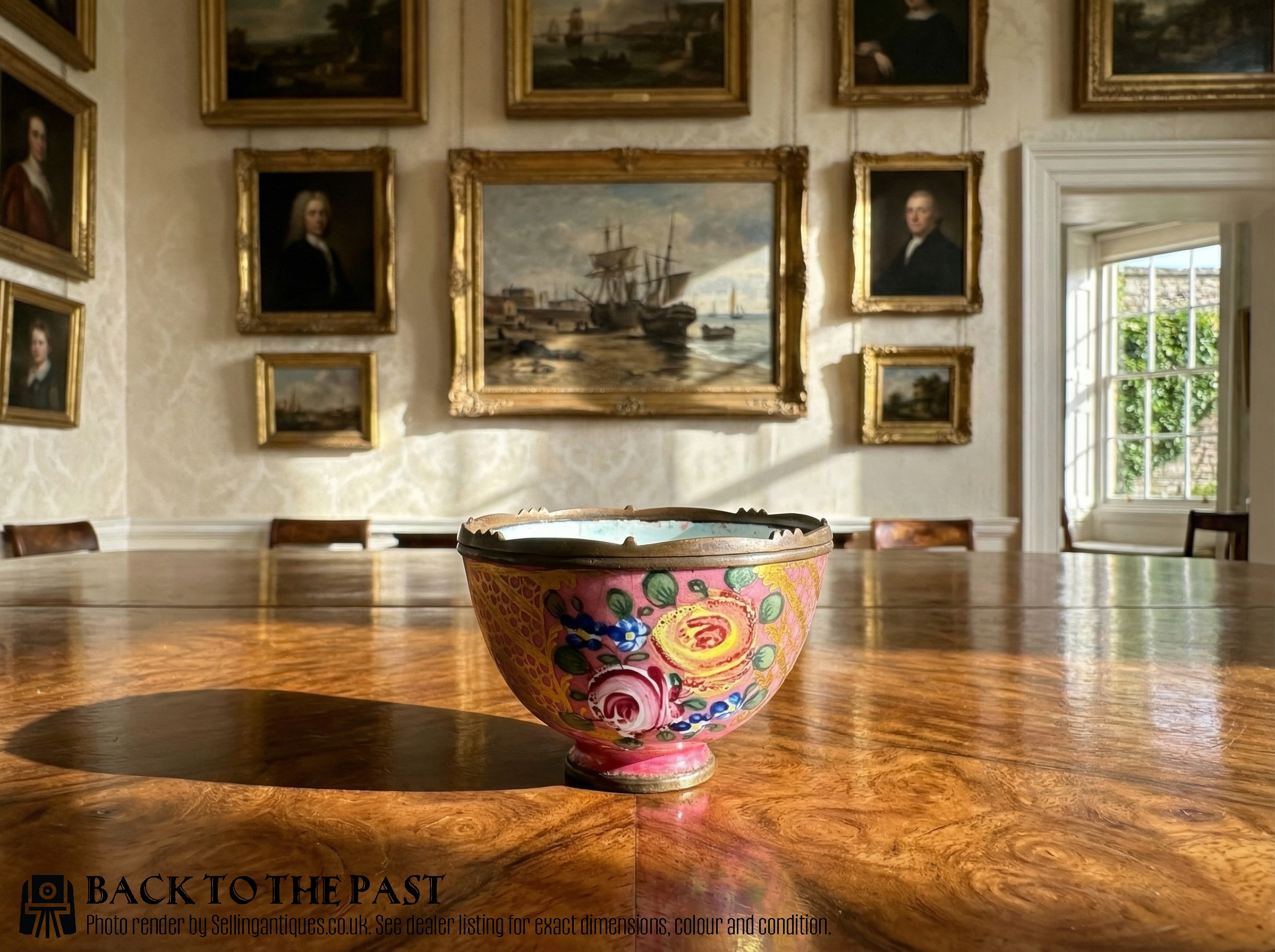
French Enamel Bowl
When you search for a french antique enamel bowl, you encounter a wide selection of decorative vessels spanning the eighteenth, nineteenth, and early twentieth centuries. These pieces encompass decorative bowls, tazzas, centrepieces, salt cellars, dressing table jars, and wash basins created across various French aesthetic movements.
The most common examples on this page are nineteenth-century creations, frequently featuring champlevé enamel combined with gilt bronze or green onyx. You also find porcelain centrepieces, Bristol blue glass dressing table jars, and crystal bowls adorned with floral or armorial decorations.
Origins range from formal eighteenth-century Limoges pieces and Sevres porcelain to Art Nouveau crystal by St Louis and Japonisme designs associated with Baccarat. Regional and rustic farmhouse items sit alongside grander Belle Epoque and Chinoiserie salon accessories, reflecting diverse domestic uses of the period.
Assessing quality and craftsmanship
Quality in these vessels rests on the precision of the enamel work and the crispness of the surrounding metal mountings. Superior examples display smooth, evenly fired enamel surfaces without pitting or hairline fractures, set within cleanly chased gilt bronze or ormolu frames.
The integration of materials also dictates the standing of a piece, particularly where porcelain, glass, or onyx meet metal mounts. Finer works demonstrate seamless joins and high-grade materials like heavy crystal, Sevres porcelain, or unblemished green onyx rather than lesser substitutes.
French Enamel Bowl Retail Price Guide 2026
Typical asking prices for french enamel bowl among the pieces listed under this phrase on Sellingantiques today, from the lower quarter to the upper quarter. They describe what is for sale here now, not the wider market.
Some nineteenth-century French makers hid their floral enamel designs inside dressing jars so only the owner saw them.
St Louis glassworks·Rene Lalique·Samson Of Paris·Baccarat·Louis Pierre Malpass
The French Enamel Bowl Glossary
- Champlevé
- An enamelling technique where troughs or cells are hollowed out of a metal surface and filled with vitreous enamel before firing. The surrounding metal walls remain visible as part of the design.
- Cloisonné
- A method of decorating metal objects by soldering flat metal wire to the base to form compartments, which are then filled with enamel paste and fired.
- Ormolu
- A metallic alloy resembling gold, utilised for gilding bronze mounts, furniture, and decorative objects during the eighteenth and nineteenth centuries.
- Tazza
- An Italian term adopted for a shallow bowl or cup elevated on a stem and foot, frequently employed as a centrepiece or serving vessel.
- Japonisme
- A nineteenth-century artistic movement reflecting the strong influence of Japanese art and design on European decorative arts, visible in asymmetrical motifs and natural subjects.
French Enamel Bowl: Frequently Asked Questions
How do I clean a French antique enamel bowl?
Dust the surface gently with a soft, dry cloth to prevent accumulation without abrasive contact. Avoid chemical cleaners, immersion in water, or harsh polishes that can damage vulnerable enamel, glass, or gilt bronze mounts.
For stubborn grime, consult a professional conservator who understands the specific reactions of nineteenth-century glass, metal, and vitreous enamel compounds. Safe handling preserves the integrity of delicate decorative additions like gold enamel or applied plaques.
What is the difference between champlevé and cloisonné?
Champlevé involves carving or gouging troughs directly into a solid metal base to hold the coloured enamel paste before firing. The resulting metal partitions form part of the visible structural pattern.
Cloisonné builds the design by soldering thin metal wires onto the surface of the base metal to create raised compartments for the enamel. Both techniques produce durable, colourful ornamentation but differ fundamentally in how the metal grid is formed.
Were these bowls used for food or display?
Many larger pieces, such as centrepieces, jardinieres, and tazzas, served decorative functions in nineteenth-century salons, holding floral arrangements or simply displaying fine craftsmanship. Smaller items like salt cellars and dressing table jars had specific utilitarian roles in domestic dining and personal grooming.
Over time, the primary function of most surviving examples shifted entirely to decorative display as interior design preferences changed. Their delicate enamel and gilt bronze surfaces make them unsuited for daily modern dining use.
How can I tell if a piece is nineteenth century?
Examine the materials, mounting techniques, and stylistic markers such as Art Nouveau curves or Japonisme motifs characteristic of the eighteen-eighties and nineties. The weight of the bronze, the composition of the green onyx or crystal, and the specific firing style of the enamel offer strong chronological clues.
Maker signatures, factory marks, and historical hallmarks on the metal mounts provide further confirmation of the manufacturing era. Comparing construction methods against documented workshop practices helps verify the period.