
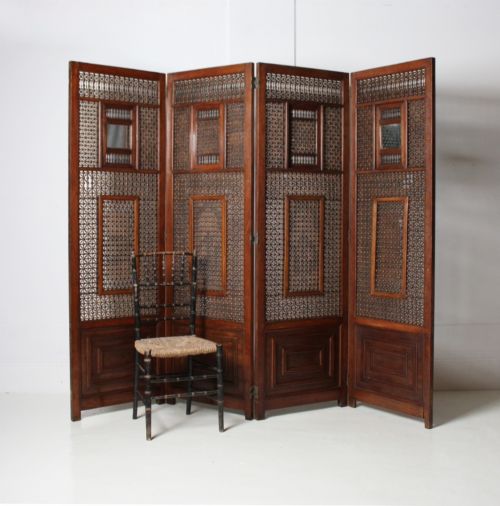


Freestanding Panel Screen
These freestanding panel screen pieces divide spaces and frame hearths, offering versatile panels from diverse global traditions.
Freestanding Panel Screen
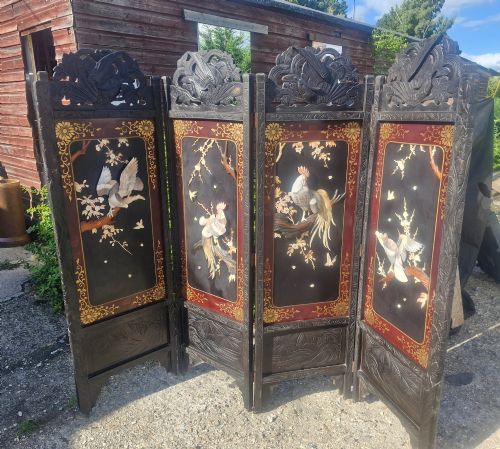
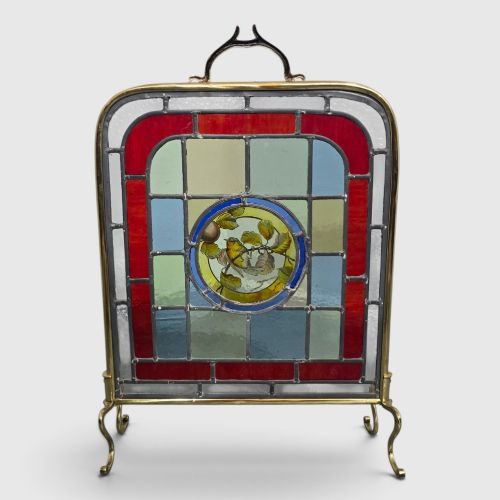
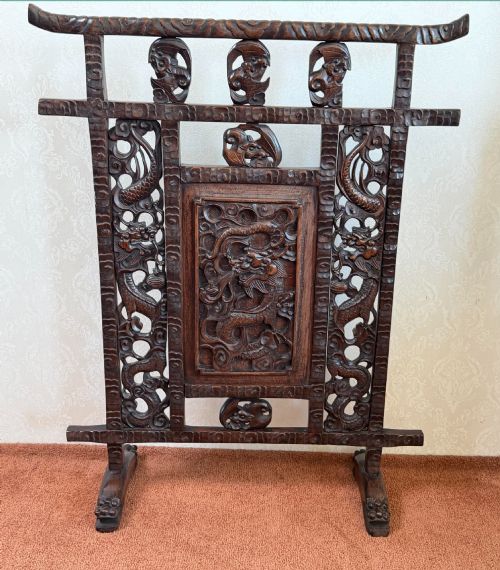
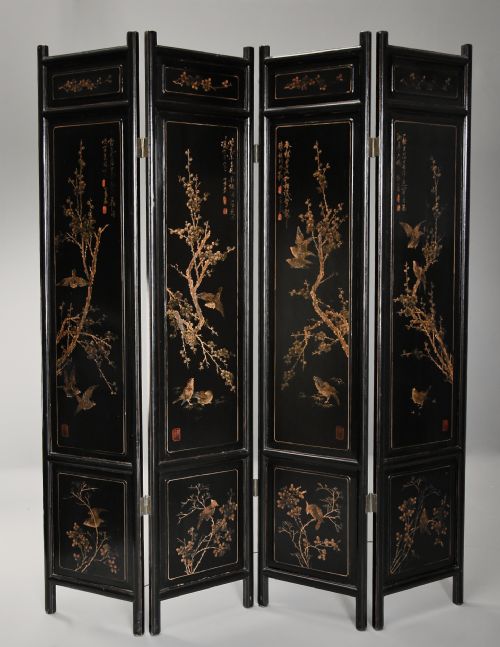
A freestanding panel screen provides functional division and decorative presence within domestic interiors across various historical periods. Buyers searching for a freestanding panel screen encounter diverse configurations ranging from compact hearth guards to multi-leaf room dividers.
The selection encompasses tall folding room dividers alongside lower fire screens designed for hearth placement. Originating from distinct cultural traditions, these objects utilise materials such as hardwood, brass, lacquer and stained glass.
Examples span the Victorian era through the early twentieth century, showing global influences including Japanese Meiji, Qing Dynasty, Islamic Revival and Arts and Crafts aesthetics. Each piece serves either to shield a room from fireplace radiant heat or to partition interior space.
How they were made
Maker construction relies on timber frames of walnut, oak, padauk or teak, often housing intricate infills of carved bone, lacquered panels or pierced mashrabiya woodwork. Metalwork versions employ hammered copper, cast iron or brass frames, occasionally incorporating mirror plates or leaded stained glass.
Surface decoration involves deep carving, black lacquer application and textile insertion such as woolwork panels. Joinery techniques secure multiple folding leaves with hinges, allowing the panels to stand unsupported in a room or before a fireplace.
The listings here span the Victorian era, 1870, 1880, 1890, 1900, 1910, 1920, and 1930 periods, incorporating brass, hardwood, lacquer, bone, and stained glass.
What varies in quality
Quality depends upon the depth and precision of surface ornamentation, whether in the carving of bone figures on lacquer or the intricacy of pierced wooden mashrabiya panels. Superior examples display substantial framing timbers like padauk or walnut alongside refined metalwork.
The architectural integrity of the folding hinges and the balance of the supporting frame dictate how well the freestanding structure holds its position. Finer pieces integrate high-grade artistic details such as specialised copper work or hand-finished lacquer.
The Freestanding Panel Screen Glossary
- Mashrabiya
- An architectural element of turned wood pieces arranged in intricate geometric lattices, frequently utilised in panels to filter light and air.
- Padauk
- A dense tropical hardwood prized for its deep reddish colour and robust stability in carved furniture and screens.
- Meiji
- A Japanese historical period associated with fine craftsmanship, visible in folding screens featuring detailed carved bone figures.
- Chinoiserie
- European decorative style reflecting Chinese artistic traditions, often applied to lacquered furniture and screen surfaces.
- Spark guard
- A protective mesh or glass panel integrated into a fire screen to prevent burning embers from escaping the hearth.
Freestanding Panel Screen: Frequently Asked Questions
What is a freestanding panel screen used for?
These screens serve primarily as portable room dividers to section off areas of a larger floor plan or as decorative hearth accessories to shield a room from fireplace heat.
Their flexible folding design allows them to be repositioned easily to alter the layout and visual dynamics of an interior space.
How do I distinguish a fire screen from a room divider?
Fire screens are typically lower in height, constructed to sit directly in front of a fireplace opening, and often feature brass, iron, copper or woolwork panels.
Room dividers are taller multi-leaf folding structures designed to stand independently and partition larger areas of a room.
What materials are common in these screens?
The listings feature wood and hardwood frames such as oak, walnut, teak and padauk, alongside brass, iron, copper and leaded glass.
Surface enrichment frequently incorporates black lacquer, carved bone, textiles and mirror plates.
How do I identify the period of a screen?
Dating relies upon stylistic markers such as Victorian brasswork, Arts and Crafts copper framing, or specific regional aesthetics like Qing Dynasty lacquer and Japanese Meiji carving.
Construction methods and framing timbers also provide clear indications of nineteenth and early twentieth century manufacturing origins.