


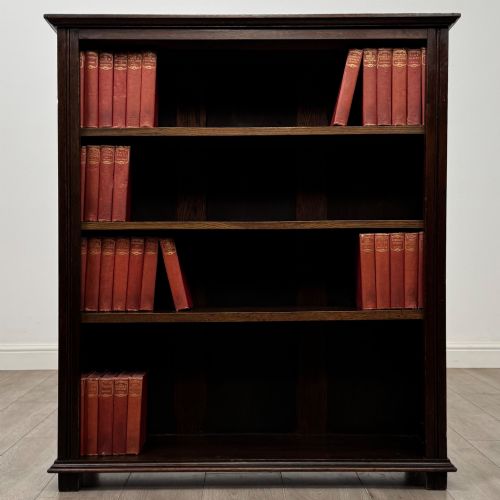
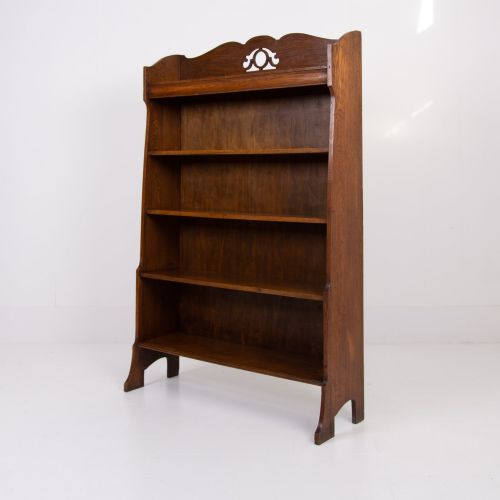
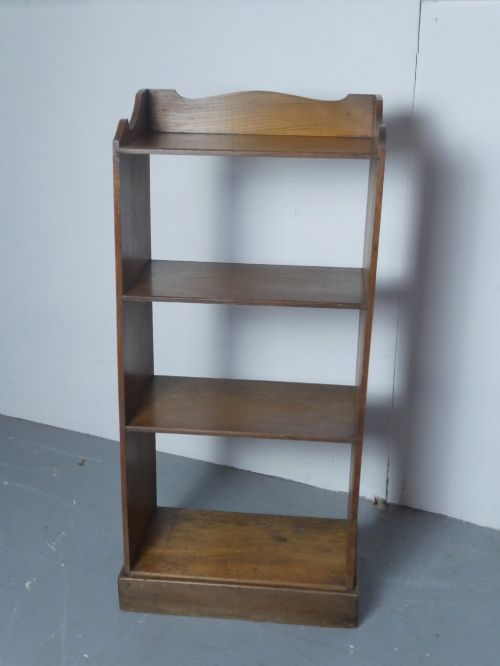
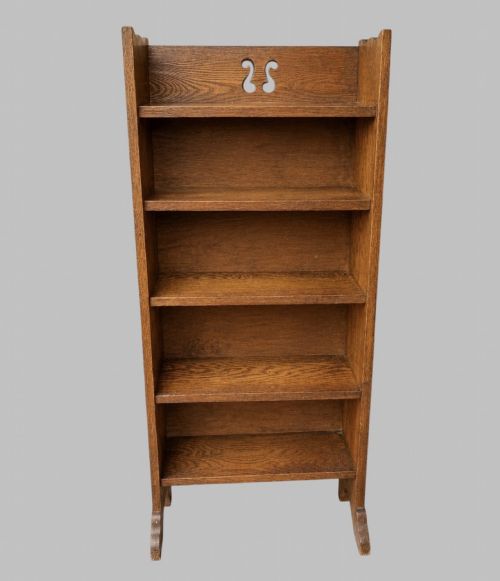


Freestanding Oak Book Display
A freestanding oak book display brings honest grain and sturdy shelves into a room, offering an accessible spot to keep working volumes close at hand.
Freestanding Oak Book Display
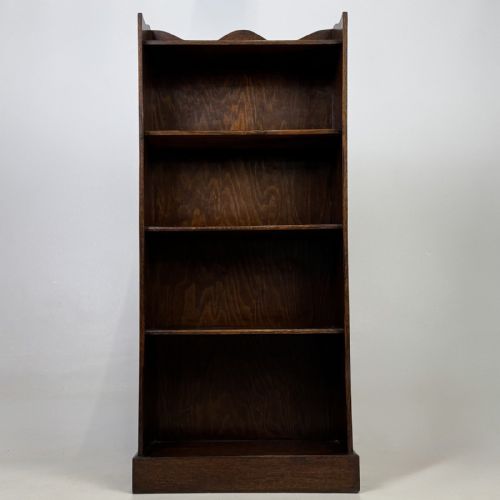
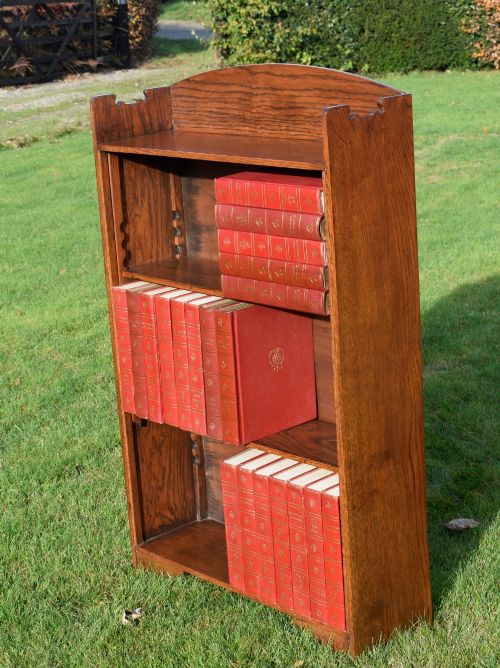
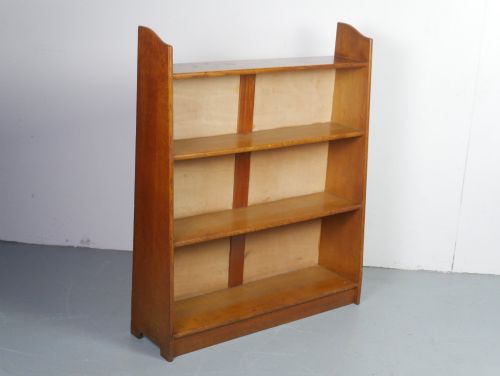
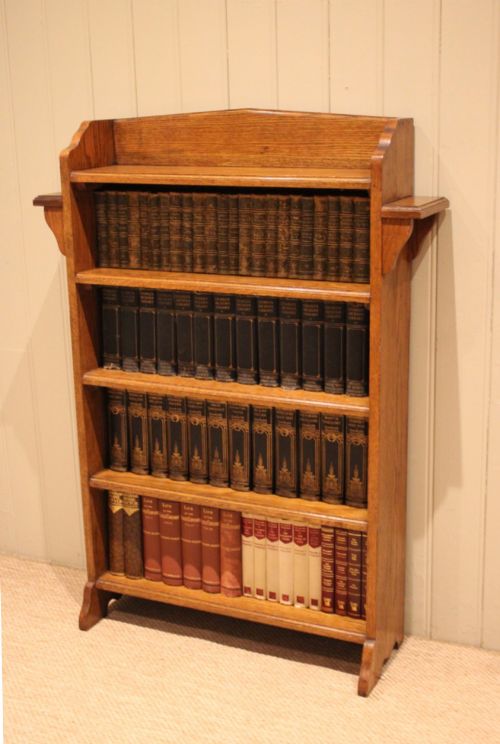
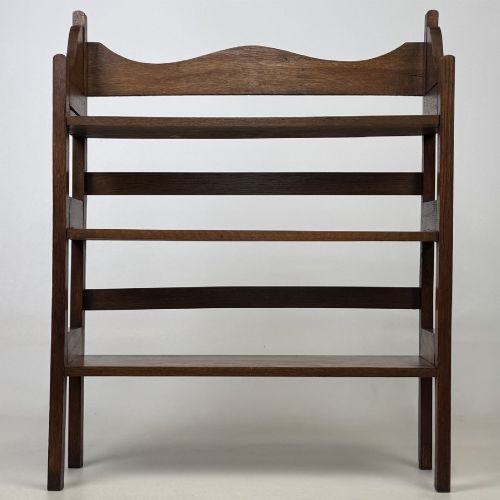
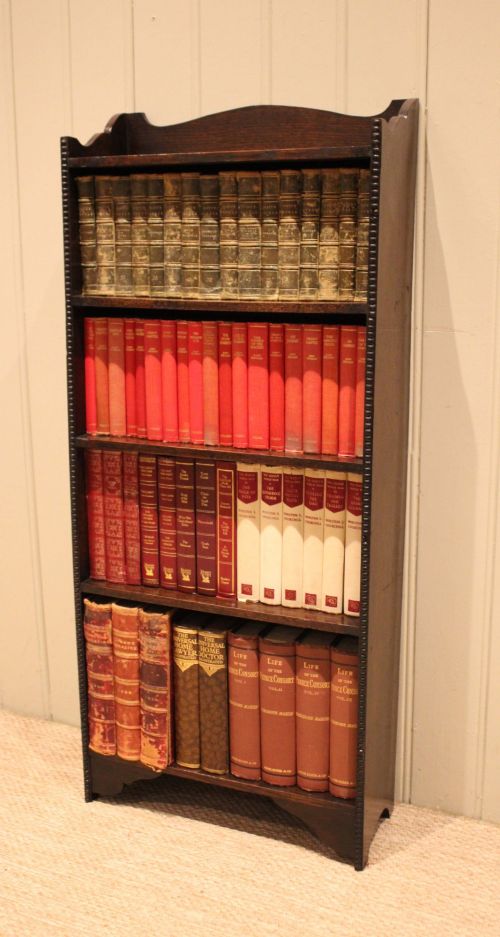
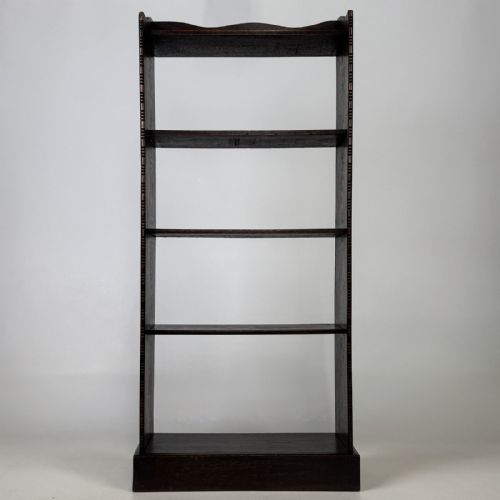
A freestanding oak book display is a practical item designed to hold books upright without needing wall support, appearing frequently on this page as open bookcases and shelving units. These pieces range from narrow early twentieth-century examples to broader Edwardian and Art Deco forms, often finished with simple shelves or raised galleries.
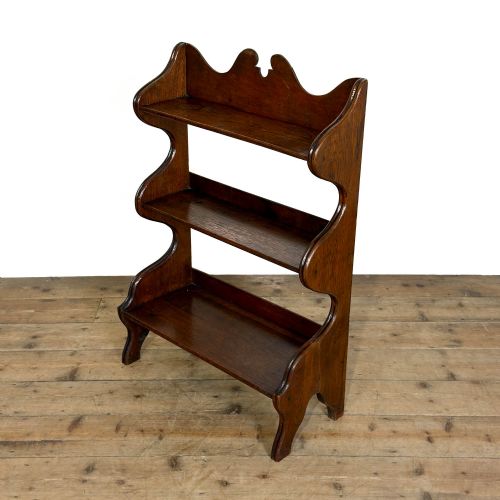
Buyers looking for a freestanding oak book display will most commonly encounter open-backed shelving units and bookcases dating from the Edwardian era through the nineteen-thirties. Many incorporate decorative details such as shaped galleries, bow-front shelves, or cut-out motifs rooted in the Arts and Crafts tradition.
What varies in quality
The standard of a freestanding oak book display depends on the selection of the timber and the crispness of its joinery, moving from simple utilitarian storage to more considered Arts and Crafts or Art Deco design work. Better examples show careful attention to grain matching, solid back panels, and cleanly executed mouldings or galleries.
Proportion and scale also separate simpler factory pieces from finer workshop productions, with narrower or smaller formats requiring precise carpentry to remain stable without wall fixings. The presence of decorative flourishes like shaped galleries or distinctive front mouldings further distinguishes the range.
Freestanding Oak Book Display Retail Price Guide 2026
Typical asking prices for freestanding oak book display among the pieces listed under this phrase on Sellingantiques today, from the lower quarter to the upper quarter. They describe what is for sale here now, not the wider market.
Listings span the nineteenth century through the nineteen-thirties, dominated by oak construction combined with occasional glass and brass elements.
The Freestanding Oak Book Display Glossary
- Open bookcase
- A piece of furniture featuring exposed shelves without doors, designed for easy access to books. This form represents the majority of items found within this search.
- Gallery
- A raised decorative border along the top edge of a piece of furniture, intended to stop items from sliding off. These appear in shaped or raised variations on early twentieth-century examples.
- Arts and Crafts
- A design movement prioritising traditional craftsmanship, visible grain, and honest construction methods. Pieces from this style often feature decorative cut-outs and solid oak construction.
- Bow front
- A curved outward front profile applied to shelves or cabinets. This shape softens the linear geometry typical of standard bookcase designs.
- Part glazed
- A description for furniture doors or fronts that combine timber frames with glass panels. This allows contents to be viewed while kept protected from dust.
Freestanding Oak Book Display: Frequently Asked Questions
What is a freestanding oak book display?
A freestanding oak book display is an upright storage unit made from oak that stands independently without wall fixtures. These pieces include open bookcases, shelving units, and glazed cabinets.
Most examples found here date from the late nineteenth century through the nineteen-thirties. They provide practical storage while displaying book collections in domestic spaces.
How do I style an oak bookcase?
An oak bookcase fits easily into traditional and contemporary rooms through its natural timber tones. Pair it with complementary wooden furniture to build a cohesive study or living area.
Allow the grain of the oak to anchor the room by keeping surrounding walls neutral. Mix upright books with occasional decorative objects to balance the visual weight of the shelves.
Are these bookcases adjustable?
Certain pieces include adjustable shelving to accommodate books of varying heights. Edwardian and later twentieth-century examples occasionally incorporate this flexibility into their design.
Many traditional formats rely on fixed shelves secured firmly within the vertical uprights. Checking the specific configuration helps determine how volumes can be arranged.
How do I identify Edwardian oak furniture?
Edwardian oak furniture typically displays lighter golden tones compared to darker Victorian pieces. Makers of this period often utilised straightforward geometric forms influenced by earlier revival styles.
Details like raised galleries, simple mouldings, and golden oak finishes point directly to this era. The construction remains robust while shedding heavy Victorian ornamentation.