
Compact Open Shelving
Compact open shelving brings architectural utility to tight spaces through shallow footprints and unfettered access.
Compact Open Shelving
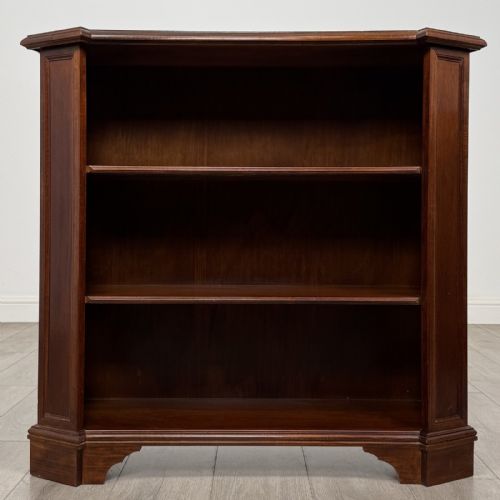
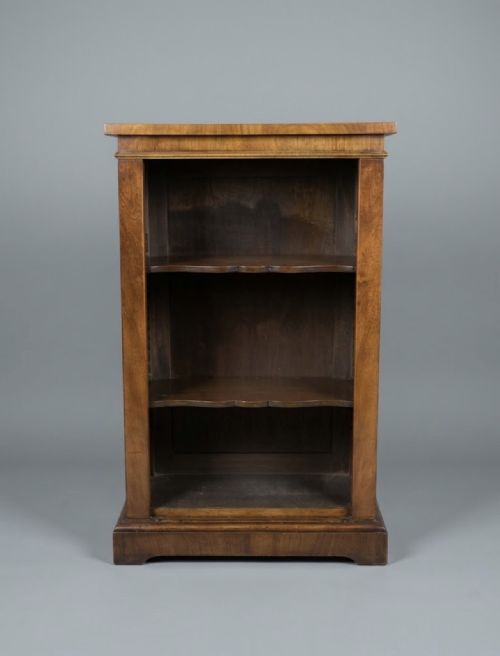
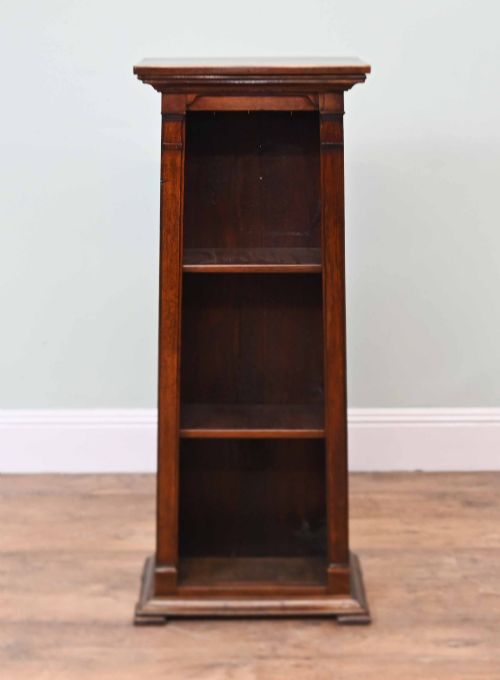
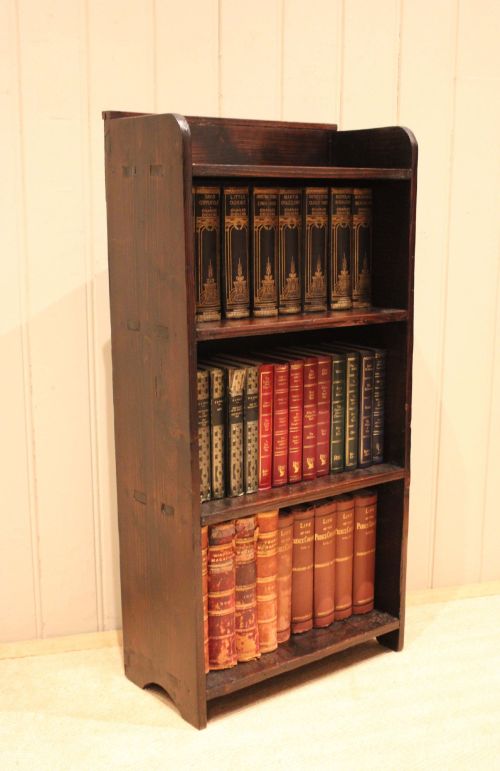
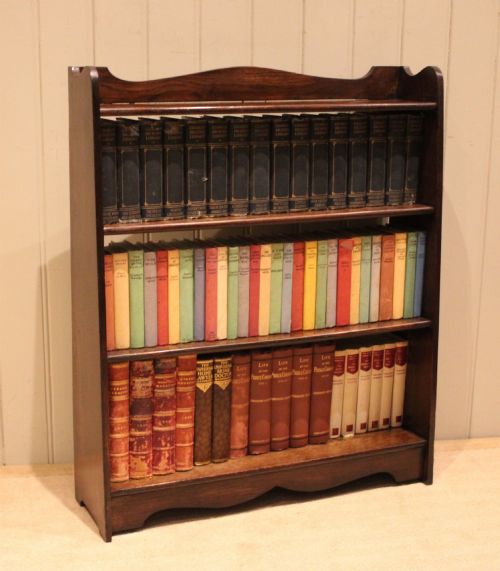
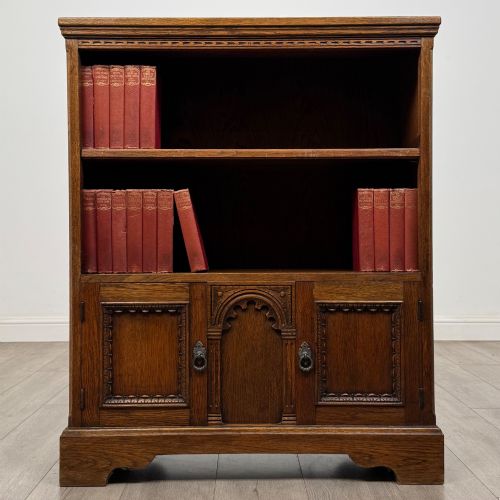
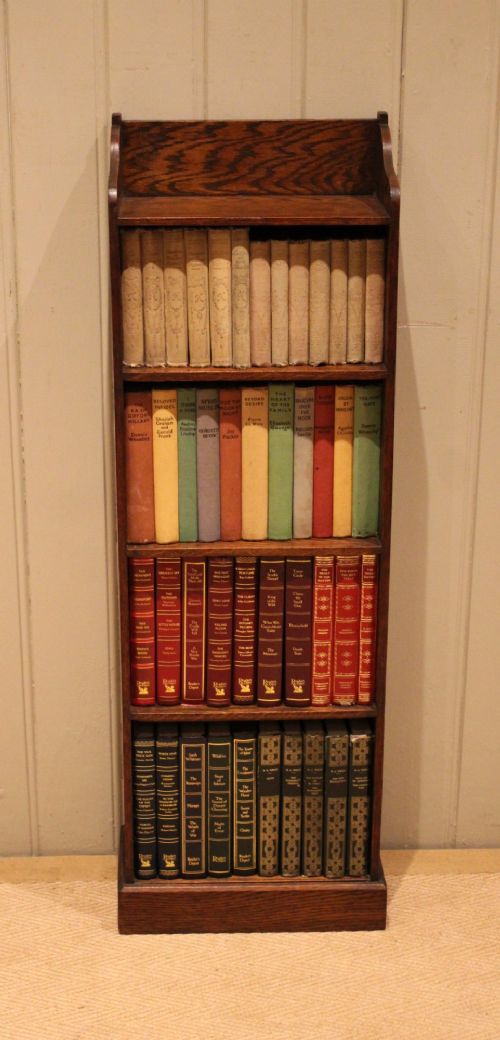
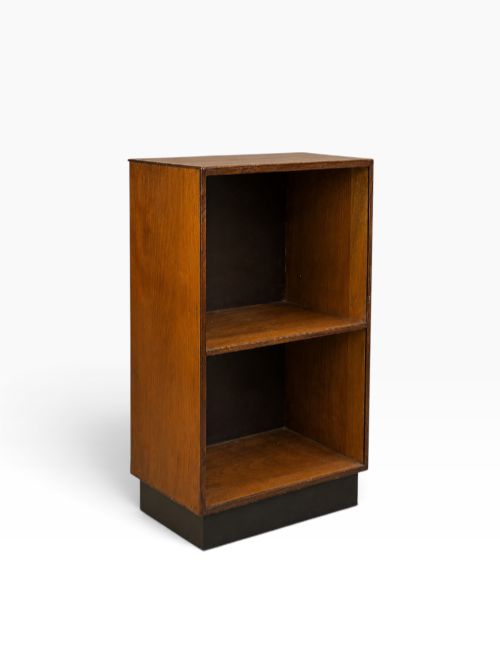
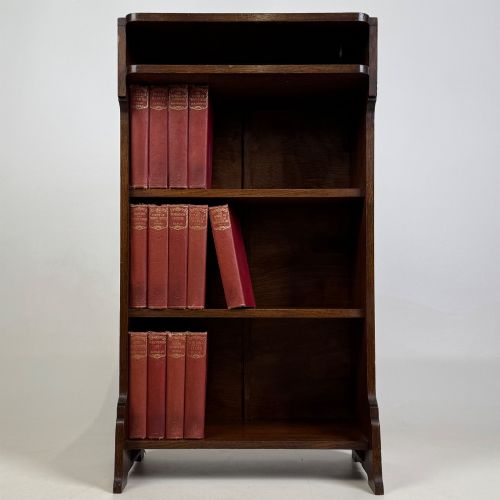
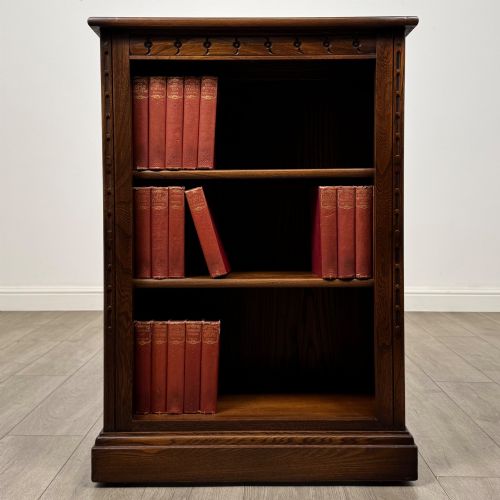
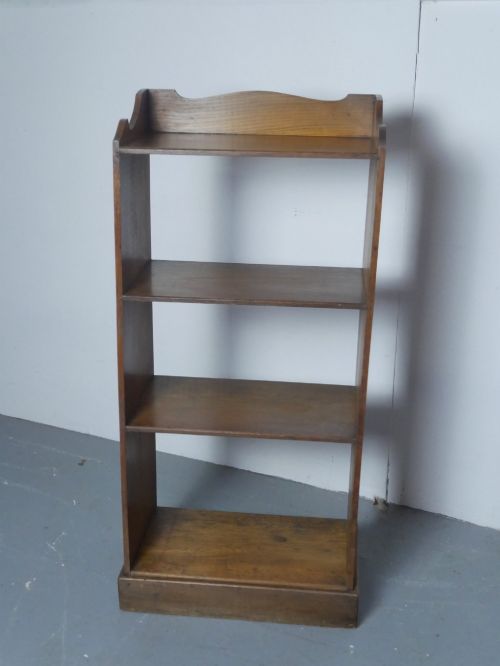
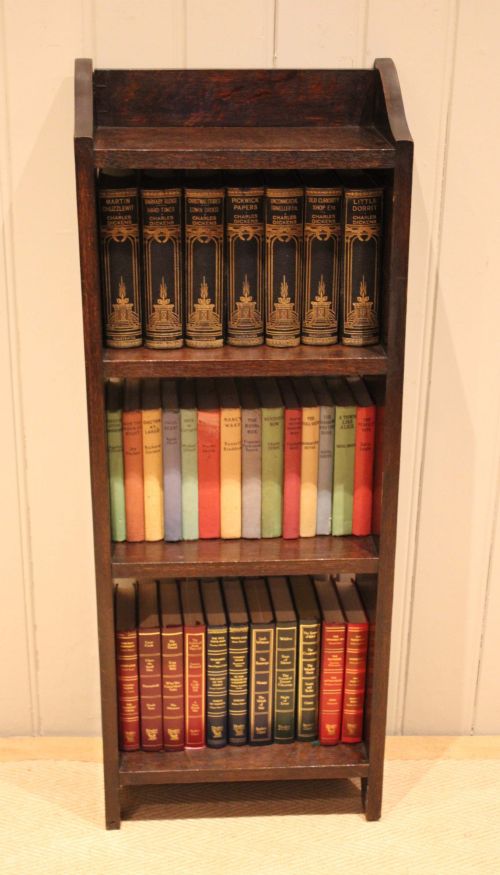
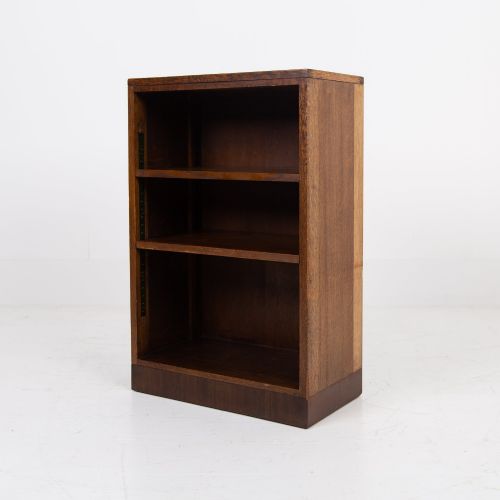
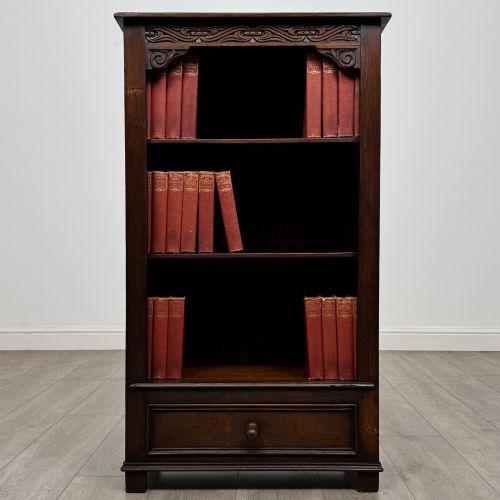
Compact open shelving comprises low, tall, slim, and diminutive bookcases designed to hold volumes without enclosing them behind glass or timber doors. These pieces serve domestic spaces where floor space is limited yet storage remains essential for daily utility.
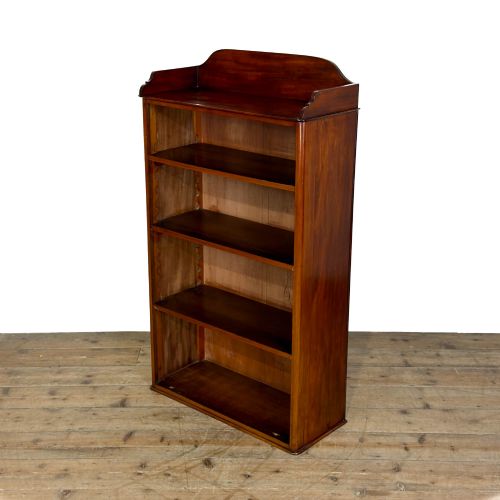
The versions most frequently met on this page span the Victorian, Edwardian, and 1930s periods, executed primarily in oak and mahogany. Forms range from simple upright tiers to designs featuring raised galleries, carved cupboard doors, lower drawers, or angled shelves.
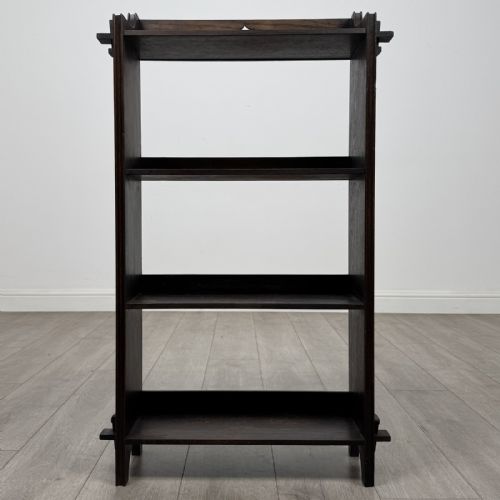
Origins stretch across the nineteenth and twentieth centuries, incorporating Arts and Crafts, Art Deco, and rustic country sensibilities. Buyers select these items to house collections while maintaining an open, uncluttered line of sight across a room.
Judgments of quality
Quality separates through the selection of timber stock and the precision of joint work rather than surface ornamentation alone. Dense, well-figured oak and rich mahogany retain structural stability across decades of weight distribution.
Listings span periods from the nineteenth century through the 1940s, featuring oak, mahogany, ash, and pine.
Ercol
The Compact Open Shelving Glossary
- Gallery
- A raised decorative border along the top edge of a piece that prevents items from sliding off the surface. This feature appears frequently on Edwardian oak bookcases.
- Dwarf bookcase
- A low shelving unit designed to sit beneath dado height and maintain an unobstructed wall above. These compact forms suit smaller rooms.
- Arts and Crafts
- A design movement prioritising honest construction, visible joinery, and local materials over industrial ornamentation. Pieces from this tradition show straightforward utility.
Compact Open Shelving: Frequently Asked Questions
How do I choose the right size?
Measure the available wall space and floor area before browsing, keeping the shallow footprints of these bookcases in mind. Consider whether a tall slim profile or a low dwarf unit best suits the room's proportions.
Account for the height of the volumes you intend to store, as internal shelf clearances vary across different periods and styles.
Are these suitable for heavy books?
Solid hardwood construction in oak and mahogany provides the necessary strength to support dense collections of volumes. Fixed shelves offer greater inherent load capacity than adjustable variants.
Inspect the shelf thickness and support fixing methods to determine suitability for heavier folio editions.
How do I maintain wood finishes?
Apply bees wax periodically to nourish the timber and maintain a soft sheen without building up thick residues. Avoid placing furniture in direct sunlight or near heat sources to prevent timber splitting.
Dust regularly with a dry cloth to protect the polished surface from abrasive particles.
What defines Edwardian proportions?
Edwardian pieces often favour lighter scaling and restrained ornamentation compared to heavier Victorian precedents. Compact footprints and carved details reflect domestic interior trends of the early twentieth century.
Oak remains the dominant timber choice for this period, frequently paired with simple open shelving formats.