

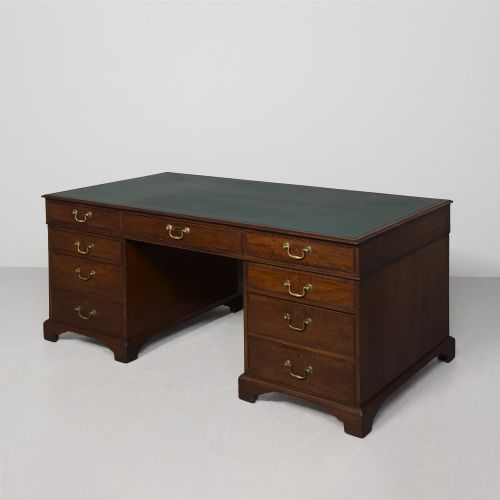
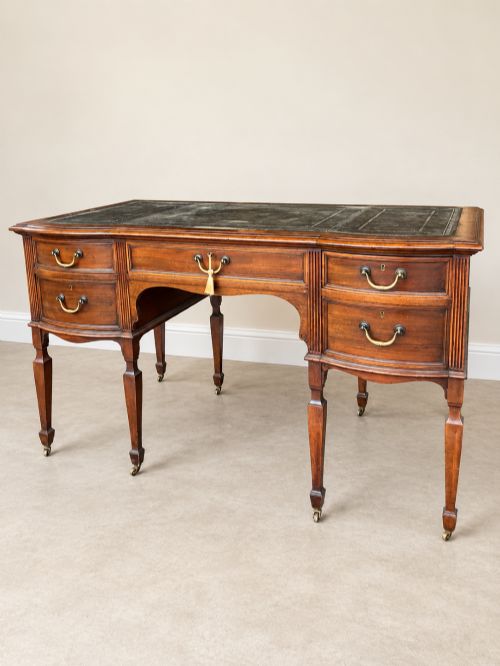
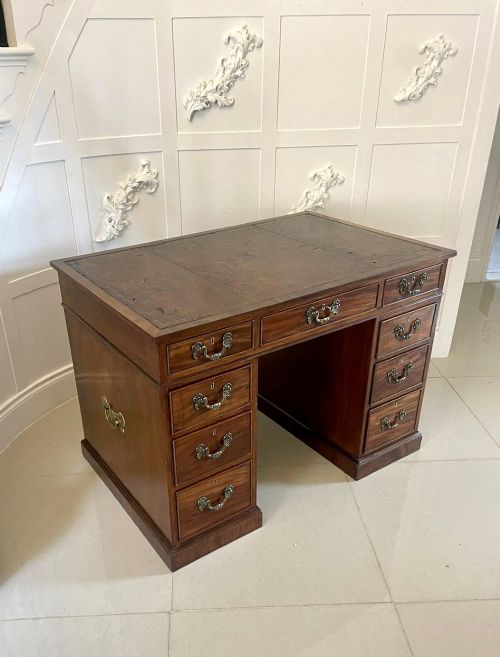
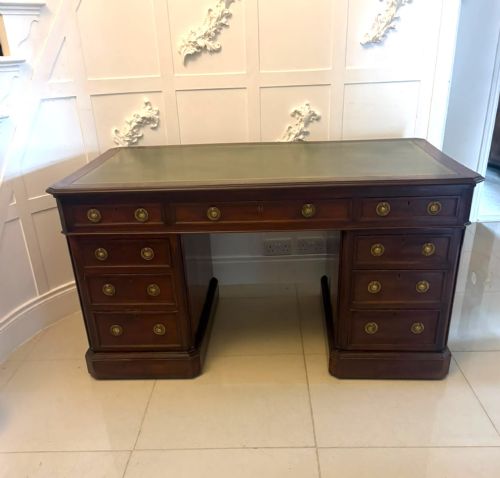
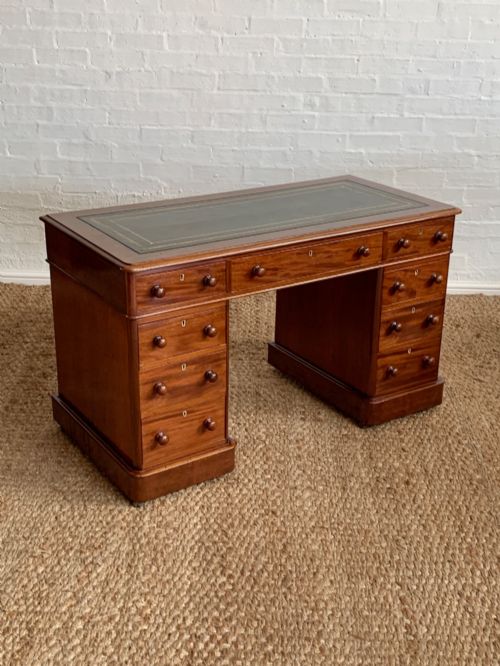
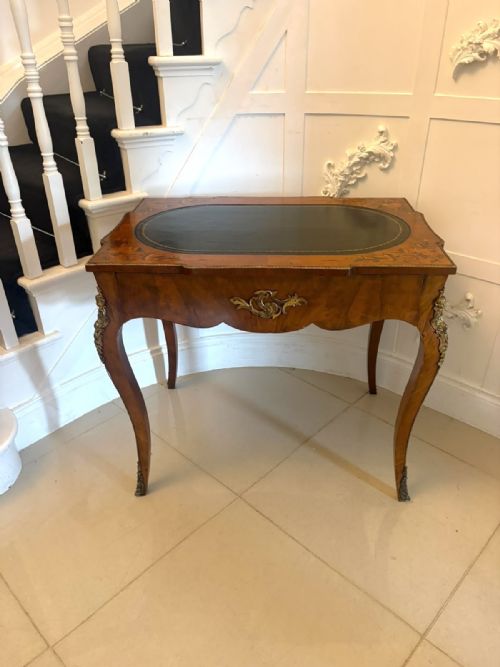
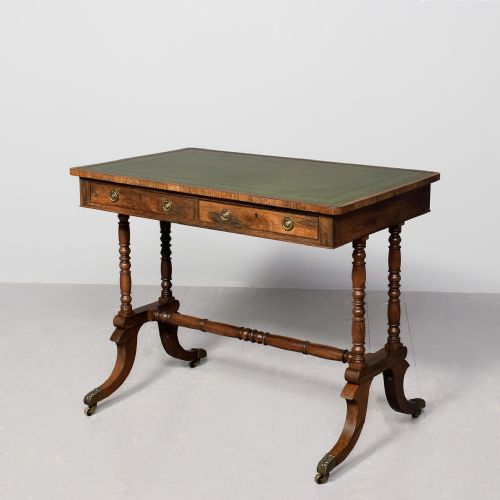


Freestanding Executive Desk
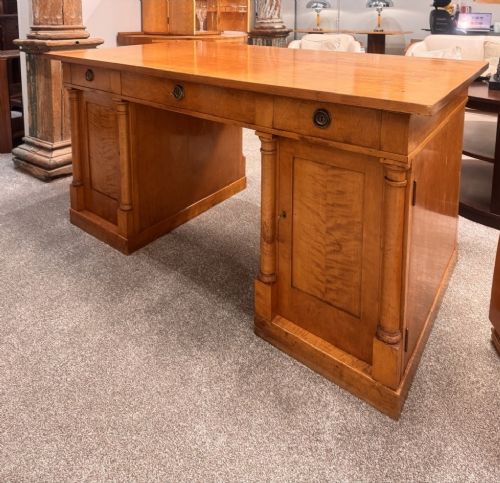
A freestanding executive desk sits proud in the middle of a room, finished on all sides to command the space.
Freestanding Executive Desk
A freestanding executive desk serves as a commanding centrepiece in a room because it is finished on all sides, unlike a standard wall-facing bureau. When you search for a freestanding executive desk, you encounter substantial writing tables, partners desks, and pedestal desks designed to stand away from walls.
The pieces listed here span the Georgian, Regency, Victorian, and Biedermeier Revival periods, stretching from eighteen hundred into the nineteen-thirties. Mahogany forms the backbone of these selections, alongside rosewood, walnut, burr walnut, burr oak, satin birch, and oak.
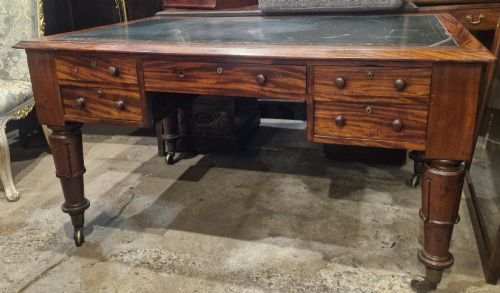
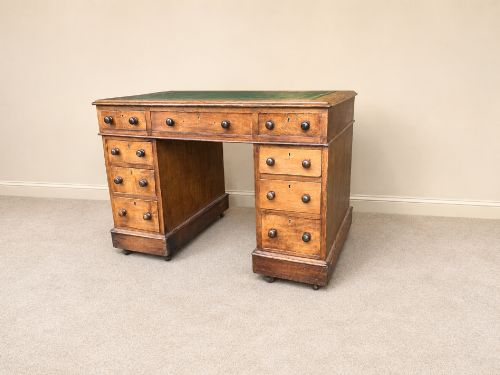
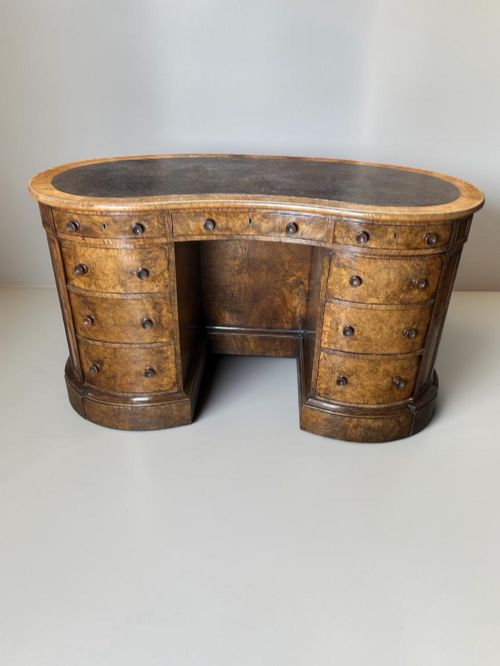
Formats range from pedestal kneehole desks with fitted stationery drawers and writing slides to kidney-shaped desks, bureau plat tables, and expansive library tables. You are most likely to meet mahogany pedestal desks from the Victorian era or Georgian library tables when browsing these offerings.
How they were made
Cabinet makers utilised dense hardwoods like mahogany, rosewood, and oak for structural integrity, often applying figured veneers such as burr walnut and satin birch to prominent surfaces. Timber selection determined the weight and visual gravity of each writing table.
Leather inserts, frequently tooled in colours such as olive green, provide the writing surface on top of these tables and desks. Brass hardware, including handles, key escutcheons, and castors, details the drawers and supports mobility.
Freestanding Executive Desk Retail Price Guide 2026
Typical asking prices for freestanding executive desk among the pieces listed under this phrase on Sellingantiques today, from the lower quarter to the upper quarter. They describe what is for sale here now, not the wider market.
The selection includes revival pieces alongside nineteenth-century originals, notably featuring Biedermeier satin birch from the nineteen-thirties.
What varies in quality
The refinement of timber figure and the consistency of the grain dictate the visual standard of a desk. Burr walnut and figured satin birch require exceptional cutting skill to display balanced patterns across pedestals and drawers.
Construction details such as the presence of finished backs, matching secondary timbers in drawer linings, and intact original leather inserts elevate certain pieces above standard utility furniture. Proportion and decorative restraint further separate master cabinet work from simpler workshop output.
The Freestanding Executive Desk Glossary
- Partners desk
- A large pedestal desk designed with drawers and cupboards on both sides so two people could work opposite each other. These pieces represent the heavier end of executive library furniture.
- Pedestal desk
- A writing desk comprising a top surface supported by two independent banks of drawers or pedestals. This form allows a central kneehole for seating.
- Bureau plat
- A French freestanding writing table, typically featuring a leather inset top and multiple frieze drawers. These tables originated in the Louis periods and display refined marquetry or mounts.
- Writing slide
- A pull-out shelf housed above the drawers of a desk to extend the usable surface area for correspondence. Slides slide back flush when not in use.
- Kneehole desk
- A compact pedestal desk featuring a central recess for the legs, often flanked by smaller drawers. Georgian and Victorian examples frequently include a central cupboard behind the kneehole.
Freestanding Executive Desk: Frequently Asked Questions
Can a freestanding desk float in a room?
These desks are specifically constructed to stand away from walls because their rear panels receive the same timber treatment and polish as the front.
This makes them ideal for positioning in the centre of a home office or library where the back remains visible.
How do I care for the leather top?
Tooled leather inserts require occasional treatment with specialist leather balm or wax to prevent the surface from drying and cracking.
Avoid placing hot cups or moisture directly on the leather to preserve the gold tooling and original tone.
How do I identify a Victorian desk?
Victorian desks typically feature dense mahogany or walnut construction, often incorporating deep pedestal banks and turned wooden or brass handles.
Details like olive green tooled leather tops and robust framing point directly to the nineteenth-century manufacturing tradition seen in these listings.