

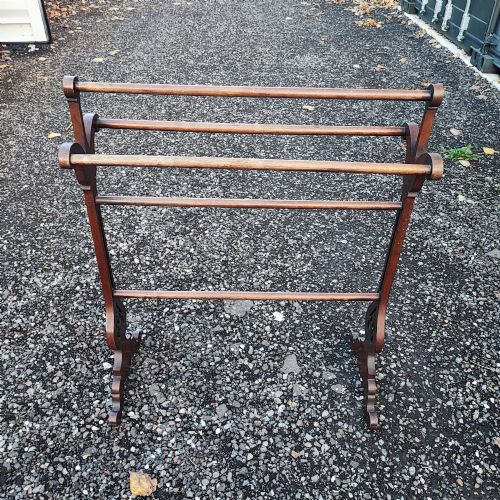
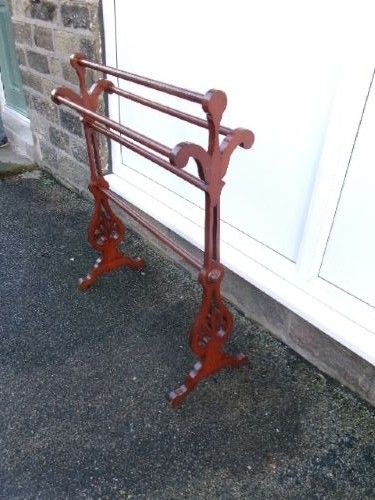
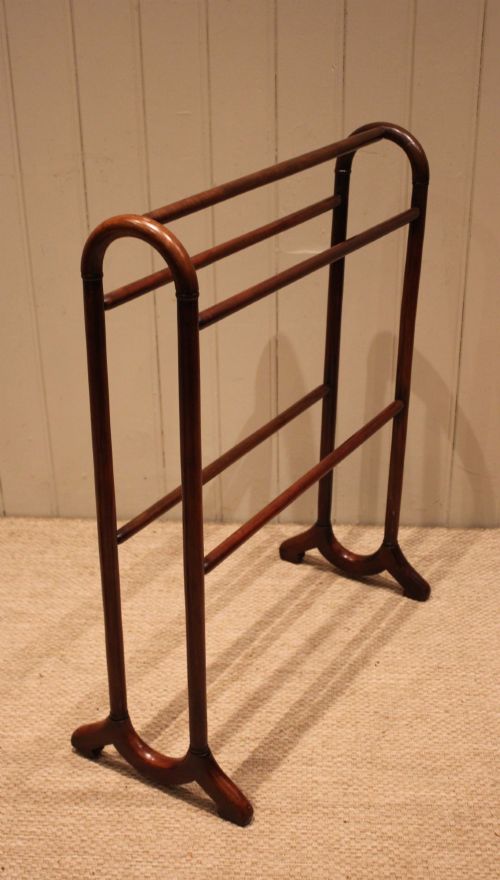
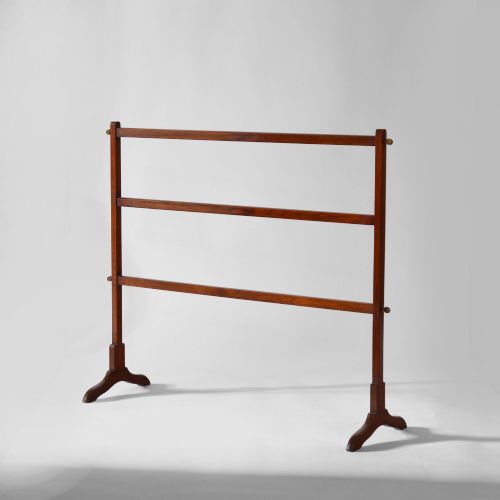
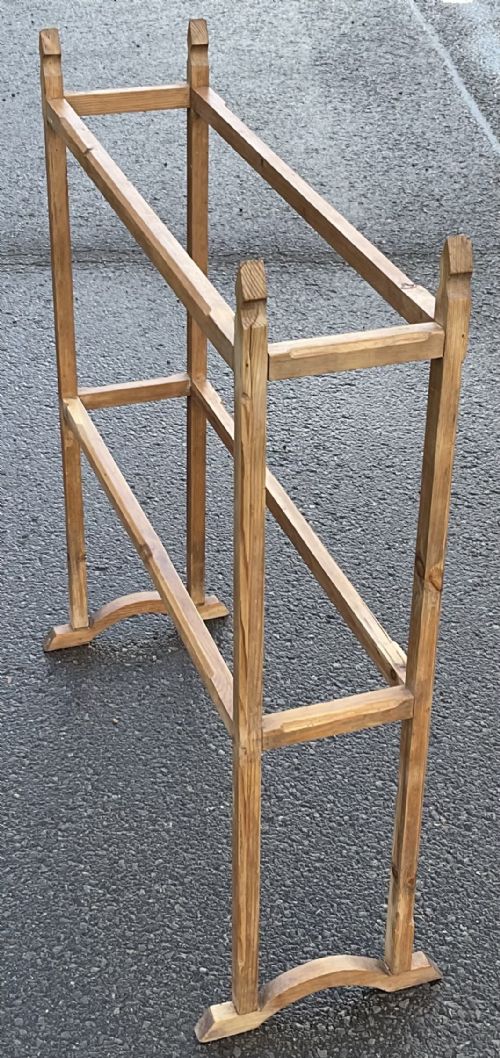


Freestanding Clothes Airer
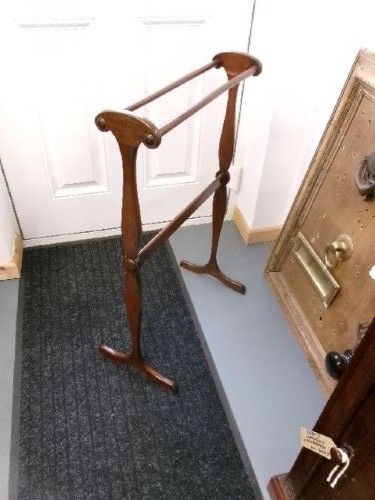
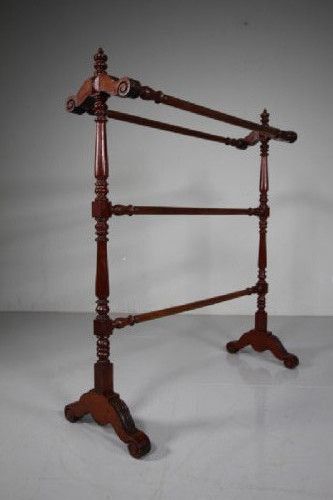
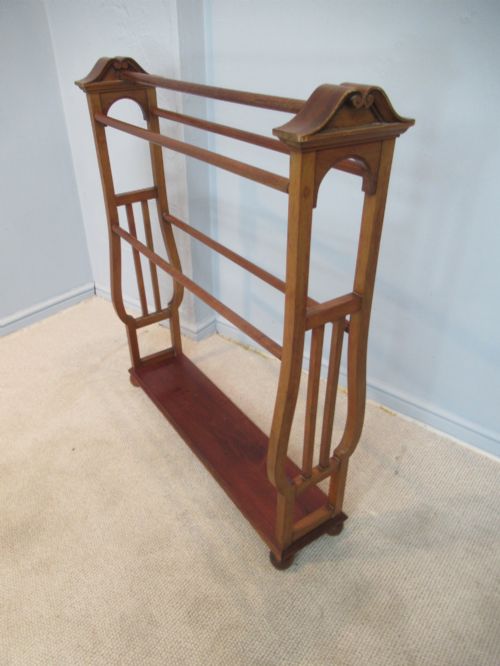
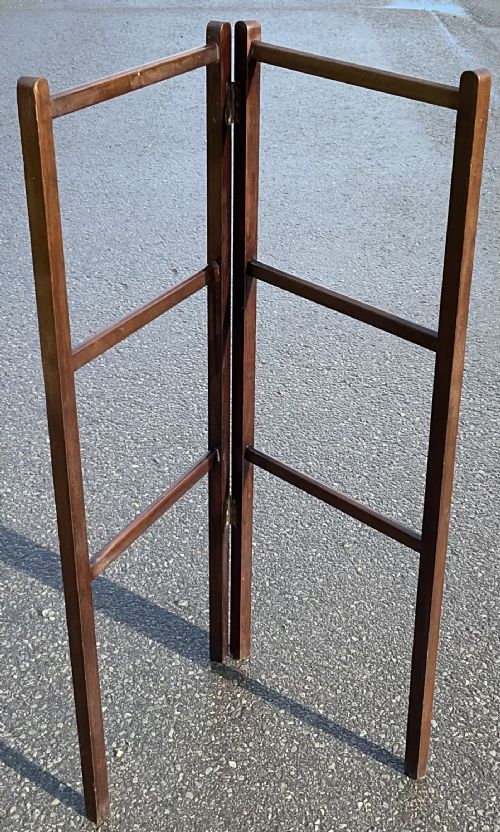
A freestanding clothes airer is a practical wooden frame designed to dry laundry without fixing to a wall.
Freestanding Clothes Airer
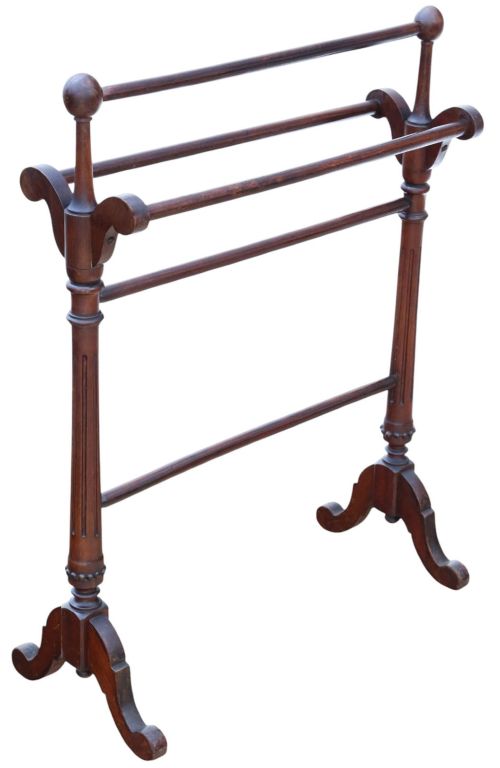
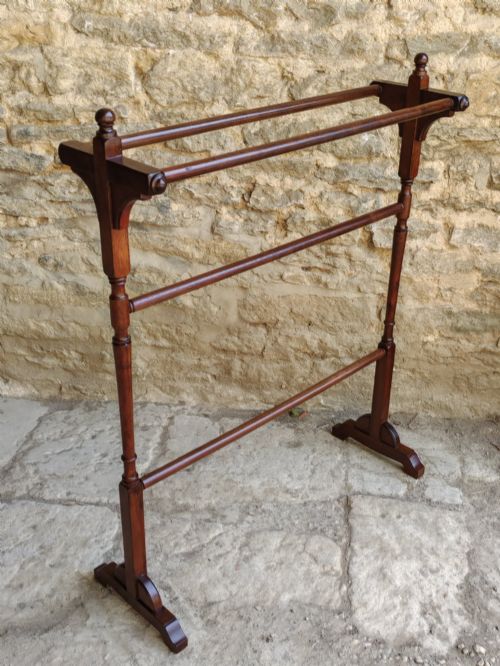
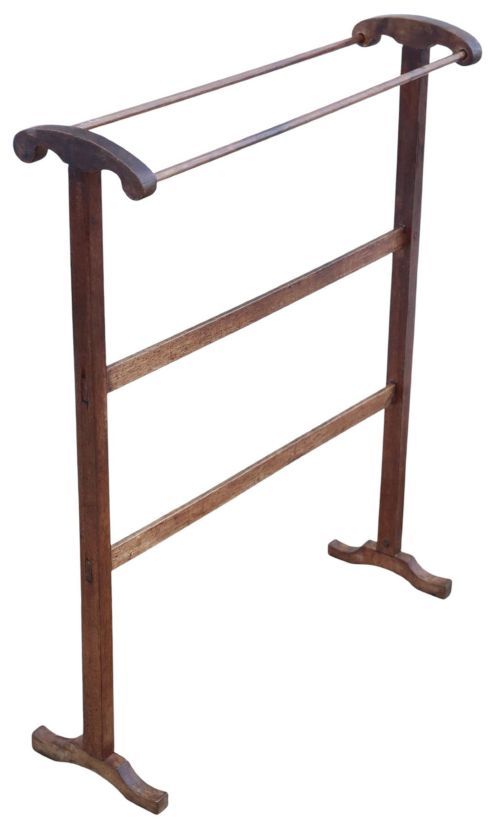
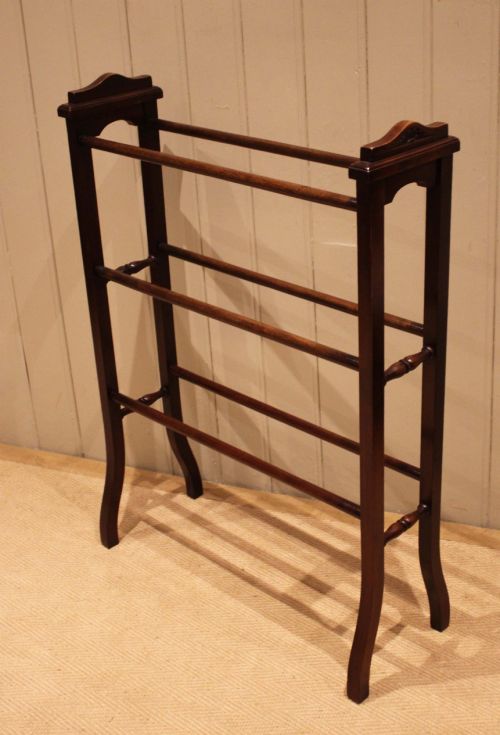
A freestanding clothes airer, often catalogued as a towel rail stand, provides portable rails for drying garments and textiles across domestic interiors. These pieces appear in forms ranging from simple folding frames to large floor-standing stands with multiple rungs.
The versions met most frequently on this page date from the nineteenth and early twentieth centuries, spanning the Regency, Victorian, and Edwardian periods. Mahogany and pine dominate the selection, offering both refined parlour pieces and robust utility items.
Makers designed these airers to sit near a heat source, utilising hinged folds or rigid standing frames to maximise drying space. Their survival depends on sturdy timber joints that withstand regular movement around the house.
How they were made
Cabinetmakers constructed these airers using solid timbers such as mahogany, oak, walnut, and pine, selecting woods that resisted moisture and warping. Turned uprights and tenon joints held the rails firmly in place under the weight of damp linens.
Some examples feature ebonised wood or delicate boxwood inlay, reflecting the decorative tastes of the Victorian and Edwardian eras. Folding mechanisms relied on brass hinges and pivoting dowels to allow the frames to collapse flat when not in use.
Freestanding Clothes Airer Retail Price Guide 2026
Typical asking prices for freestanding clothes airer among the pieces listed under this phrase on Sellingantiques today, from the lower quarter to the upper quarter. They describe what is for sale here now, not the wider market.
Boxwood details hide quietly among dark timbers, giving industrious laundry stands an unexpected touch of elegance.
What varies in quality
Quality rests upon the selection of timber and the solidity of the turning on the uprights and rails. Superior examples utilise dense hardwoods like mahogany or walnut with cleanly fitted joints that prevent wobble during daily use.
Finer pieces display thoughtful proportions, decorative inlay, or ebonised finishes, whereas utilitarian items in pine serve purely functional roles. The integrity of the pivoting hinges and the thickness of the individual rails dictate how well the structure endures repeated folding.
The Freestanding Clothes Airer Glossary
- Cheval towel rail
- A freestanding frame supported by sturdy uprights, allowing the rail section to swing or tilt independently. This design offers greater stability for heavier garments.
- Ebonised wood
- Timber treated with a dark stain or finish to imitate ebony. This technique was popular in the late nineteenth century for a sleek, formal appearance.
- Five bar towel rail
- A stand incorporating five horizontal rails for hanging textiles. These provide ample space for multiple items while remaining compact on the floor.
- William IV
- A transitional design period spanning the early nineteenth century, known for heavy, robust proportions and classical restraint. Pieces from this era often use dense mahogany.
- Arts and Crafts
- A design movement prioritising honest construction and visible craftsmanship over excessive ornament. Oak stands from this period celebrate simple, sturdy joinery.
Freestanding Clothes Airer: Frequently Asked Questions
How were clothes airers used?
These frames stood near hearths or in laundry rooms to dry garments efficiently indoors. Families draped linens and clothing over the horizontal rails to utilise ambient room heat.
Their lightweight construction allowed servants or household members to relocate the stand easily as rooms changed throughout the day.
How do I date a wooden airer?
Dating relies on timber choice, turning style, and construction methods visible in the frame. Regency and early Victorian pieces often feature heavy mahogany, while Edwardian versions favour lighter pine or inlaid mahogany.
Examine the joints and hinges for period-appropriate hand tools or early machine-cut precision.
Are these airers stable enough for daily use?
Most standing rails remain robust if the wood has not suffered from damp or excessive shrinkage. Solid hardwood frames handle everyday laundry without difficulty.
Gentle handling of folding mechanisms preserves original brass hinges and wooden dowels for long-term placement in modern homes.
What is the difference between an airer and a towel rail?
Period makers often used both terms interchangeably for the same freestanding furniture form. Larger versions frequently served a dual purpose for drying laundry and hanging bathroom towels.
The scale and number of rails determine whether a piece suited a grand landing or a modest utility space.