
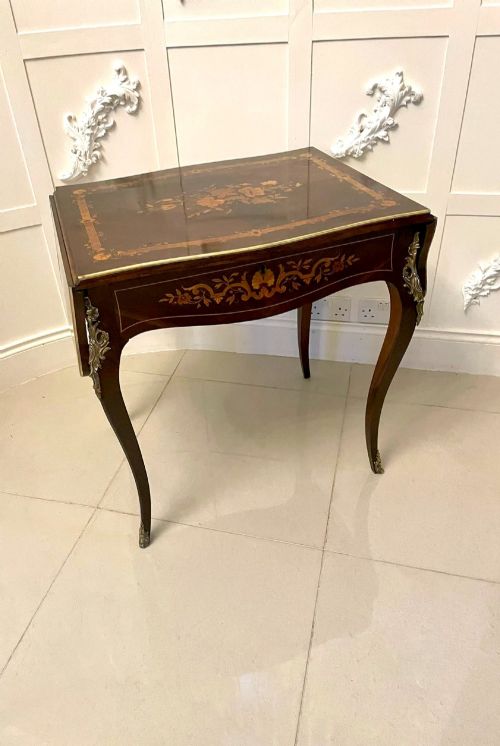


Freestanding Centre Table
A freestanding centre table anchors a room from any angle, designed to be viewed in the round rather than pushed against a wall.
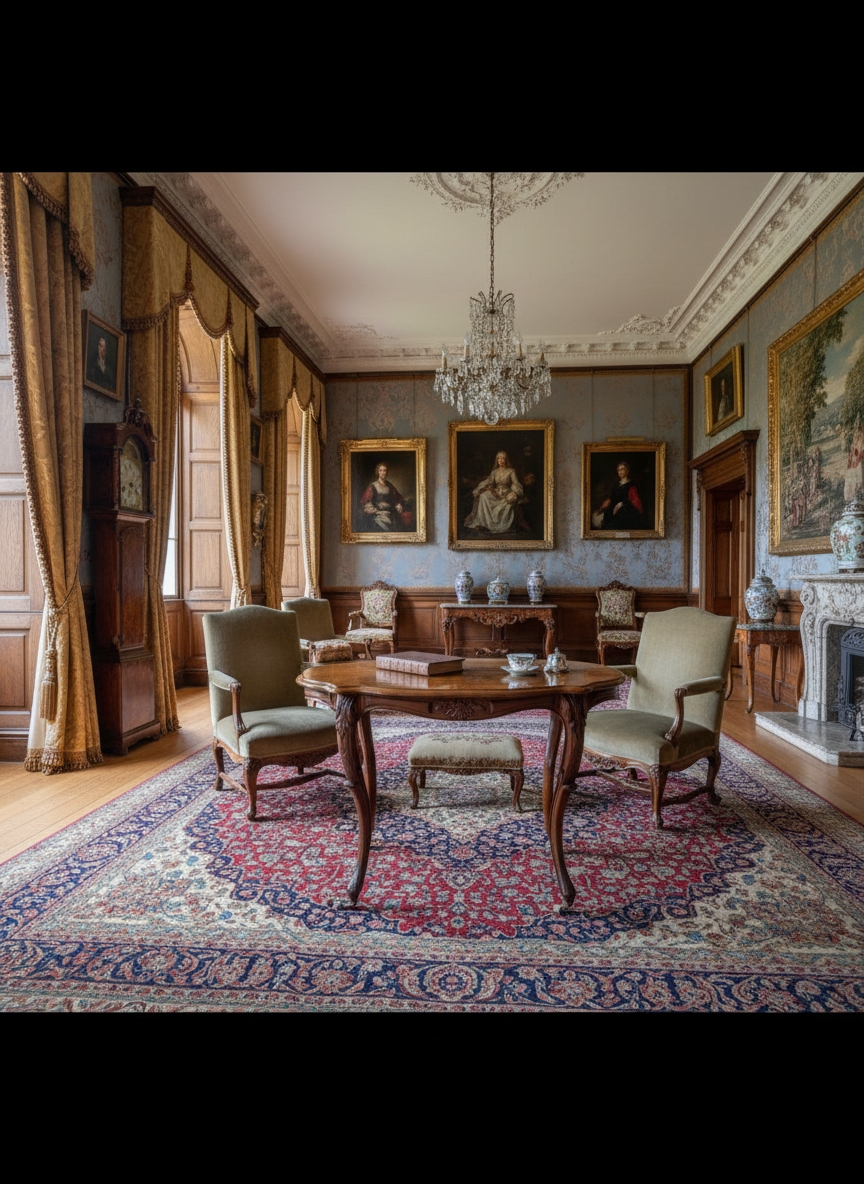
Freestanding Centre Table
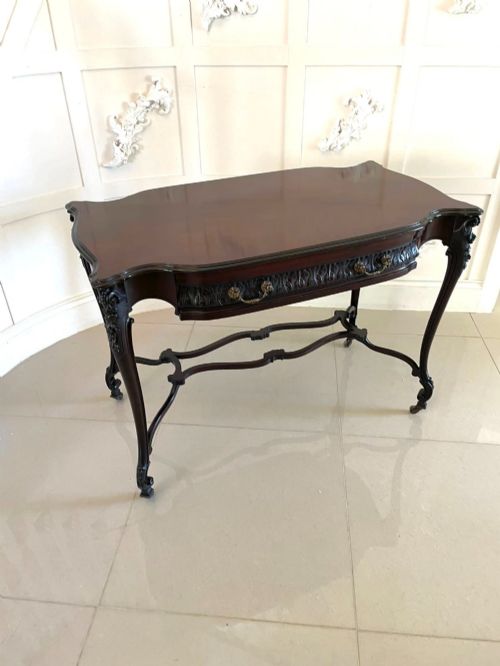
A freestanding centre table is designed to sit in the middle of a room, finished with equal care on all sides so it has no true back or front. These pieces serve multiple functions across domestic spaces, appearing as library tables, occasional tables, sofa tables, and writing tables.
The selections available derive principally from the Victorian period, alongside examples spanning the Georgian, Regency, William IV, and Edwardian eras. Many pieces reflect continental influence, adopting French Louis XV revival styles and decorative marquetry.
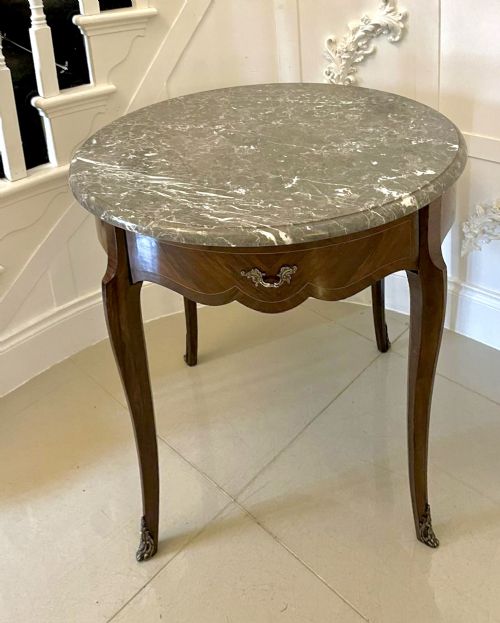
Mahogany, burr walnut, and rosewood form the main structural timbers, whilst specialist pieces incorporate kingwood, ormolu mounts, and inset marble tops.
Materials and Construction Methods
Cabinetmakers utilised dense hardwoods such as mahogany and rosewood for solid framing and turned supports, whilst applying figured veneers like burr walnut and kingwood to expansive tabletops. Marquetry and parquetry techniques introduced intricate geometric or floral patterns into the surface wood veneers.
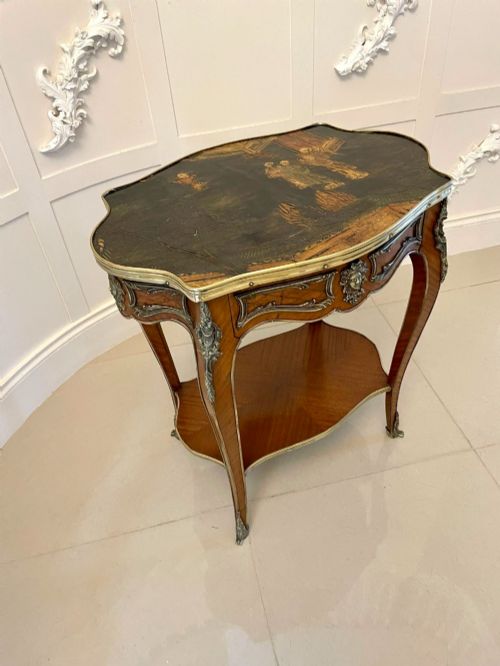
Ormolu mounts cast in gilt bronze were frequently applied to enrich the corners and legs of French-influenced designs. Marble tops were fitted securely to heavy stone or wooden bases, particularly on lamp and occasional tables.
Listings feature pieces spanning the Georgian, Regency, William IV, Victorian, and Edwardian periods, constructed from mahogany, walnut, rosewood, kingwood, and oak.
Differentiating Quality and Craftsmanship
The standard of a freestanding centre table is judged by the selection and matching of wood veneers, such as figured mahogany or burr walnut. Superior examples display seamless grain continuity across the tabletop and precise execution in inlaid marquetry and parquetry.
The Freestanding Centre Table Glossary
- Ormolu
- Gilt bronze mounts used as decorative ornamentation on furniture. These brass-alloy castings were heavily gilded and attached to the corners or aprons of French-style tables.
- Marquetry
- Decorative veneer work forming pictorial or floral designs. Cabinetmakers cut thin slices of contrasting woods to create detailed patterns across the table surface.
- Parquetry
- Geometric wood inlay forming repeating patterns. This technique utilises small blocks of timber like kingwood or walnut to construct tiled floor-like designs on tabletops.
- Sofa table
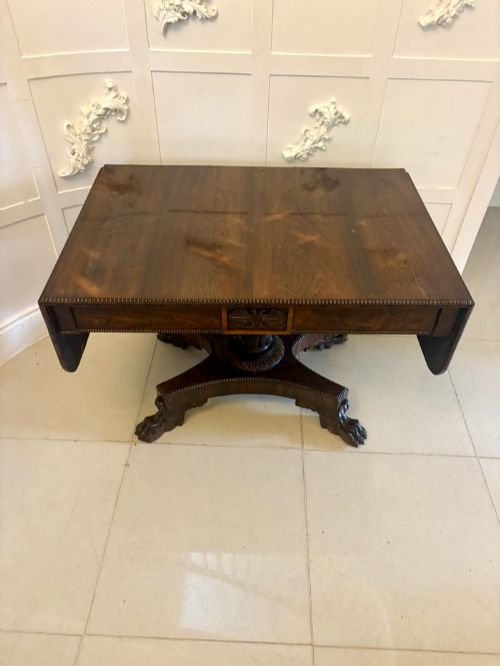
- A rectangular occasional table traditionally placed in front of or beside a sofa. These pieces usually feature drop leaves and double pedestals or trestle supports.
- Library table
- A large sturdy table designed for holding books and writing materials. These functional surfaces offer finished backs allowing placement away from walls.
Freestanding Centre Table: Frequently Asked Questions
Where should a freestanding centre table go?
These tables are designed to sit in the open space of a room rather than against a wall. Their finished backs and detailed pedestals allow them to be viewed from every side.
They function effectively in the middle of large reception rooms, libraries, or entrance halls as central display surfaces.
What is the difference between a library table and a centre table?
Library tables were traditionally built larger and heavier to support heavy volumes and writing tasks. They frequently incorporate drawers beneath the top for storage.
General centre tables span a wider variety of lighter forms, including occasional, lamp, and sofa tables designed for display and entertaining.
How do French revival styles differ from standard Victorian pieces?
French revival tables often incorporate Louis XV and Rococo design elements such as curved cabriole legs and elaborate ormolu mounts. They frequently feature intricate marquetry and parquetry inlays using kingwood and rosewood.
Standard Victorian pieces tend to focus on rich burr walnut or carved mahogany with sturdy central pedestal or basket bases.