

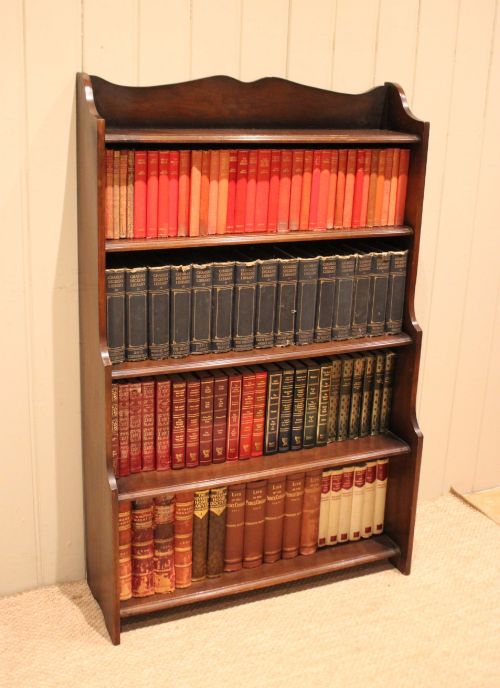
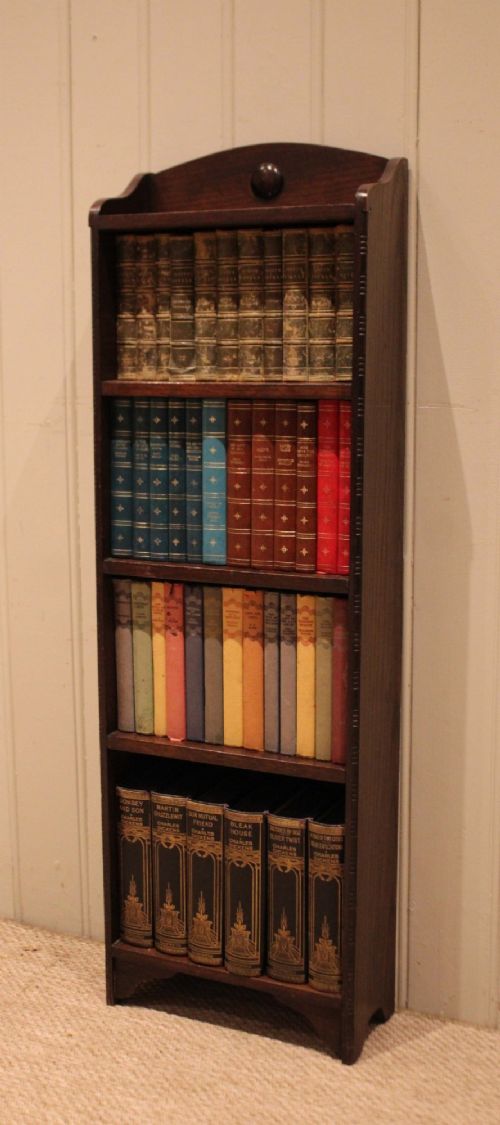
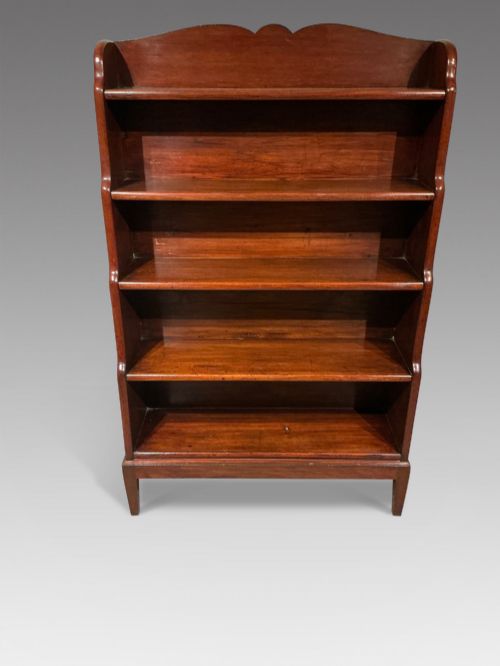
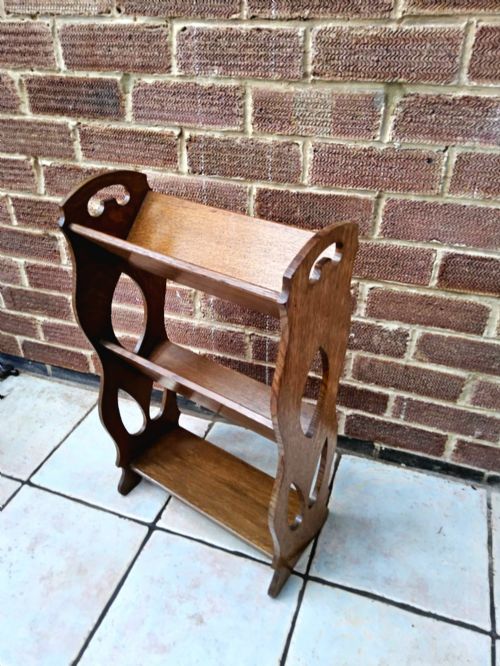
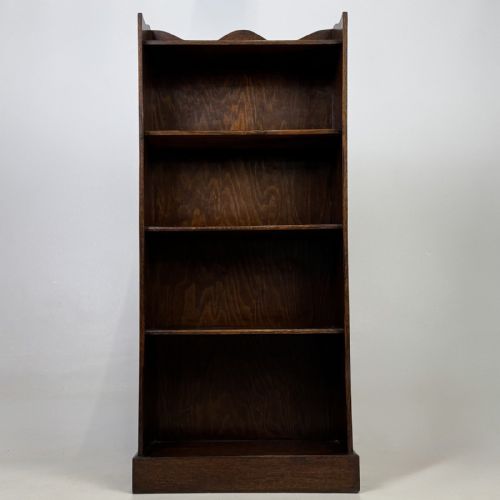
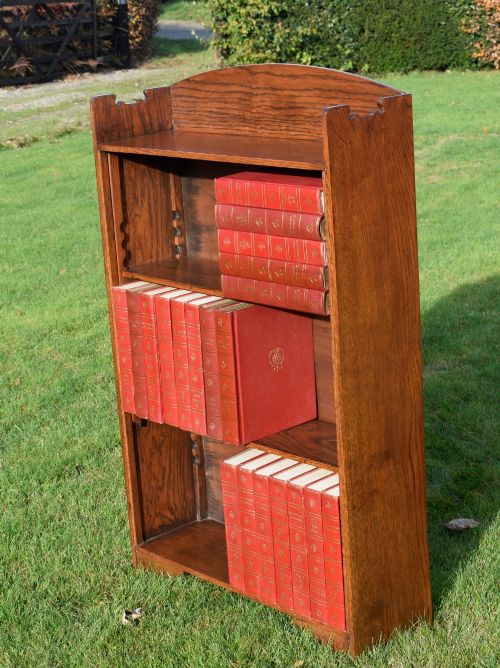
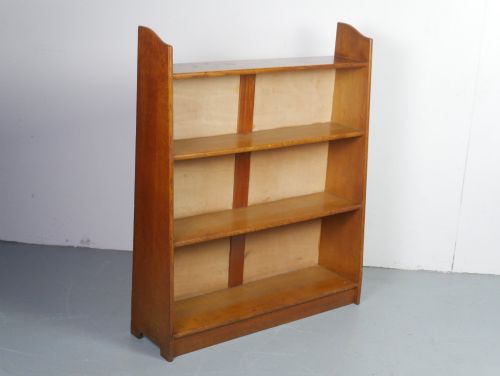
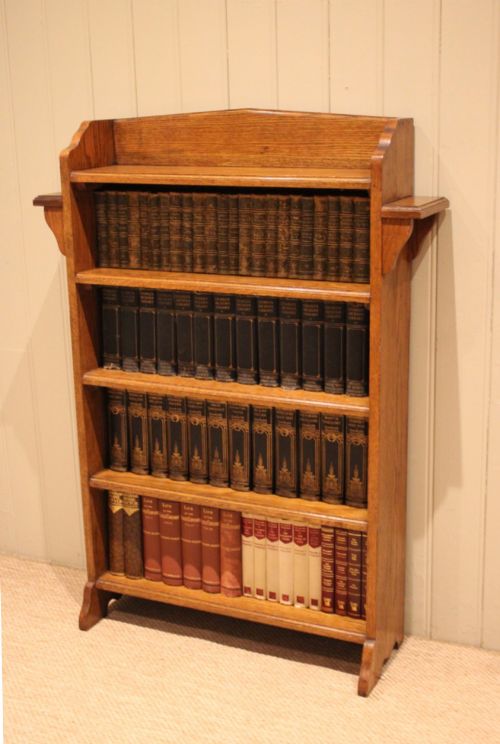
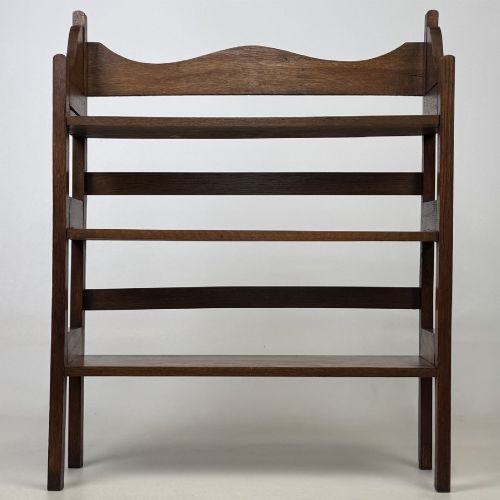
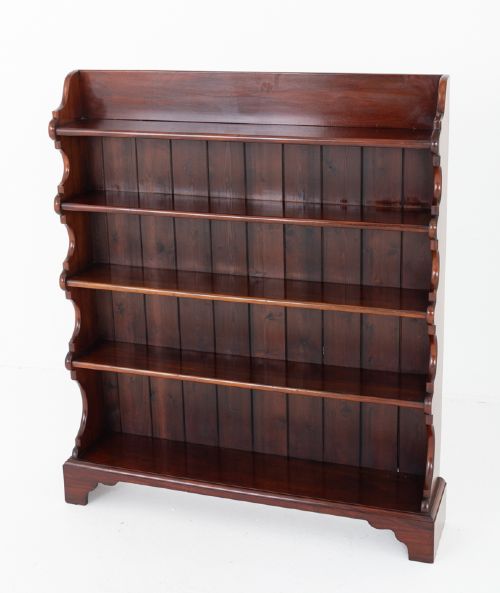
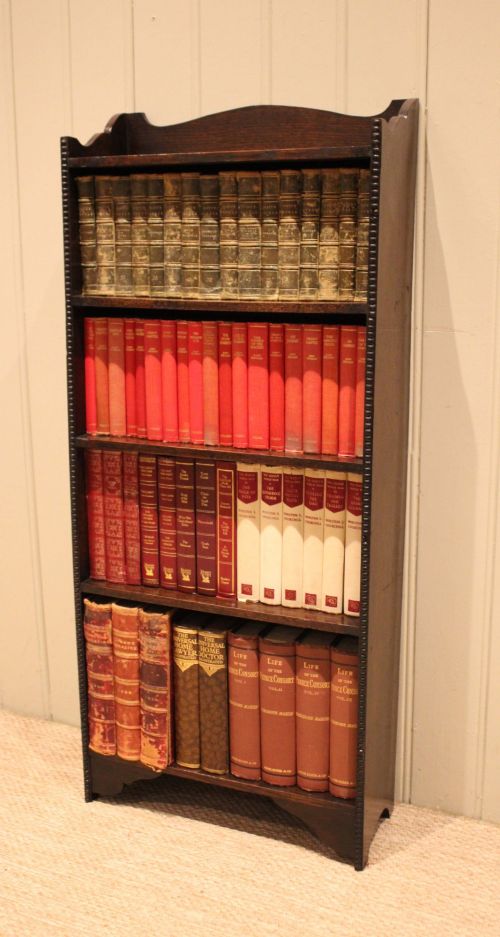
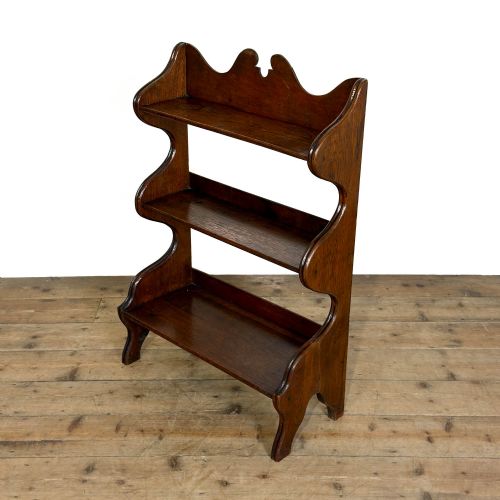
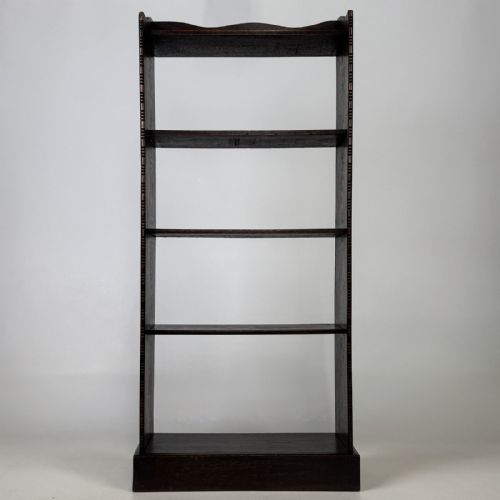
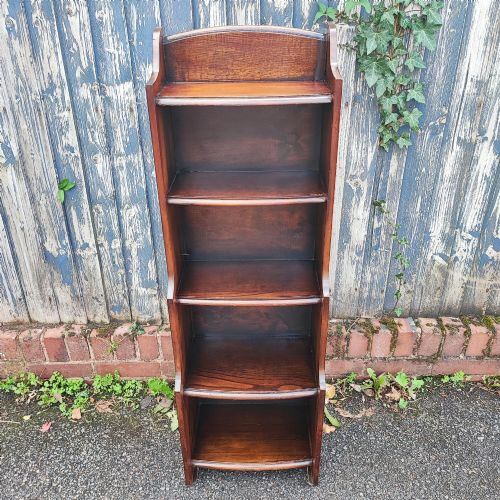
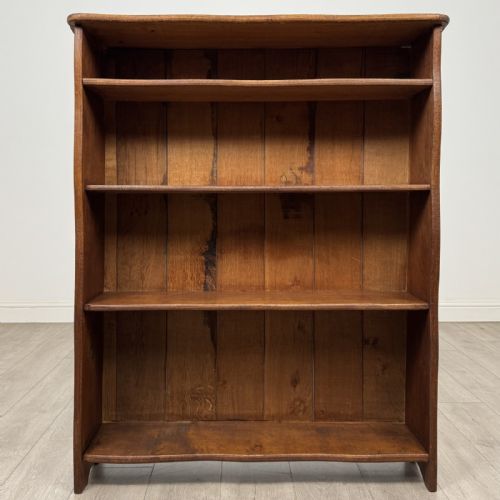
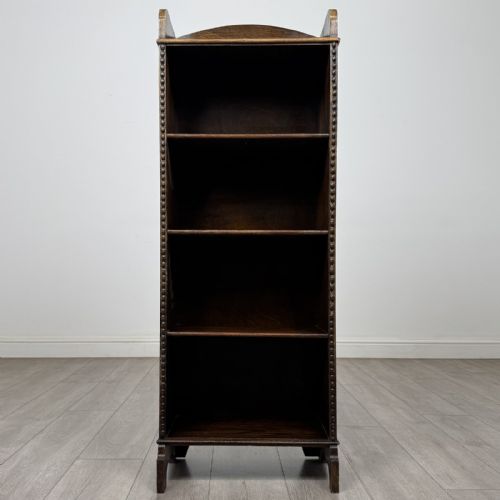
Freestanding Book Shelves
These freestanding book shelves span centuries of practical design, offering flexible storage that anchors a room without relying on fixed wall fixings.
Freestanding Book Shelves
Freestanding book shelves provide accessible, movable storage for libraries and living spaces, appearing frequently in open forms from the Edwardian period and the nineteenth century. You will encounter open oak and mahogany bookcases most often, alongside specialised variants like revolving book troughs and low shelving units.
The pieces on this page range from compact magazine racks to tall Victorian Gothic cupboards and tiered lawyer troughs. Styles stretch from restrained Arts and Crafts designs with decorative cut-outs to grand Regency revival and Art Deco forms.
How they were made
Cabinet makers constructed these pieces primarily using solid oak, mahogany, and walnut, often accentuating the timber with flame mahogany veneers. Brass fittings, cast iron, and glass doors appear on specific variants, while pine served for simpler utility pieces.
Construction techniques prioritized stability and utility, incorporating adjustable shelving mechanisms, integrated magazine racks, and structured mouldings. Joinery methods relied on traditional cabinet-making practices suited to heavy daily loading of books.
Freestanding Book Shelves Retail Price Guide 2026
Typical asking prices for freestanding book shelves among the pieces listed under this phrase on Sellingantiques today, from the lower quarter to the upper quarter. They describe what is for sale here now, not the wider market.
Listings feature oak, mahogany, walnut, and pine across Edwardian, Victorian, and Arts and Crafts styles.
What varies in quality
Quality rests in the choice of timber and the sophistication of the joinery, distinguishing heavy flame mahogany and figured golden oak from utilitarian pine. Superior examples display refined decorative cut-outs, precise mouldings, and functional adjustable shelving systems.
Proportion and presence separate standard production items from grander library pieces, such as large Victorian Gothic carcases or signed revolving fixtures. The integrity of the timber finish and the retention of original brass hardware further divide the ordinary from the exceptional.
Waring and Gillows
The Freestanding Book Shelves Glossary
- Waterfall bookcase
- A set of open shelves stepped back progressively from bottom to top. This form creates a distinctive tiered profile often seen in Edwardian oak and nineteenth-century mahogany.
- Book trough
- A low, open-topped receptacle designed for holding books at an easy viewing angle. These frequently appear in revolving formats or as sectioned desktop and floor-standing pieces.
- Adjustable shelves
- Shelving supported by movable pins or rack-and-pinion mechanisms to alter shelf heights. This practical feature allows storage for volumes of varying sizes.
- Arts and Crafts
- A design movement emphasising handcraftsmanship, plain surfaces, and honest construction. Pieces in this style often display exposed joints, decorative cut-outs, and golden oak.
- Flame mahogany
- Mahogany timber cut to reveal a distinctive undulating grain pattern resembling flickering flames. This decorative veneer was favored for high-status nineteenth-century library furniture.
Freestanding Book Shelves: Frequently Asked Questions
How do I adjust the shelves?
Many period bookcases feature wooden side ratchets or metal pins that let you lift and reposition the horizontal boards to suit taller volumes.
Simpler utility versions may have fixed shelves, so check the internal construction if you plan to store unusually sized books.
Where should I place a freestanding shelf?
These pieces suit living rooms, studies, and hallways, functioning effectively against flat walls or as room dividers depending on whether the back is finished.
Ensure the floor is reasonably level to keep tall oak and mahogany carcases stable without relying on wall anchors.
What is a book trough?
A book trough is a specialised low storage unit designed to hold books upright in a V-shaped or open-topped trough for quick selection.
They appear as stationary floor-standing furniture or as revolving pieces placed beside armchairs and library tables.