

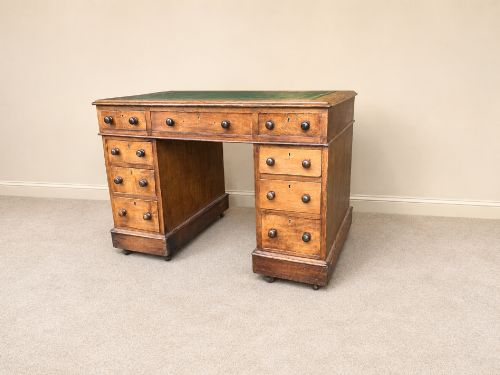
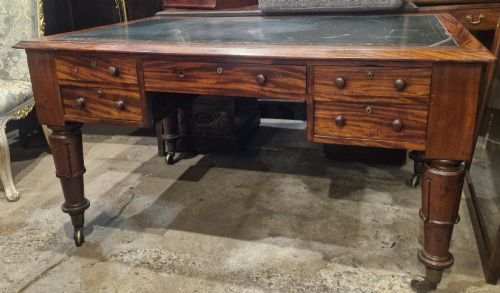
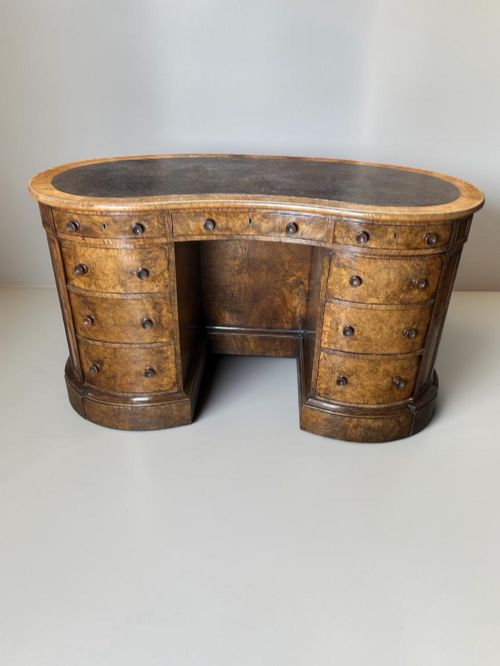
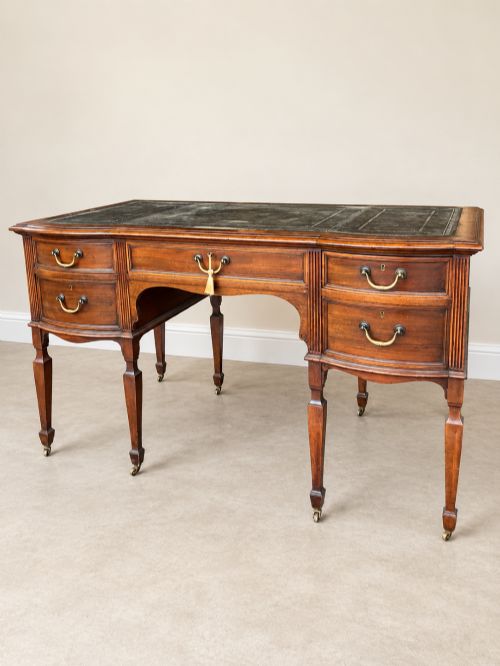

Free Standing Table
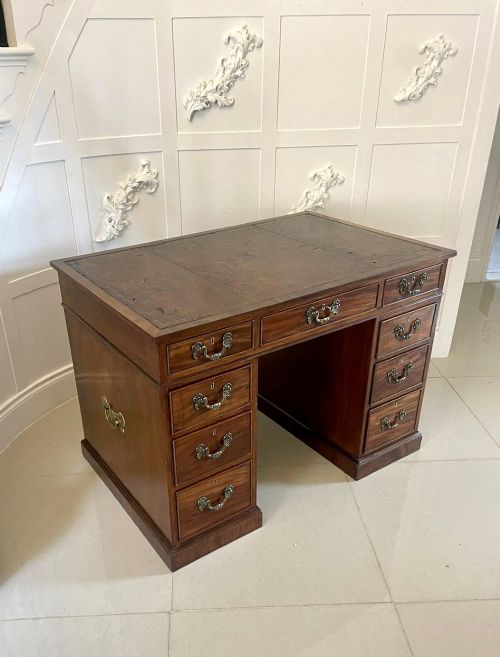
A free standing table stands clear of the wall, presenting finished timber on all four sides to anchor a room.
Free Standing Table
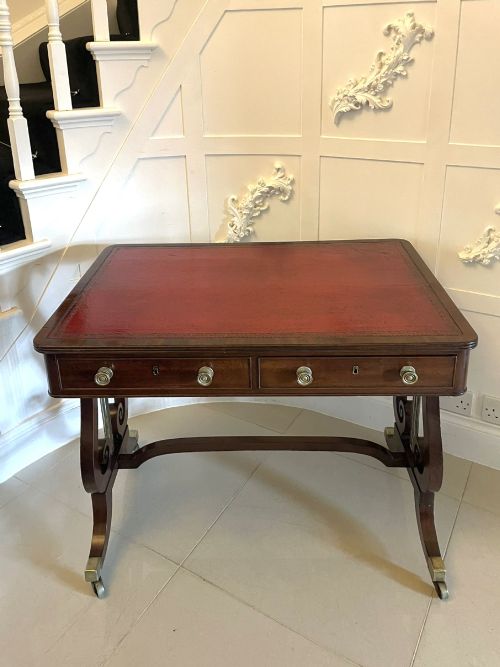
A free standing table appears across several centuries in forms designed to command the centre of a room rather than sit against a partition. The selection spans George III, Regency, and Victorian periods, alongside Edwardian examples.
The practical function ranges from writing desks and library tables to sofa tables, lamp tables, and occasional side pieces. Mahogany and rosewood dominate, accompanied by walnut, oak, and satinwood.
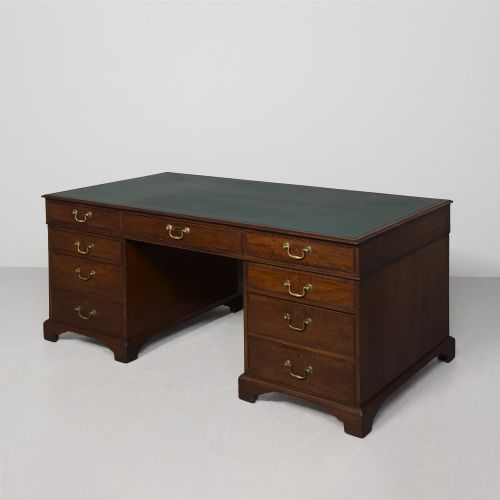
Desks and partners desks provide workspace accessible from multiple directions, while library tables and side tables offer expansive timber surfaces. Smaller variants include sewing tables and occasional lamp stands.
Materials and Construction
Cabinetmakers select dense hardwoods such as mahogany, rosewood, and walnut, often figured with burr or flame patterns to catch the light. Secondary timbers provide structural stability beneath the polished veneers and solid boards.
Joinery relies on traditional hand-cut joints, turning, and precise inlay work incorporating boxwood or ormolu mounts. Surfaces receive French polish or wax finishes that build depth over decades of handling.
Free Standing Table Retail Price Guide 2026
Typical asking prices for free standing table among the pieces listed under this phrase on Sellingantiques today, from the lower quarter to the upper quarter. They describe what is for sale here now, not the wider market.
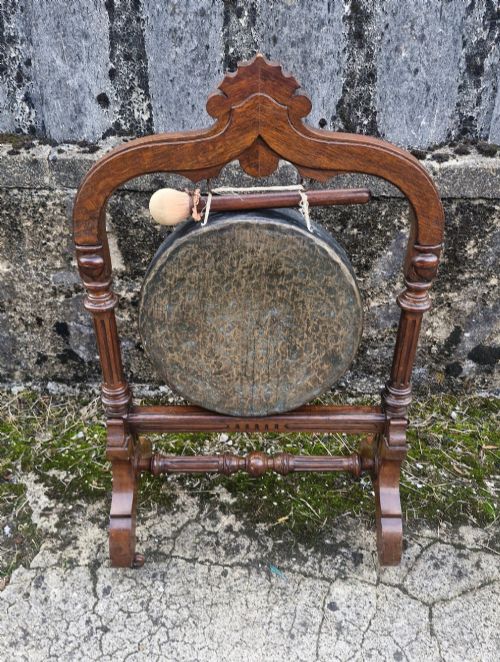
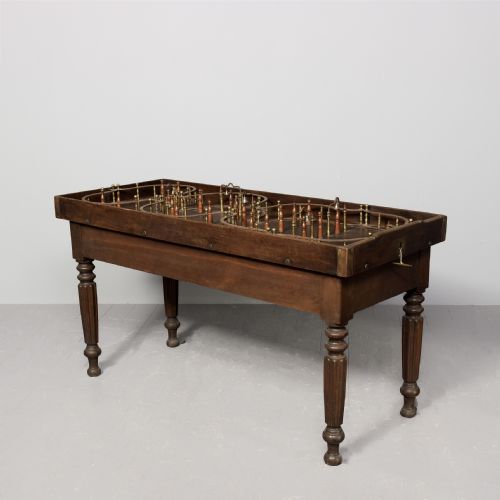
One unexpected survivor is an oak skittles game, proving Victorians enjoyed parlour sport just as much as fine joinery.
Judging Quality
The distinction between ordinary and exceptional work rests on the treatment of the reverse side, as a true free standing table demands equal finish throughout. Secondary woods, drawer linings, and the crispness of carved mouldings reveal the hand of the principal maker.
Proportion and timber selection separate utilitarian pieces from high-status furniture. Grain matching across expanses of mahogany or rosewood indicates deliberate design rather than assembly from spare stock.
Gillows
The Free Standing Table Glossary
- Partners desk
- A large double-sided desk designed for two people to work opposite one another, featuring drawers and cupboards on both faces.
- Sofa table
- A rectangular occasional table intended to stand before a sofa, equipped with drop leaves at either end and small drawers.
- Library table
- A sturdy heavy table designed for the centre of a study or library, often fitted with frieze drawers and finished on all sides.
- Satinwood
- A pale, highly reflective hardwood native to the tropics, frequently used for contrasting stringing or fine veneer panels.
- Ormolu
- Gilt bronze mounts cast and chased by hand to ornament the corners and aprons of high-status furniture.
Free Standing Table: Frequently Asked Questions
Where should I place a free standing table?
These pieces perform best in the centre of a room, behind a sofa, or in an open hallway where all four sides remain visible.
Because the back receives the same finish as the front, position the furniture away from walls to let the proportions breathe.
How do I care for polished mahogany surfaces?
Maintain the timber by dusting with a soft dry cloth and applying natural beeswax sparingly when the polish appears dry.
Avoid placing pieces in direct sunlight or near heat sources to prevent the wood from splitting and the polish from fading.
Can I use a library table as a desk?
Library tables offer generous surface area and often include shallow drawers suitable for modern paperwork and daily writing tasks.
Check the kneehole clearance if you intend to sit closely, as many antique tables sit lower than contemporary desks.
How do I distinguish Regency pieces from Victorian ones?
Regency furniture typically displays restrained classical lines, brass inlay, and dark rosewood surfaces inspired by antique Roman design.
Victorian pieces often introduce heavier proportions, bolder carving, and revival styles ranging from Gothic to Rococo.