




Framed Wooden Landscape Painting
A framed wooden landscape painting brings the open air inside, carrying the lasting touch of 18th-century, Victorian, and mid-century brushwork.
Framed Wooden Landscape Painting
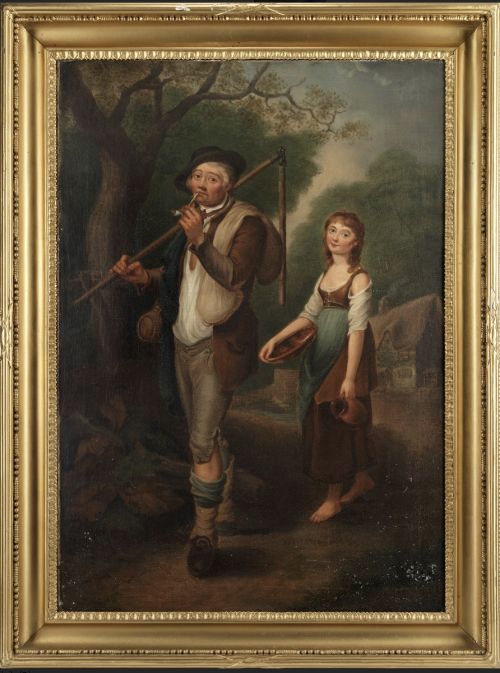
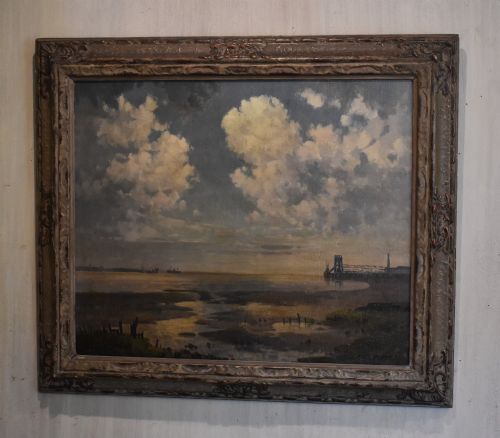
A framed wooden landscape painting captures rural, coastal, and urban views across centuries of artistic tradition. When searching for a framed wooden landscape painting, buyers encounter works executed on canvas, wood panel, board, and paper, set within period wooden frames.
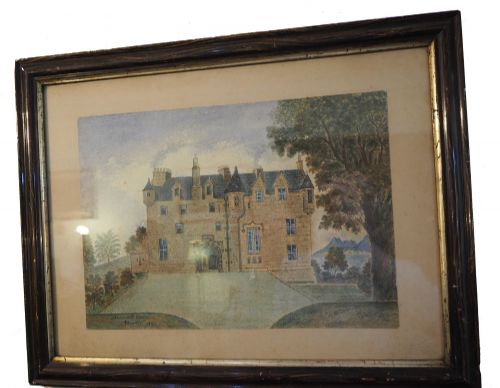
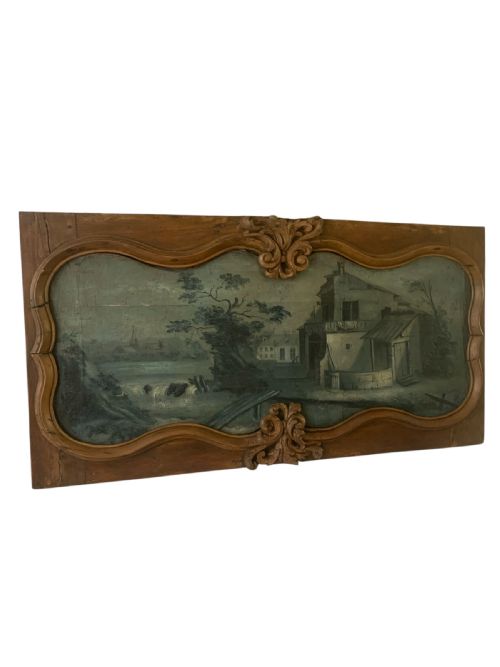
The selections span Georgian and Victorian eras through to Edwardian, British Impressionism, and mid-century modern movements. These pieces range from naive folk art panels and topographical watercolours to assured oils on panel and canvas.
Regional British views sit alongside French, Venetian, and Canadian subjects, reflecting diverse topographical interests. Most examples on this page date from the nineteenth and early twentieth centuries, offering direct connections to historical painting practices.
Materials and Techniques
Artists painted using oil and watercolour mediums applied to canvas, stretched paper, prepared wood panels, and paper laid onto board. Wooden supports include oak panels and thin boards that required careful priming to hold oil paint over generations.
Frames utilise timber mouldings, often gilded or painted, enclosing glass where watercolours or delicate pastels demand physical protection. Canvases are secured to wooden stretchers, sometimes accompanied by later conservation measures such as canvas laid onto board.
Quality and Execution
Quality rests in the handling of light, brushwork confidence, and the harmony between the painted composition and its wooden frame. Superior works demonstrate assured tonal control and atmospheric depth, whether executed in a naive folk style or within established academic traditions.
The integrity of the original support material and the survival of the paint surface dictate the standing of an individual piece. Retaining an authentic period frame matching the era of the artwork enhances the cohesive integrity of the object.
Thomas Barker of Bath·Clive Browne·F.J. Snell·Hubert Wellington·Edward Matthew Elliott·Raymond Picque·William Lee Hankey·Gustave De Bréanski·John Constable·George Weatherill·Berthe des Clayes·A. Winter Shaw·Robert Macaulay Stevenson·Emanuele Cappello·Ernest Higgins Rigg·John Falconar Slater·A. Michaelis·Albert de Belleroche·John B. MacDonald·WD Scull·Kershaw Schofield·Joseph Vickers de Ville
The Framed Wooden Landscape Painting Glossary
- Oil on panel
- A painting executed directly onto a wooden board or panel rather than stretched canvas. This method provides a rigid and durable painting surface.
- Watercolour painting
- Artworks created using water-soluble pigments on paper supports. They rely on the white of the paper to shine through translucent washes.
- Impressionism
- An art movement focusing on accurate depiction of light and ordinary subject matter. Works in this style prioritize loose brushstrokes over tight academic finish.
- Topographical painting
- An artwork depicting a specific real-world location with geographical fidelity. These pieces serve as visual records of towns, rivers, and castles.
- Folk art
- Creative work produced by self-taught artists working outside formal academic traditions. Such pieces emphasise decorative directness over conventional perspective.
Framed Wooden Landscape Painting: Frequently Asked Questions
How do I hang a heavy wooden frame safely?
Heavy wooden frames require sturdy wall fixings screwed directly into masonry or wooden wall studs rather than relying on standard plaster plugs. Ensure the hanging wire or brass D-rings on the back of the frame are securely fastened to the wooden sides.
Distribute the weight evenly across two wall hooks to keep the painting level and reduce stress on the hanging hardware. Check the stability of the frame joints periodically as seasonal humidity changes wood tension.
How do I clean an antique wooden frame?
Dust wooden frames gently using a soft, dry brush or a clean microfiber cloth to lift surface particles without disturbing the finish. Avoid using water, chemical sprays, or liquid polish on gilded or aged wood surfaces, as moisture strips antique patination.
For stubborn grime, consult a professional conservator rather than attempting solvent cleaning at home. Preserving the original surface finish maintains the historic character of the piece.
How can I tell a watercolour from an oil painting?
Watercolours feature transparent washes of pigment on paper, usually displayed beneath protective glass to prevent moisture damage. The paper texture remains visible beneath the paint layers.
Oil paintings utilise thicker, opaque pigments applied to canvas or wood panels, presenting a rich texture with visible brushstrokes. These works rarely require glass cover, allowing the paint binder to show its natural sheen.