


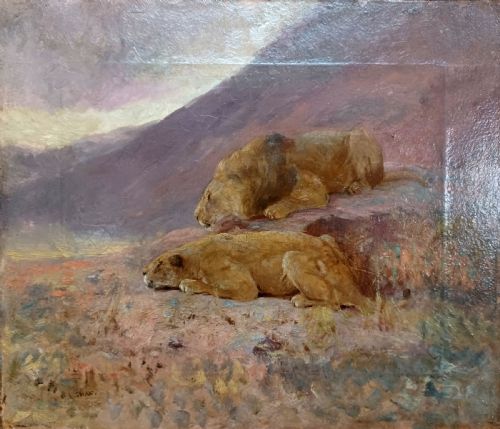


Framed Wildlife Oil Painting
These framed wildlife oil painting works capture natural history and sporting subjects across centuries of brushwork.
Framed Wildlife Oil Painting
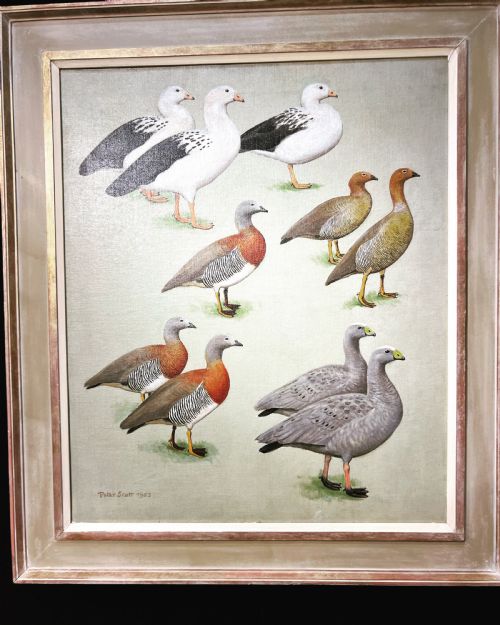
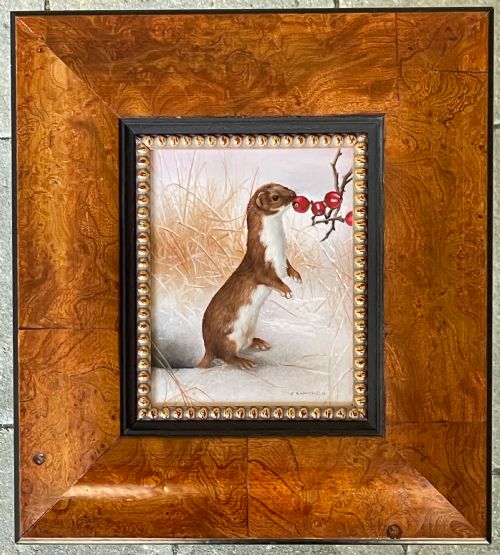
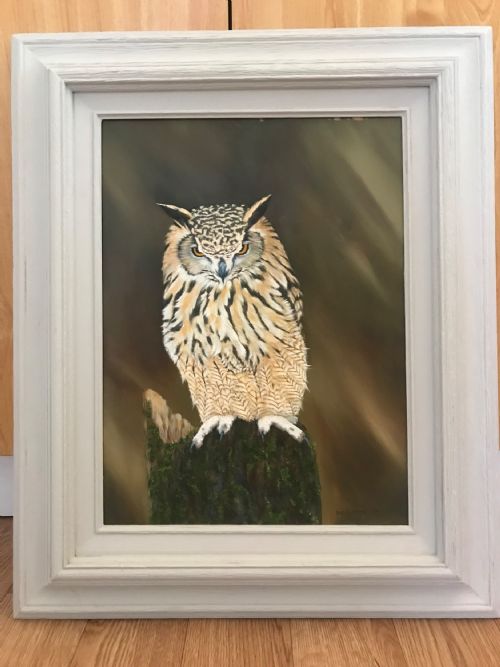
A framed wildlife oil painting brings the natural world indoors, depicting animals, birds, and sporting scenes rendered in pigment. When you search for a framed wildlife oil painting, you encounter subjects ranging from majestic big cats and soaring geese to quiet riverbank studies of ducks and weasels.
The selection on this page spans from the eighteenth century through the nineteenth century and into mid-century modern pieces. You will find both intimate panels of single birds and large canvases showing dramatic encounters between predators and prey in landscapes.
British naturalism and Victorian animalier traditions strongly shape these works, alongside Dutch and Flemish influences visible in earlier compositions. Each piece is set within its frame, preserving the historical context of the artwork for display on a wall.
Materials and Technique
Artists painted primarily with oil paint applied to prepared canvas, wooden board, or panel supports. The malleability of oil allowed painters to build rich textures for feathers, fur, and foliage over extended drying times.
Wood and gilded wood were shaped and joined to create ornate or simple frames, often accented with gold leaf. These frames were designed to complement the tonal depth of the oil paintings while protecting the edges of the canvas or board.
Several paintings include tiny ducklings paddling diligently behind their mother, proving that even fierce predators must share the canvas with softer wildlife moments.
Assessing Quality
Quality rests upon the artist's anatomical precision and ability to render movement, light, and texture convincingly across fur and feather. Superior works demonstrate careful observation of the subject in its natural habitat, rather than stiff or generic representation.
The harmony between the painting and its frame influences the overall integrity of the piece. Period frames that suit the date and scale of the canvas elevate the presentation, whereas mismatched or later replacements alter the historical balance.
Sir Peter Markham Scott·Carl Whitfield·David Orr Kerr·Philipp Ferdinand de Hamilton·Marmaduke Cradock·Cuthbert Edmund Swan·Thomas Blinks·Constant Ludovic Artz·Geza Vastagh·Godfrey Douglas Giles·William Crampton·James Malcolm Stewart·Stephen Elmer
The Framed Wildlife Oil Painting Glossary
- Animalier
- A nineteenth-century artistic focus on the realistic portrayal of animals, both wild and domestic. This genre often captures beasts in dynamic motion or tense repose.
- Canvas
- A heavy woven fabric stretched across a wooden stretcher frame to serve as a sturdy painting surface. It provides the foundational texture for many historic oil paintings.
- Oil paint
- A slow-drying paint made by mixing pigments with a drying oil, typically linseed oil. This medium permits subtle blending of tones and rich, luminous finishes.
- Gilded wood
- Wood surfaces coated with a thin layer of gold leaf or metal powder. This technique gave frames a luminous metallic sheen that caught candlelight or daylight in historic interiors.
- Panel
- A flat piece of wood used as a rigid support for painting instead of fabric. Panels were favoured by many early artists for their smooth, stable surfaces.
Framed Wildlife Oil Painting: Frequently Asked Questions
What periods do these paintings come from?
The available works span several centuries, with examples originating from the eighteenth, nineteenth, and twentieth centuries. You will find pieces reflecting eighteenth-century European styles alongside Victorian animalier studies and mid-century modern interpretations.
This chronological spread allows collectors to choose between dramatic old master compositions and more naturalistic sporting art from later decades.
Are all these paintings mounted in frames?
Every piece listed under this category comes enclosed in a frame, which is often made of wood or gilded wood. These enclosures range from simple wooden mouldings to ornate antique frames that complement the era of the artwork.
The frame serves both a decorative purpose and a protective function for the canvas or board within.
What kind of wildlife appears in the artwork?
The subjects cover a diverse range of fauna, including British game birds, waterfowl, ducks with ducklings, and red squirrels. Larger predators such as lions, leopards, bears, and wolves also feature prominently in dramatic combat or stalking scenes.
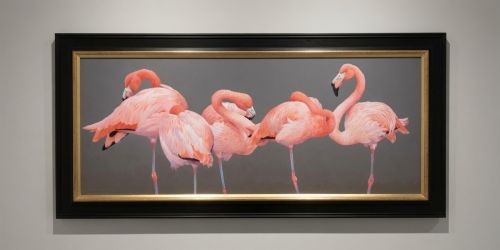
Exotic birds and wild boar further expand the variety of animals captured by the artists.
How do I care for an oil painting?
Display your framed wildlife oil painting away from direct sunlight and fluctuating humidity to protect the canvas and wood. Gentle dusting with a soft, dry cloth is usually sufficient for maintenance.
Avoid using water or chemical cleaners on the paint surface or the gilded wood frame.