





Framed Victorian Tapestry Picture
These framed victorian tapestry picture examples bring domestic needlecraft into nineteenth-century interiors through wool and silk compositions.
Framed Victorian Tapestry Picture
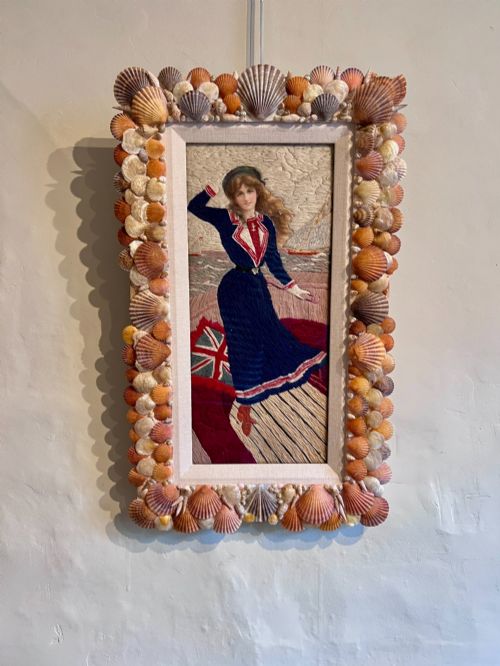
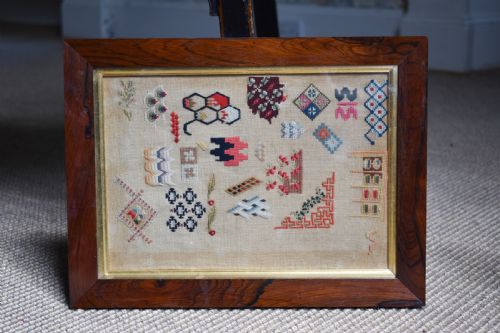
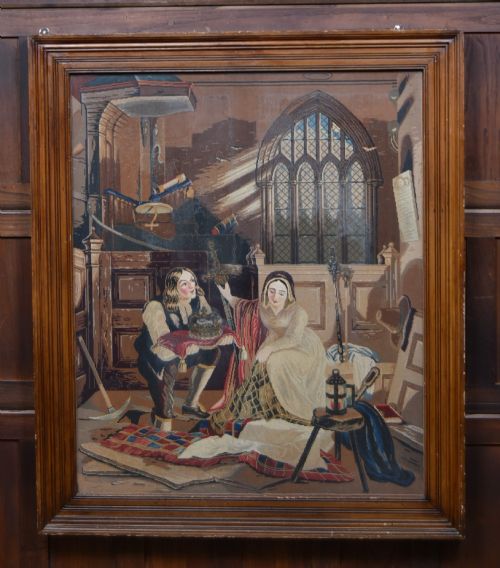
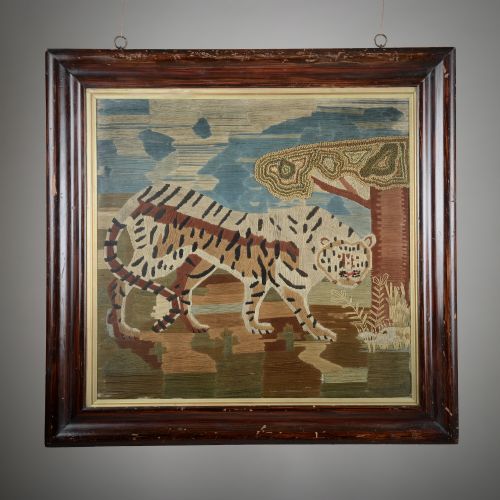
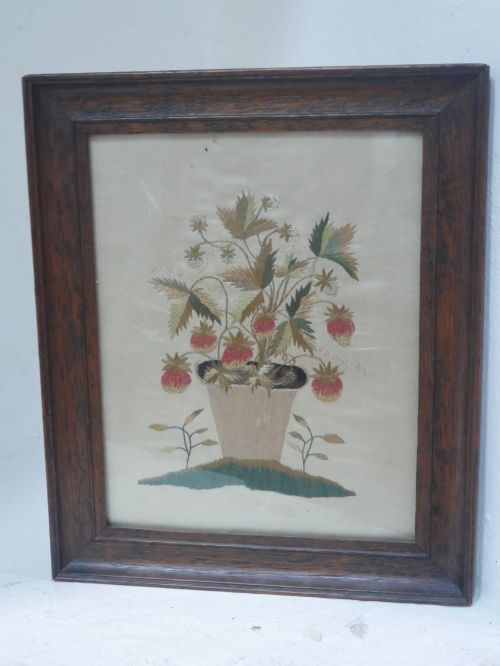
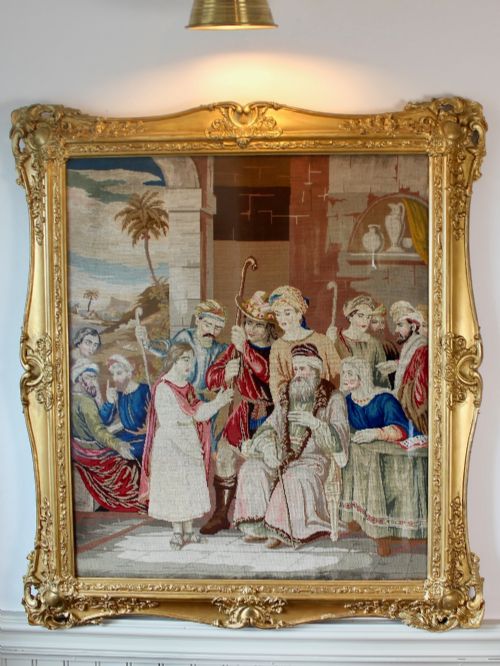
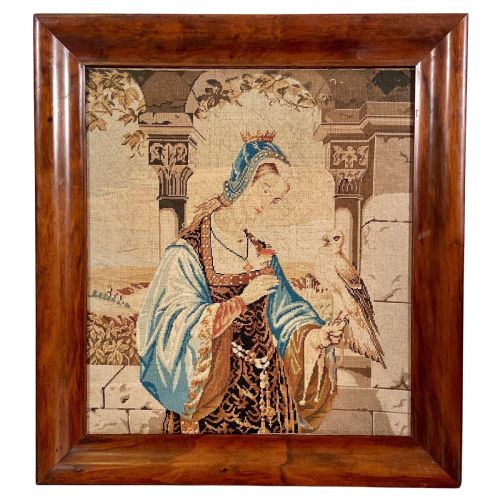
A framed victorian tapestry picture represents a textile artwork produced during the nineteenth century, most commonly seen as woolwork, Berlin work, gross point, or silk embroidery mounted behind glass for wall display. These pieces capture subjects ranging from animals and portraits to historical scenes and botanical studies.
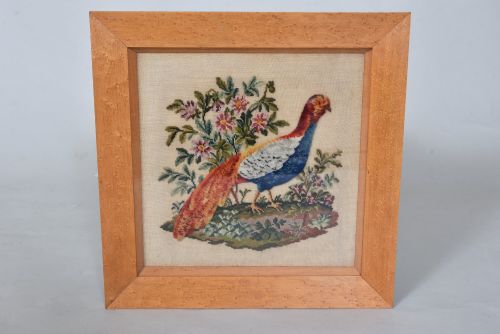
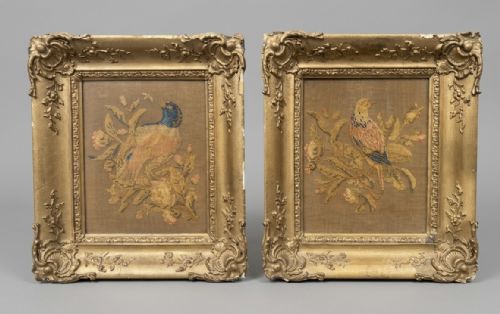
The objects stem from various domestic and continental workshops, incorporating styles such as Victorian Rococo Revival, Gothic Revival, and Victorian Folk Art. Buyers frequently encounter representations of dogs, birds, human figures, and commemorative scenes housed in period surrounds.
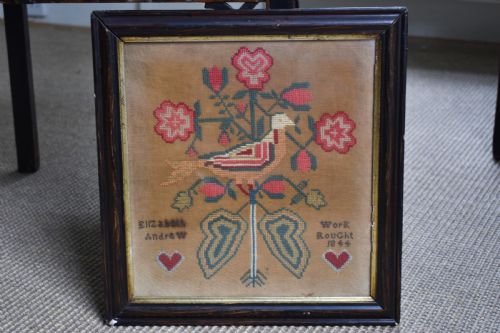
Makers ranged from young girls completing educational samplers to skilled artisans producing large Berlin wool work wall hangings and carpet mosaic pictures. The visual output reflects the diverse needlework traditions active across Britain and continental Europe during the period.
Materials and construction methods
Makers utilised wool, silk, linen, and canvas as the primary foundation and thread materials for stitching these textile pictures. Gros-point and petit-point techniques allowed artisans to achieve varied levels of detail in depictions of animals, figures, and floral arrangements.
Compositions required mounting onto supportive canvas or linen backings before being secured inside timber surrounds. Wood types such as rosewood, oak, burr maple, and giltwood formed the protective frames, frequently paired with glass to shield the textiles from environmental wear.
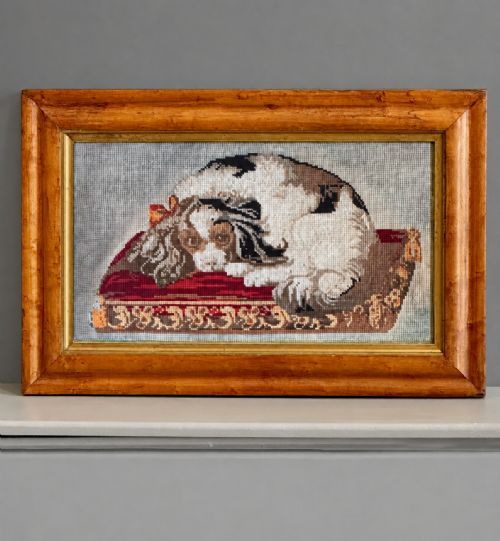
A King Charles spaniel immortalised in wool gazes out from beneath a burr maple frame.
Assessing quality in needlework pictures
Quality rests in the precision of the stitching and the complexity of the design, where fine gros-point and petit-point needlework demonstrates greater technical skill than simpler executions. The intricacy of shading in wool or silk threads dictates the visual depth of subjects like animals and portraits.
The preservation of the original frame contributes substantially to the integrity of the piece, particularly where burr maple, rosewood, or elaborately moulded giltwood surrounds remain intact. Colour retention in the wool and silk fibres also separates standard domestic samplers from masterwork tapestry panels.
The Framed Victorian Tapestry Picture Glossary
- Berlin work
- A type of needlepoint embroidery worked in wool on canvas using charted patterns introduced from Germany during the nineteenth century. This technique enabled stitchers to create colourful pictorial scenes.
- Gros-point
- A coarse needlepoint stitch executed on canvas that provides a durable texture for large woolwork pictures. It often appears alongside finer stitches to create contrast within a single composition.
- Petit-point
- A fine, highly detailed needlepoint stitch worked on single-thread canvas using wool or silk threads. It allows for precise facial expressions and intricate background details in portrait panels.
- Plushwork
- An embroidered textile technique utilising looped stitches that are cut to create a velvety, three-dimensional pile. This method frequently appears in depictions of animals such as pheasants.
- Sampler
- A piece of needlework produced to demonstrate proficiency in various stitches and alphabets, often including dates and the maker's age. These items serve as educational records of nineteenth-century domestic needlecraft.
Framed Victorian Tapestry Picture: Frequently Asked Questions
How do I hang a framed victorian tapestry picture?
These textile artworks require placement away from direct sunlight to prevent the wool and silk threads from fading over time. Stable indoor humidity levels protect both the fabric composition and the original wooden frame.
Secure picture wire attached firmly to the wooden surround distributes the weight evenly across wall fixings. Using appropriate wall anchors ensures the framed piece remains balanced and safe.
What subjects appear in these antique tapestries?
The compositions cover a broad spectrum of visual themes, including domestic animals, historical figures, religious scenes, and horse racing tracks. Makers also produced commemorative military pieces and traditional samplers.
Floral studies, hunting scenes, and portraits of courtly figures reflect the varied tastes of nineteenth-century households. Each subject utilises specific stitching techniques to highlight textures and forms.
How are these pieces dated?
Dating relies on stylistic indicators, framing materials, and occasional inscribed dates or maker details stitched directly into the canvas. Samplers frequently record the exact year and the age of the maker.
Frame construction, such as the use of rosewood, burr maple, or specific giltwood moulding styles, offers further chronological context. Comparisons with dated archival examples help confirm the period of origin.