

Framed Victorian Needlepoint
These framed victorian needlepoint pieces bring historical textile art into modern interiors through detailed wool and silk stitchwork.
Framed Victorian Needlepoint
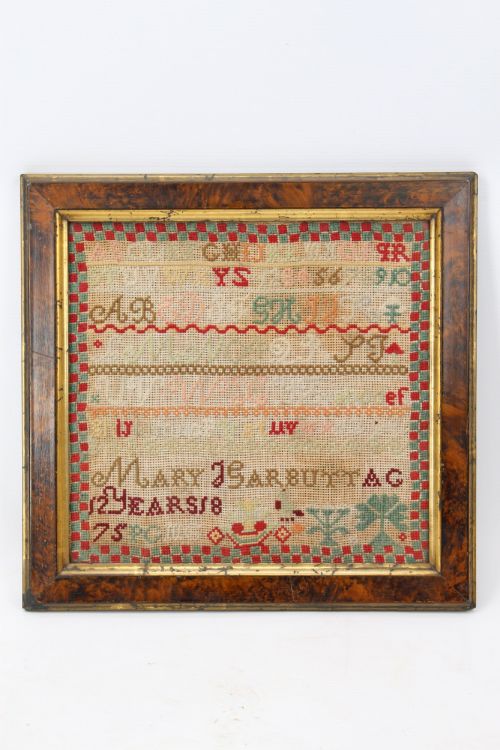
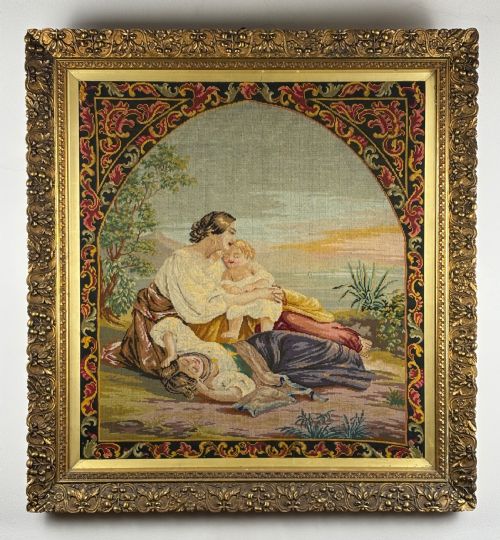
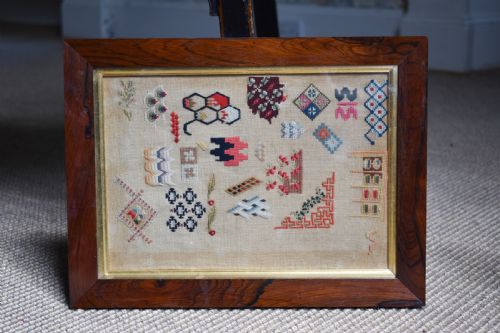
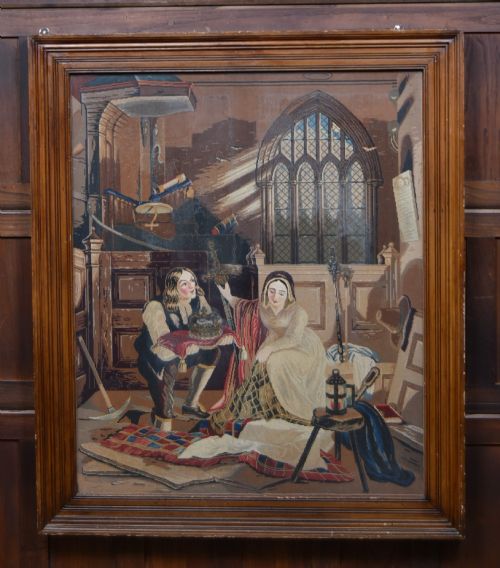
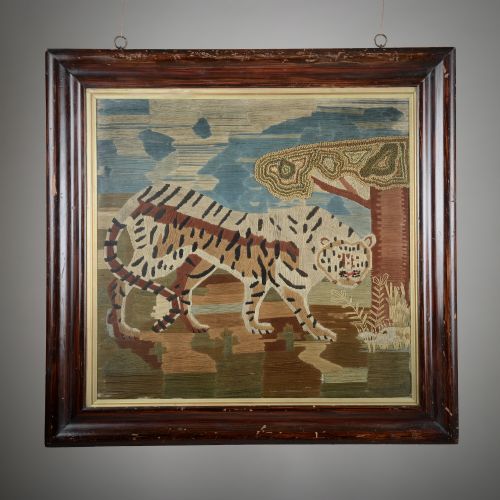
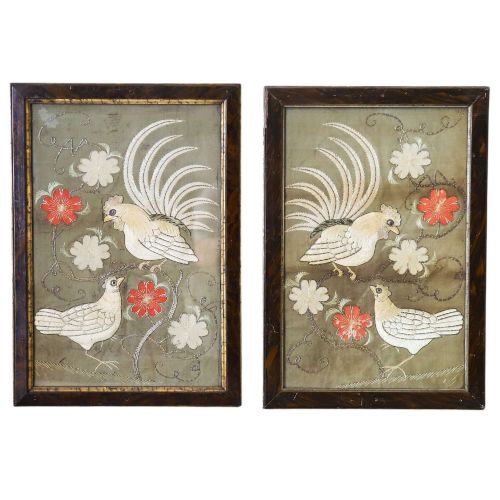
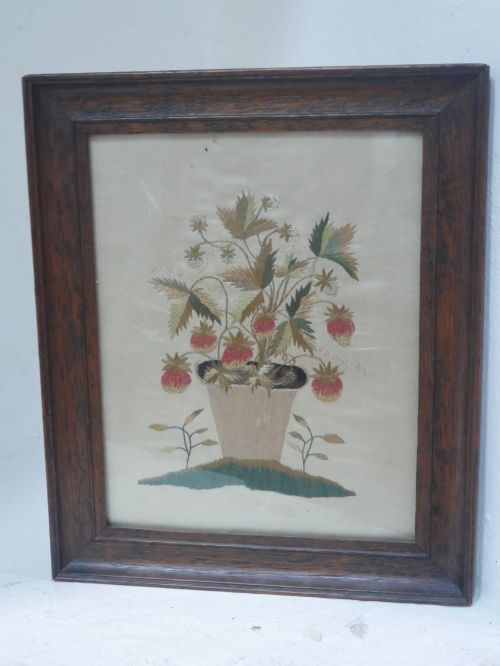
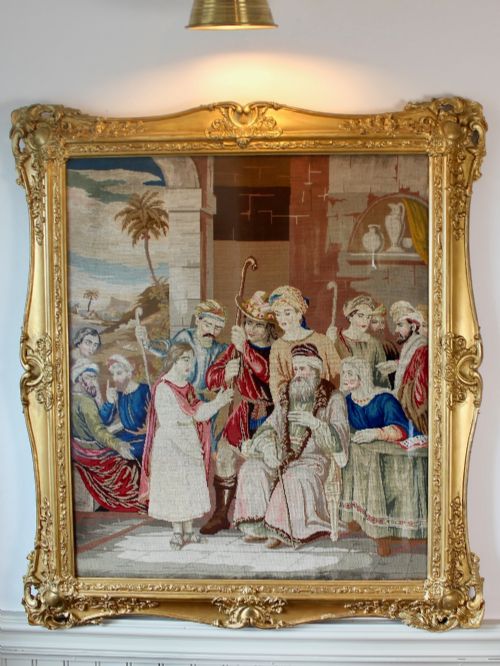
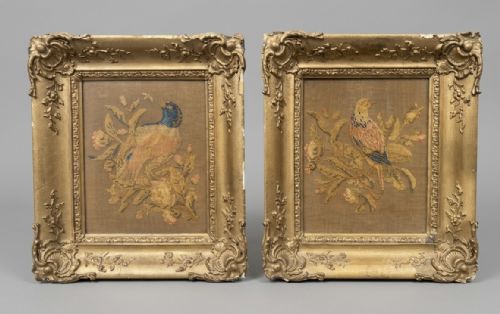
When you search for framed victorian needlepoint, you encounter textiles created across the nineteenth century, most frequently appearing as wall art, framed panels, and samplers. These pieces span portraits, animals, historic scenes, and traditional lettering worked by hand.
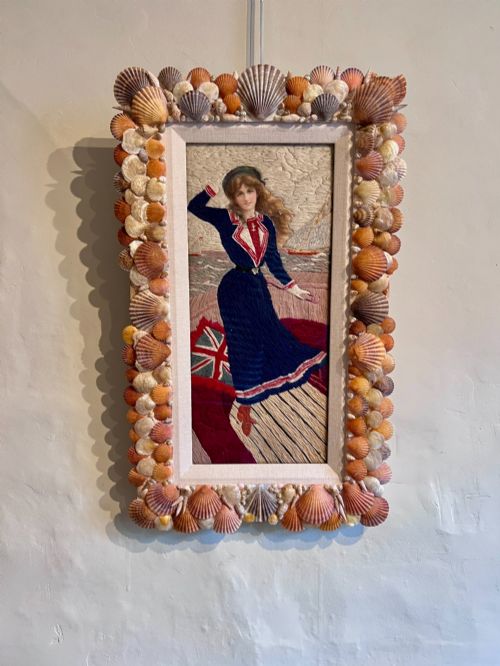
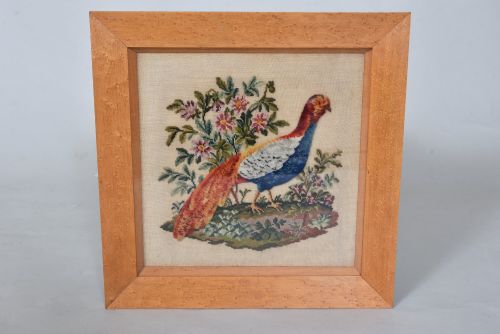
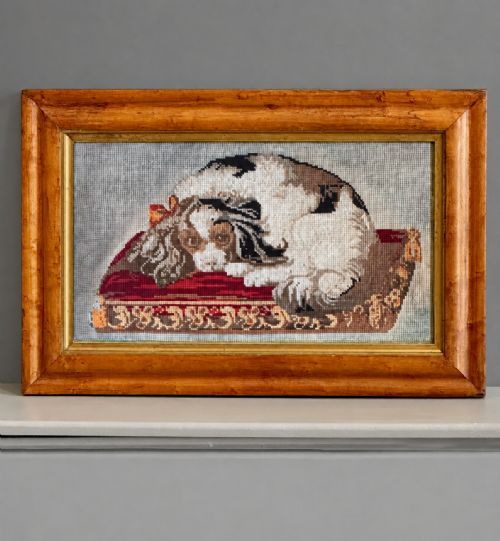
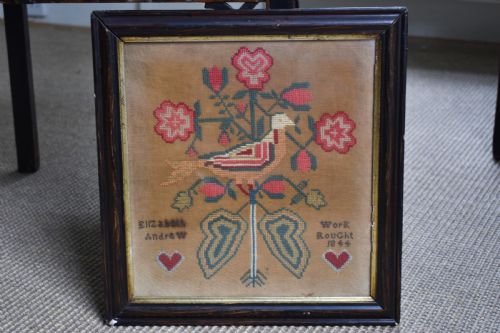
The selection includes subjects ranging from sailors and royalty to botanical studies and classical figures. Many examples incorporate specific dates or makers' ages, grounding the textile in a precise nineteenth-century moment.
Materials and construction
Maker execution relies on wool, silk, and cotton threads worked onto canvas, linen, or open-weave foundations. Stitches such as gros-point and petit-point build up dense pictorial surfaces.
Framing materials complete the works, utilising burr maple, walnut, mahogany, and giltwood alongside protective glass panes. Structural support often includes stretchers or direct backing to keep the textile flat.
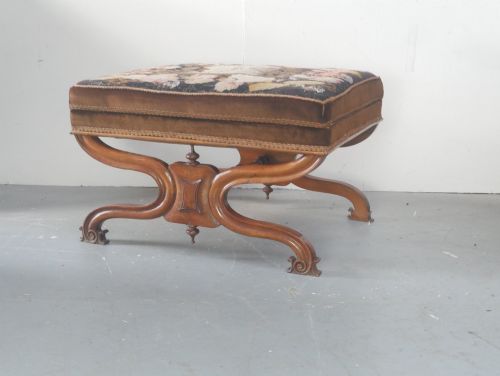
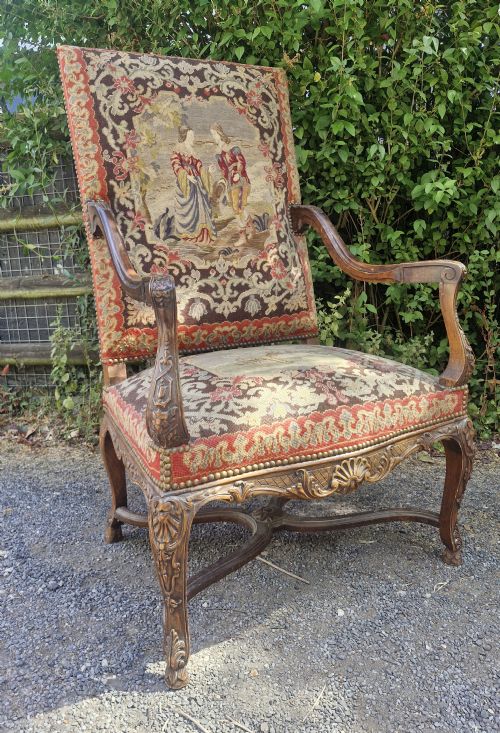
Object forms span wall art, samplers, nursing chairs, open armchairs, and evening purses.
Distinctions in quality
Quality rests on the precision of the stitch work and the complexity of the design. Finer threads and intricate shading distinguish ambitious pictorial panels from simpler samplers.
The survival of original framing, whether burr maple or giltwood, enhances the integrity of the piece. Clean surfaces and stable tension across the canvas indicate careful historical preservation.
The Framed Victorian Needlepoint Glossary
- Berlin work
- A type of needlepoint embroidered in coloured wools using charted gridded patterns. It gained immense popularity across the nineteenth century for domestic decorative projects.
- Sampler
- A demonstration piece showing various stitches, alphabets, and motifs. Young makers often completed these to prove their needlework proficiency.
- Petit-point
- A fine needlepoint stitch worked over a single thread of the canvas mesh. It permits high detail and smooth tonal gradations in faces and complex backgrounds.
- Gros-point
- A coarse needlepoint stitch worked over a larger canvas mesh. It provides durable texture well suited for heavy wall panels and upholstery.
- Plushwork
- A variant technique utilising raised, cut-loop stitches to create a velvety pile. This method gives distinct texture to animal coats and foliage.
Framed Victorian Needlepoint: Frequently Asked Questions
How should I hang framed needlework?
Keep framed textiles away from direct sunlight to prevent fading of the wool and silk threads. Stable indoor humidity protects both the antique frames and the natural fibres.
Ensure the hanging wire and wall fixings adequately support the weight of the timber and glass frames.
What is a woolie?
A woolie is a specific type of sailor-made embroidery depicting naval ships and maritime scenes. Sailors at sea created these works using surplus coloured yarns.
They offer a direct folk art record of nineteenth-century naval life.
Are these pieces original to their frames?
Many retain their period frames, such as burr maple, walnut, or moulded giltwood. Examining the fit at the back reveals whether the frame matches the age of the textile.
Original glass and backing papers offer further clues to the history of the piece.
How do I date a sampler?
Samplers frequently include stitched dates, names, and the age of the maker. Comparing the typography and border styles helps narrow down the decade when exact dates are absent.
Stylistic shifts across the century move from strict lettering towards pictorial storytelling.