




Vintage Textile Artwork
Vintage textile artwork brings together centuries of hand-stitched silk, wool, and painted fabric to anchor a room with texture and history.
Vintage Textile Artwork
When you search for vintage textile artwork, you encounter a diverse gathering of needlework pictures, embroidered panels, tapestry cushions, and framed wall hangings spanning from the seventeenth century through to the mid-twentieth century.
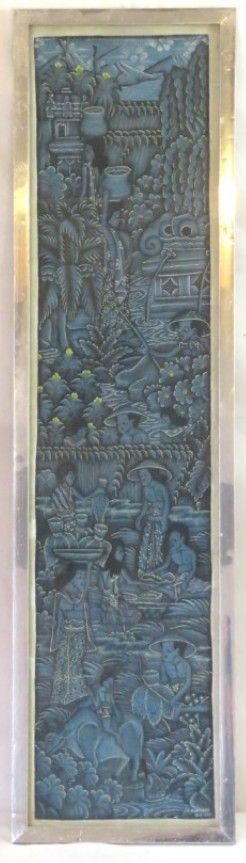
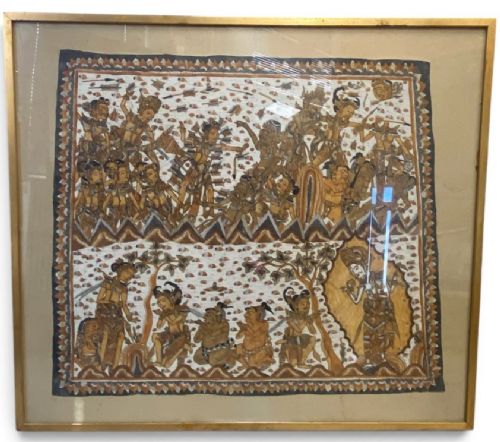
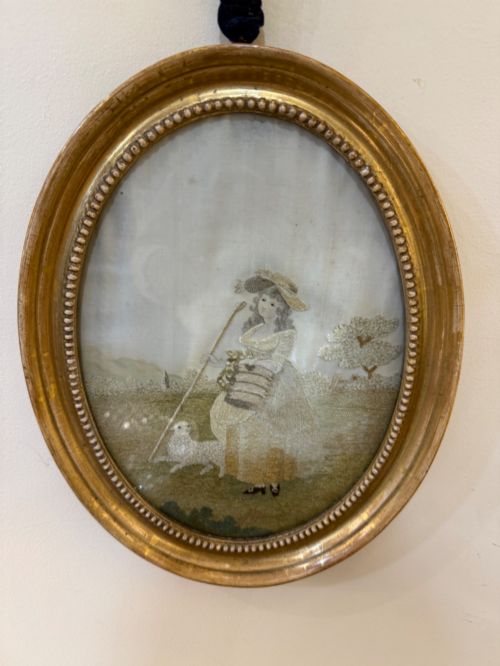
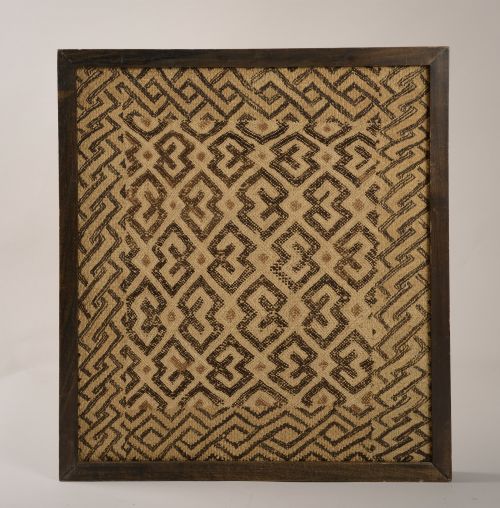
The selections on this page range from Georgian Berlin silk and Victorian alphabet samplers to Balinese Kamasan paintings on textile, Chinese garden bird embroideries, and Kuba cloth.
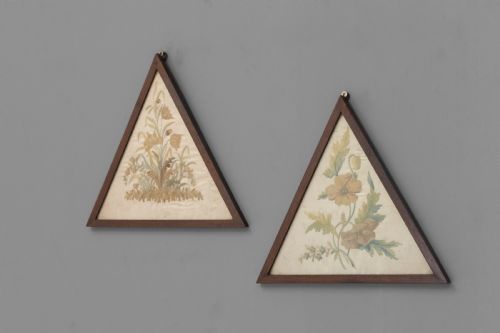
You are most likely to meet framed wall art and needlework pictures executed in wool, silk, and cotton, often preserved behind glass within wooden or giltwood frames.
Materials and construction
Pieces in this category rely primarily on natural fibres such as silk, wool, cotton, linen, canvas, and raffia, worked by hand into panels, samplers, and tapestries.
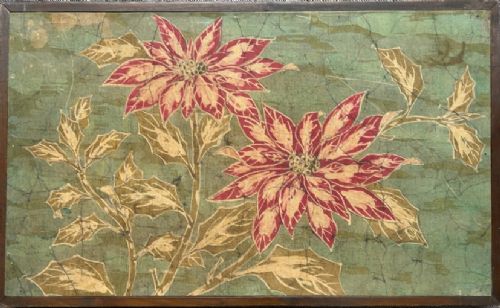
Techniques span detailed needlework, crewel work, beadwork, and hand embroidery, alongside painted fabrics from Bali, India, and other global traditions.
Many works are mounted within protective wood and giltwood frames, sometimes accompanied by glass to safeguard delicate threads and pigments.
Materials span silk, wool, cotton, linen, canvas, glass, wood, and giltwood across periods from the seventeenth to the mid-twentieth century.
Assessing quality and execution
Quality rests upon the precision of the stitching, the intricacy of the pictorial composition, and the handling of materials like fine silk and wool.
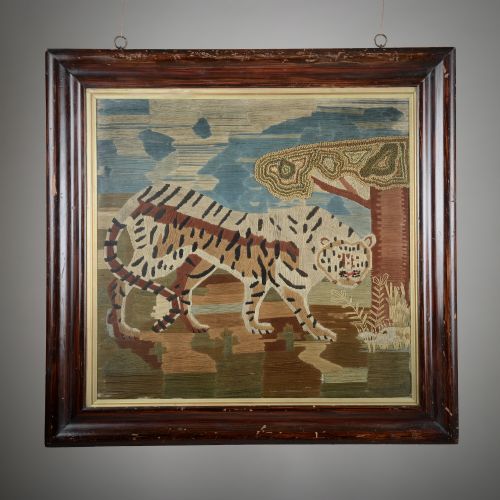
Pieces executed with complex narrative detail, such as multi-register warrior scenes or finely rendered fauna, demonstrate a higher degree of artisan skill.
The integrity of the fabric base and the preservation of original colours across centuries separate standard decorative items from exceptional works.
Beatrice Saunders·Bela Balogh·J Constable
The Vintage Textile Artwork Glossary
- Sampler
- A piece of needlework produced as a demonstration or test of skill in various stitches, often featuring alphabets and dates.
- Kuba cloth
- A textile originating from central Africa, woven from raffia palm fibre and traditionally decorated with geometric patterns.
- Kalamkari
- A type of hand-painted or block-printed cotton textile produced in India and often depicting mythological scenes.
- Giltwood
- Wood that has been treated with a thin layer of gold leaf or gilt paint, commonly found on decorative picture frames.
- Tapestry
- A form of textile art traditionally woven on a vertical loom, though the term also describes needlework pictures mimicking woven designs.
Vintage Textile Artwork: Frequently Asked Questions
How do I hang a textile artwork?
Most framed textile pieces utilise standard picture wire fixed to wooden frames, allowing them to hang securely on a wall.
Keep them away from direct sunlight to protect delicate silk and wool threads from fading over time.
Are these pieces displayed behind glass?
Many framed needlework pictures and embroidered panels feature protective glass to shield fragile fibres from dust and atmospheric moisture.
Unframed textiles or certain painted cloths may be mounted directly onto canvas or backing boards without glass.
How are different periods identified?
Periods are determined through a combination of stitching styles, material types, framing methods, and thematic content.
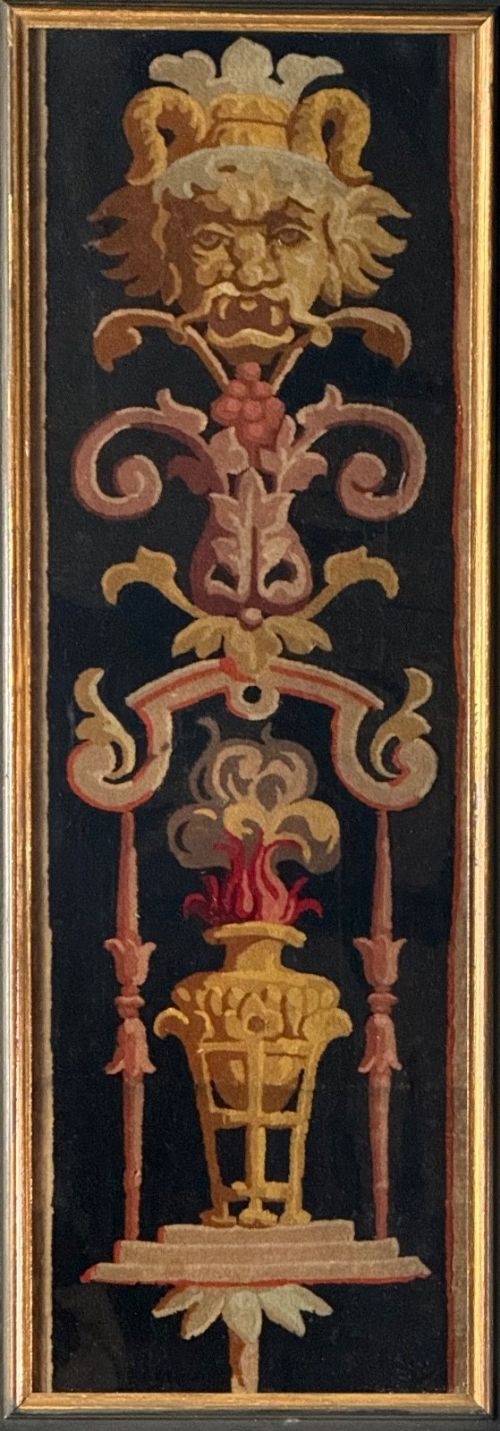
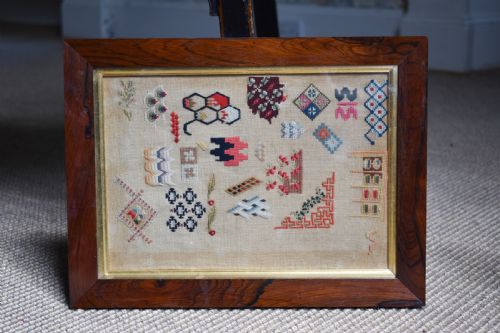
Victorian samplers often display alphabet lettering, whereas seventeenth-century panels frequently feature classical grotesques and embroidered masks.
What is the difference between embroidery and tapestry?
Embroidery involves stitching decorative designs onto an existing woven fabric base using needles and thread.
Tapestry traditionally refers to a woven textile where the design is built into the fabric structure during the weaving process itself.