




Framed Victorian Marine Art
Framed Victorian marine art brings coastal life and sailing ships of the nineteenth century into interior spaces through period paintings and dioramas.
Framed Victorian Marine Art
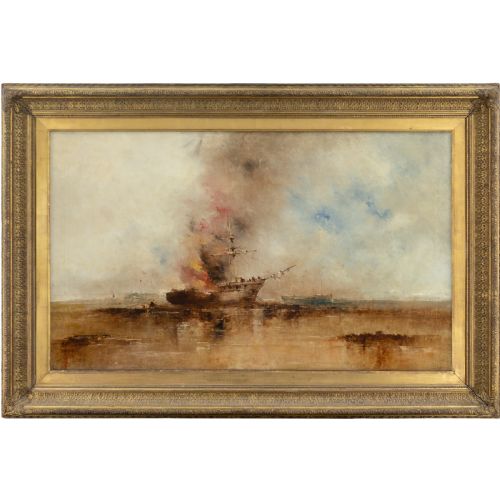
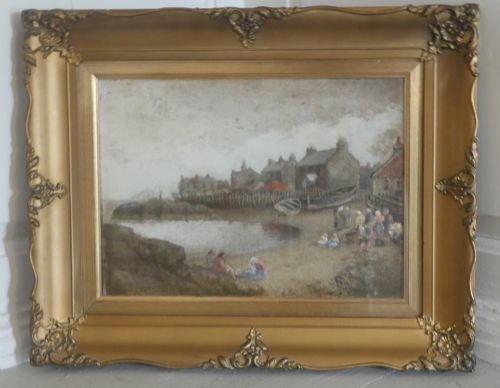
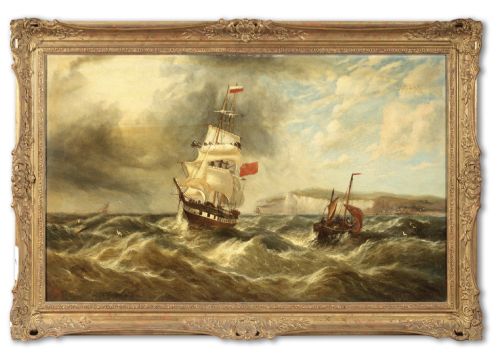
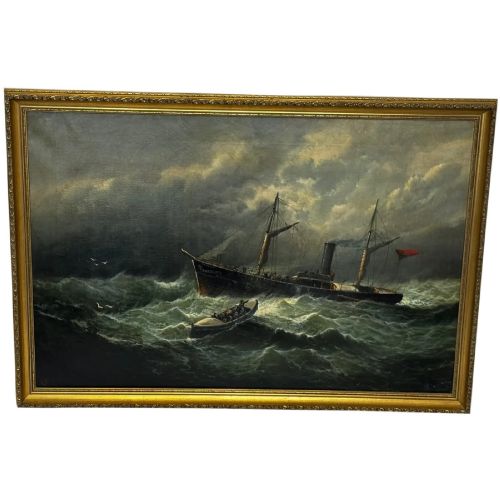
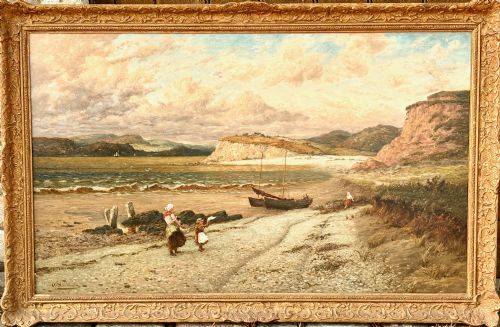
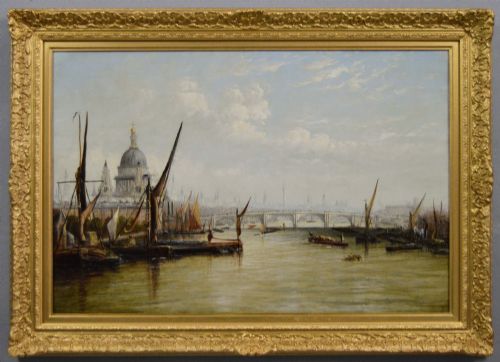
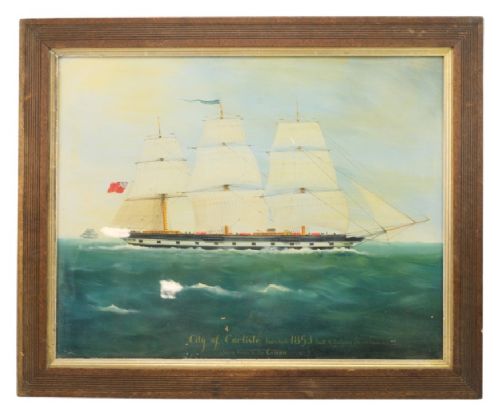
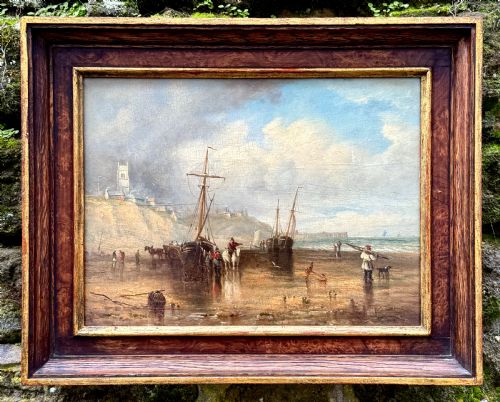
Framed Victorian marine art encompasses historical oil paintings, delicate watercolours, and dimensional dioramas documenting coastal scenes and maritime voyages. These works capture sailing vessels, bustling harbours, and turbulent seas produced across the nineteenth century.
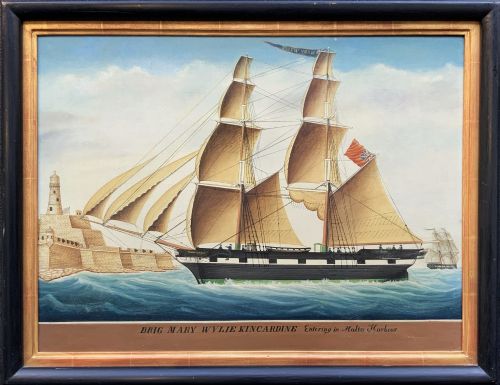
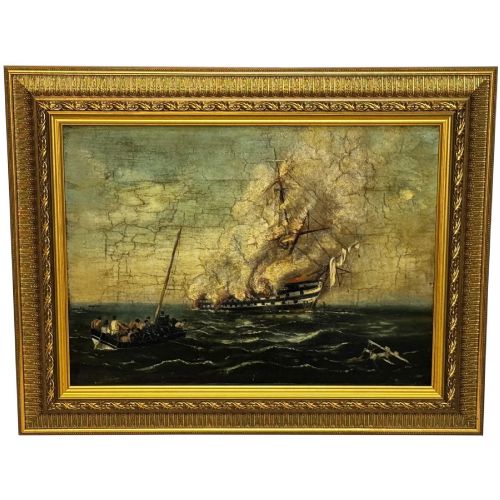
The most common examples on this page are oil paintings on canvas or board and works on paper showing British and international shipping. Subjects range from named clipper ships and merchant vessels to quiet fishing ports and dramatic coastal rescues.
Materials and Techniques
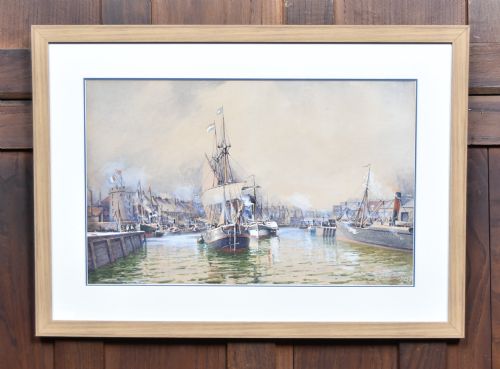
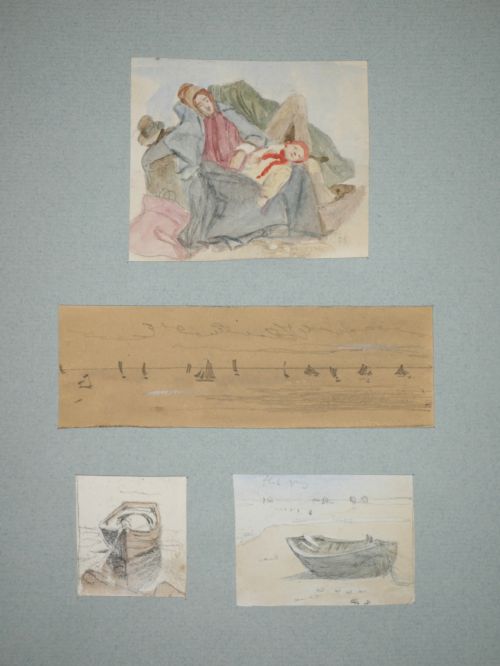
Artists utilised oil paint on stretched canvas or wooden board to build layered textures of water, sky, and vessel rigging. Watercolours on paper offer lighter, transparent depictions of coastal light and harbour activity.
Framing typically involves wood and gilt wood surrounds that complement the maritime subject matter. Maritime dioramas combine painted backgrounds with carved and rigged model ships encased behind glass.
Sailors built tiny wooden ships inside glass cases just to prove their hands were still steady after a storm.
Quality and Execution
Quality rests upon the artist's ability to render nautical architecture and atmospheric conditions with precision. Skilled handling of light on water and accurate depiction of ship rigging distinguish finer works from standard decorative pieces.
The condition of the canvas, the clarity of paper works, and the preservation of original gilt frames influence the overall standard. Works attributed to known painters or bearing signature documentation carry stronger historical interest.
James Orrock·James Smetham·William McAlpine·Edward Mills·William Banks Fortescue·John Rose Miles·William Broome·Francis Moltino·Bernard Benedict Hemy·Thomas Creswick·TB Hardy·John Wilson Carmichael·Lai Fong·Joseph Farquharson·John Moore of Ipswich·Nicholas Condy·Richard B Spencer·William Henry Williamson·John Holland·George Stanfield Walters·Abraham Hulk I·John Moxon·Alfred George Morgan
The Framed Victorian Marine Art Glossary
- Seascape
- A work of art depicting the sea, coastal views, or marine subjects. These pieces focus primarily on water and maritime activity rather than landforms.
- Diorama
- A three-dimensional display case featuring a model ship set against a painted maritime backdrop. These objects often incorporate carved wooden hulls and detailed rigging behind glass.
- Barque
- A sailing vessel with three or more masts having square sails on the foremast and mainmast and fore-and-aft sails on the mizzenmast. This rig appeared frequently in nineteenth-century commercial shipping.
- Gilt Wood
- Wood treated with a thin layer of gold leaf or metallic gilding. Frames finished in this manner were standard for displaying important nineteenth-century paintings.
- Watercolour
- A painting method where fine pigment is suspended in a water-soluble binder on paper. Artists utilised this technique for rapid coastal sketches and finished harbour views.
Framed Victorian Marine Art: Frequently Asked Questions
What subjects appear in these marine artworks?
The works depict merchant ships, clipper vessels, naval operations, and fishing boats navigating coastal waters and open seas. Harbour scenes and coastal towns also feature prominently across the collection.
Many pieces record specific vessels and historical maritime events, providing a visual record of nineteenth-century shipping and trade.
How do oil paintings differ from watercolours here?
Oil paintings utilise heavy pigments on canvas or board to capture dramatic light, rough seas, and detailed ship rigging. Watercolours rely on paper supports to deliver lighter, more transparent interpretations of coastal atmospheres.
Both mediums served Victorian artists documenting maritime life, though oils were typically chosen for larger, more formal exhibition pieces.
What is a maritime diorama?
A maritime diorama is a shadow box or framed case enclosing a miniature model ship. The vessel is positioned in front of a painted background depicting the sea and sky.
These three-dimensional pieces were often constructed by sailors or specialist craftsmen to recreate specific ships in full sail.
How should these framed pieces be displayed?
Framed marine art requires placement away from direct sunlight and damp environments to protect nineteenth-century canvas, paper, and gilt wood. Proper wall mounting ensures the weight of larger oil paintings and glass-fronted dioramas is safely supported.
Pairing these works with traditional interior spaces highlights their historical character and period craftsmanship.