




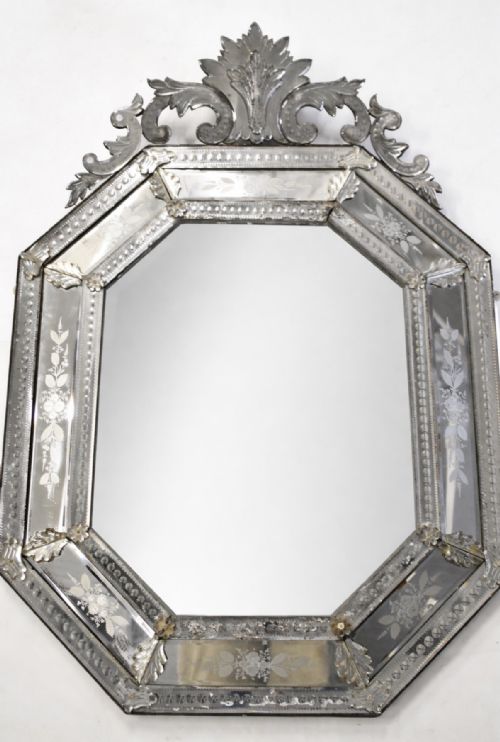


Framed Venetian Glass Mirror
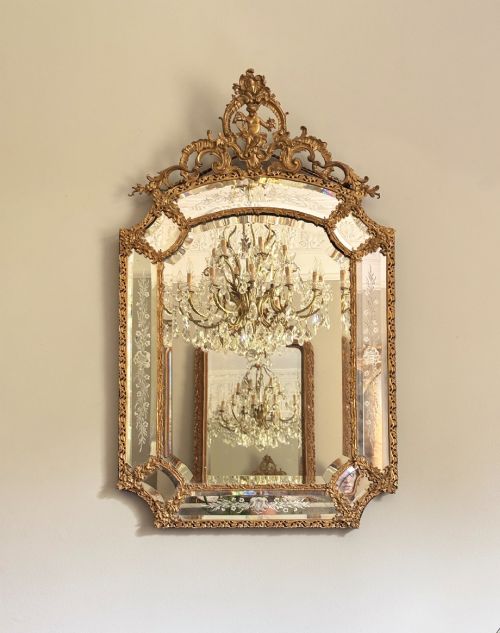
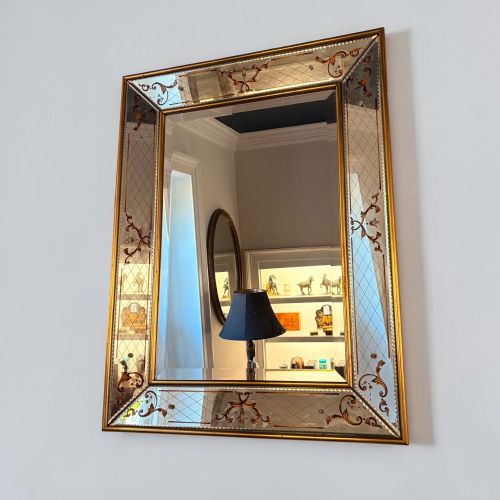
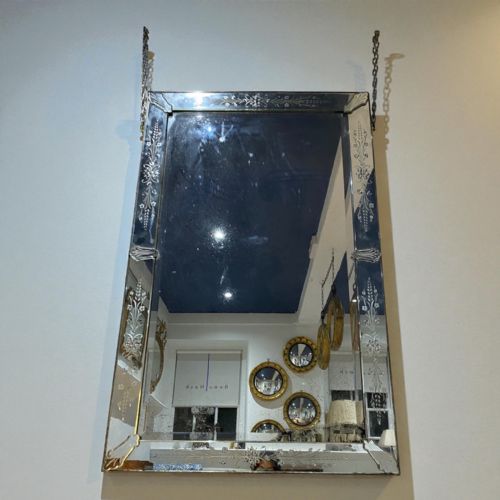
A framed venetian glass mirror brings extraordinary Italian craftsmanship and luminous reflection into a room through elaborate engraved plates and vibrant coloured borders.
Framed Venetian Glass Mirror
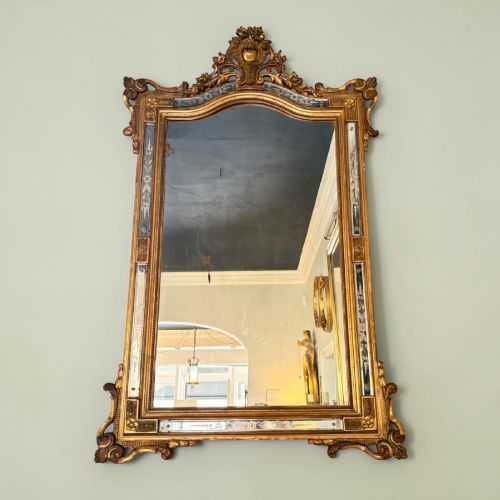
When looking for a framed venetian glass mirror, you encounter wall mirrors and overmantle mirrors spanning from the eighteenth century through the art deco era, with nineteenth century examples appearing most frequently.
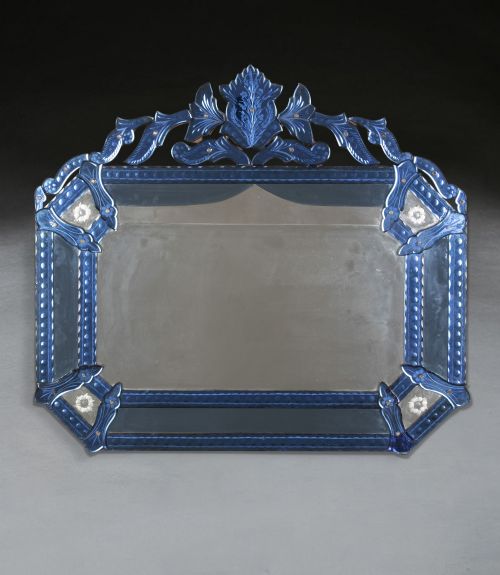
These pieces showcase distinct regional styles including Venetian, rococo revival, and italian neo-classical designs, often incorporating cushion frames, margin-edged plates, and decorative pediments.
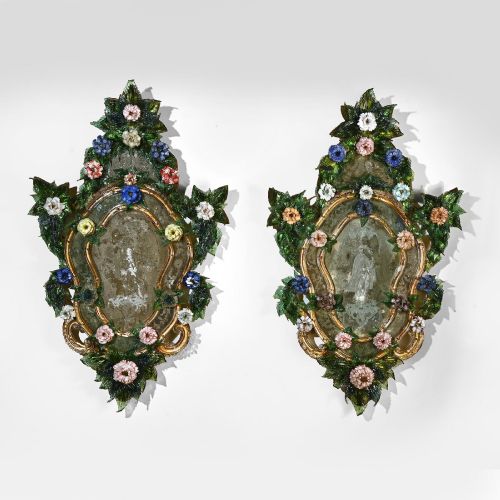
The selection ranges from pairs of murano glass mirrors and large engraved cushion mirrors to cobalt blue and ruby red bordered specimens, alongside hand-painted pier glass variations.
Materials and construction
Makers constructed these mirrors using combinations of glass, mirrored glass, and silvered glass set within carved wooden frames, giltwood, gilt wood, metal, or velvet-covered supports.
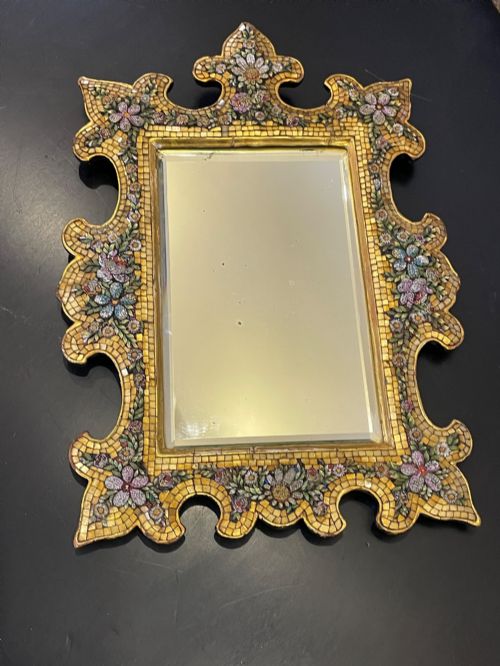
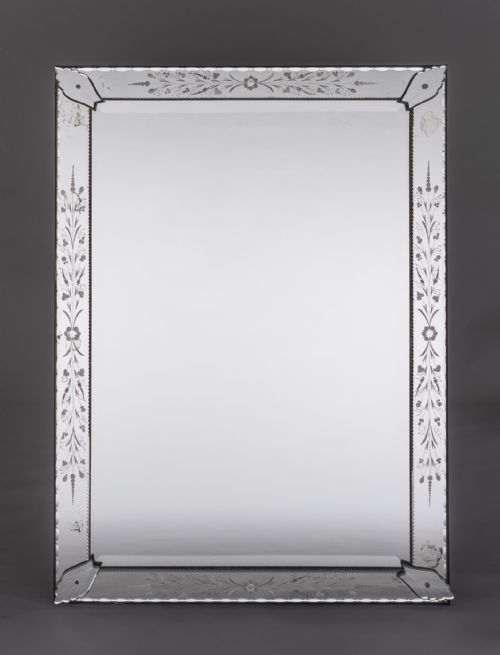
Artisans applied delicate cut and etched details directly onto the glass plates, incorporating hand-painted floral motifs and micro mosaic work to enrich the decorative borders.
Framed Venetian Glass Mirror Retail Price Guide 2026
Typical asking prices for framed venetian glass mirror among the pieces listed under this phrase on Sellingantiques today, from the lower quarter to the upper quarter. They describe what is for sale here now, not the wider market.
Listings feature items from the eighteenth, nineteenth, and early twentieth centuries, utilising materials like silvered glass, giltwood, and velvet.
Assessing quality and craftsmanship
Superior examples display crisp, deeply hand-cut engravings and intricate etching across the glass plate, contrasting with simpler or shallower surface scratching found on standard pieces.
The refinement of the supporting wooden armature, the richness of the gilding or ebonising, and the complexity of coloured glass margin plates separate standard decorative objects from exceptional works of art.
The Framed Venetian Glass Mirror Glossary
- Cushion mirror
- A mirror featuring a convex or sloping outer frame constructed from sections of glass that angle back towards the central plate. This design maximises light reflection from multiple angles.
- Margin plate
- Smaller peripheral sections of glass surrounding the main central mirror plate, frequently decorated with engraved or etched patterns. They form a decorative border integral to Venetian design.
- Pier glass
- A tall, narrow mirror designed to hang on the wall space between windows. These pieces often feature hand-painted details.
- Giltwood
- Timber that has been coated with a thin layer of gold leaf or gold paint. It provides a luminous frame for Italian mirrors.
- Murano glass
- Glass produced on the Venetian island of Murano, renowned for centuries of specialised glass-making traditions. It appears in antique mirror plates and decorative borders.
Framed Venetian Glass Mirror: Frequently Asked Questions
How do I hang a heavy venetian mirror Safely?
These mirrors require sturdy wall anchors fixed directly into masonry or wood studs rather than plaster alone. Use professional mirror-hanging hardware suited to the weight of the wooden frame and glass plates.
Ensure the hanging wire or brackets distribute the load evenly across the structure. Professional installation is recommended for large cushion or overmantle examples.
What causes foxing on antique glass mirrors?
Foxing occurs when moisture penetrates behind the silvered glass backing over decades, causing oxidation and dark spots. This natural ageing process develops gradually across nineteenth century and earlier plates.
Many collectors value authentic foxing as evidence of age and originality. It adds character without compromising the structural integrity of the glass.
How do I clean an antique glass mirror?
Dust the frame and glass gently using a soft, dry microfiber cloth. Avoid spraying liquids directly onto the glass surface, as moisture can seep behind the margins and damage the silvering.
Apply mild cleaning solution to the cloth rather than the mirror if stubborn marks require attention. Keep moisture away from velvet or giltwood frame elements entirely.
Where should I place a venetian mirror?
Position the mirror opposite a window or light source to maximise illumination and create a sense of depth in smaller spaces. Overmantles and entrance hallways serve as traditional locations for large decorative pieces.
Keep mirrors away from direct, prolonged sunlight and areas of high humidity to protect the antique glass and frame materials.