

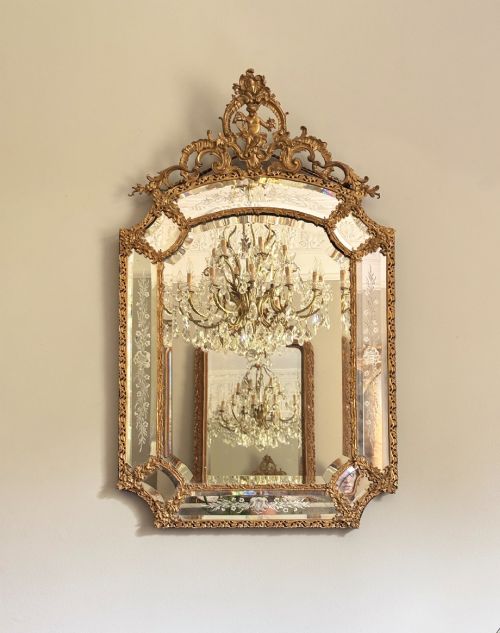
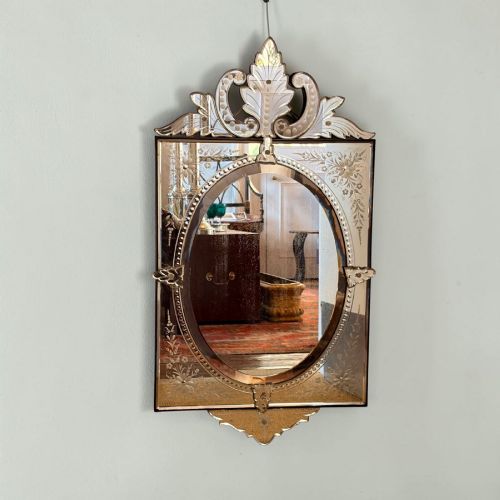
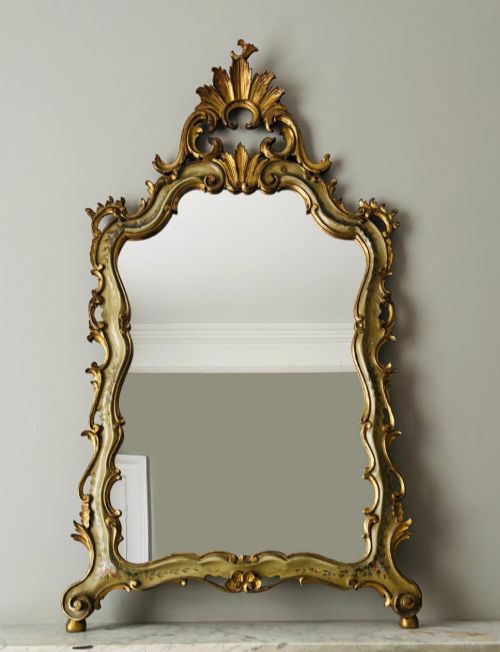
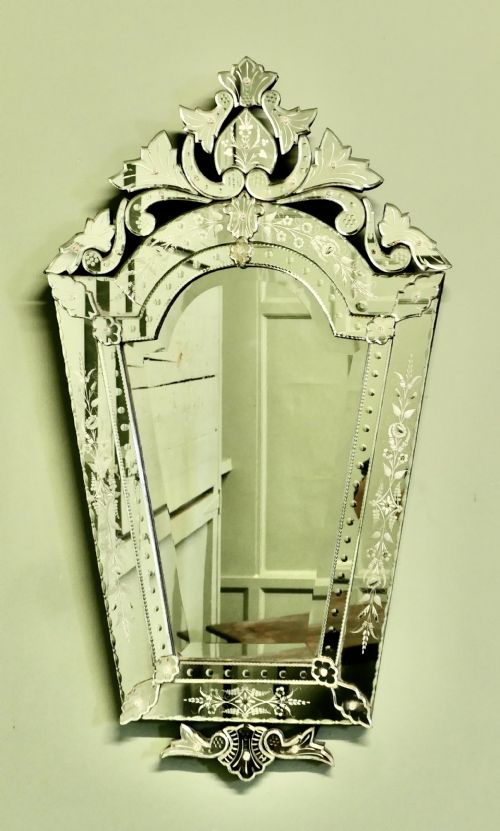
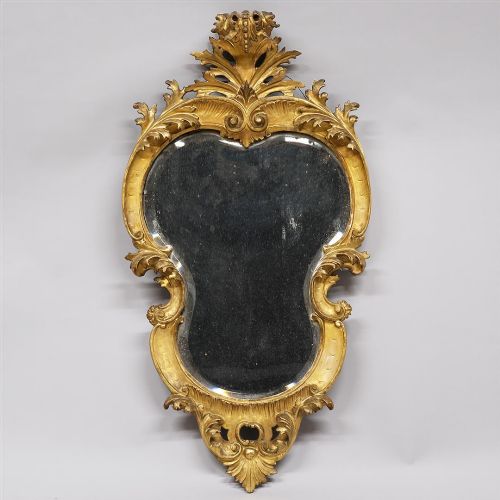
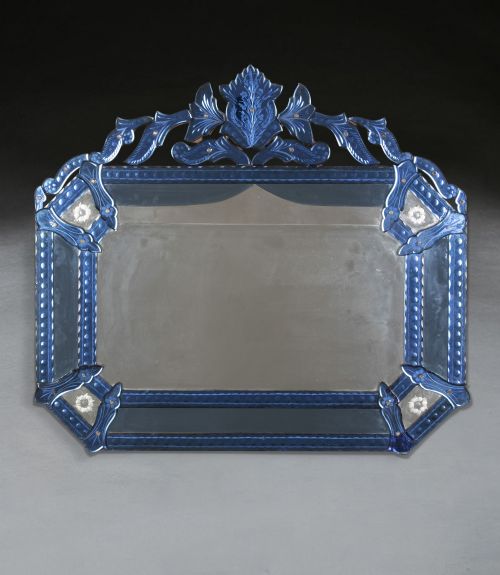
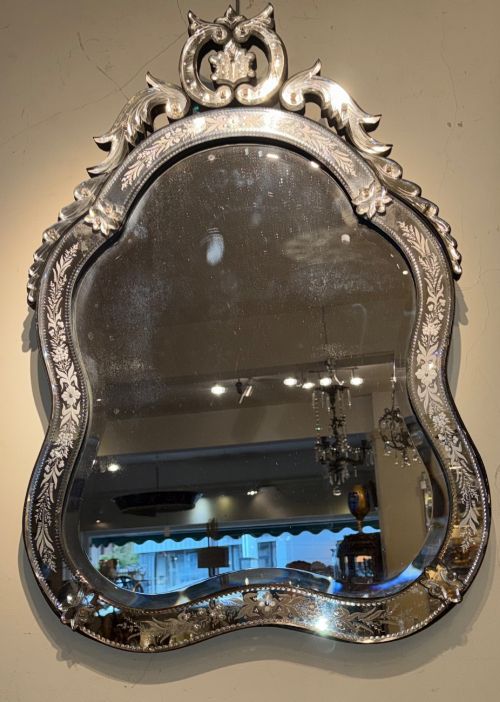

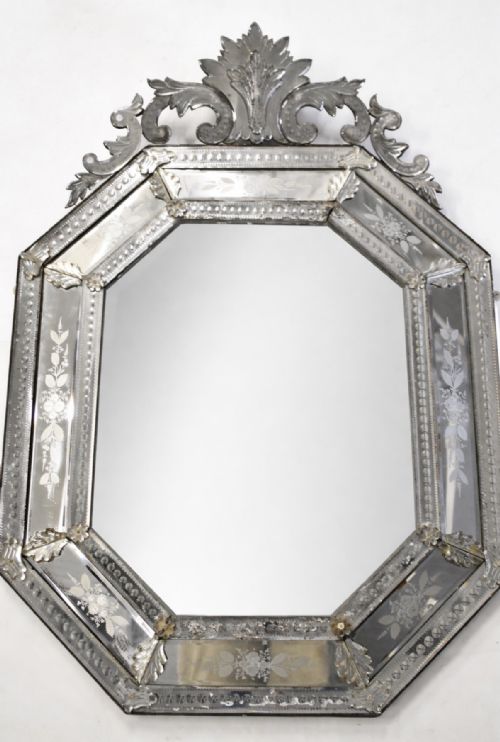


Crested Venetian Wall Mirror
A crested venetian wall mirror brings remarkable Italian glasswork and shimmering depth to any interior, capturing centuries of decorative artistry.
Crested Venetian Wall Mirror
A crested venetian wall mirror combines traditional Italian mirror-making with decorative cresting elements, creating striking focal points for interiors. You encounter examples ranging from eighteenth-century silver-leaf pieces to nineteenth-century Rococo Revival and twentieth-century Art Deco interpretations.
The form encompasses cushion mirrors, cut and etched glass frames, and designs featuring ruby red or blue glass borders. These wall mirrors draw the eye through intricate glasswork and ornate upper crests that elevate standard wall hangings into significant decorative objects.
How these mirrors were constructed
Craftsmen utilised mirrored glass, silvered glass, and traditional wooden framing structures to support delicate glass elements. Frames frequently incorporate giltwood, ebonised wood, and gilt bronze mounts to secure the intricate glass components.
Makers applied cutting, etching, and bevelling techniques directly to the glass plates and surrounding frames. This involved hand-working the glass to achieve distinctive borders, pediments, and decorative crests.
Crested Venetian Wall Mirror Retail Price Guide 2026
Typical asking prices for crested venetian wall mirror among the pieces listed under this phrase on Sellingantiques today, from the lower quarter to the upper quarter. They describe what is for sale here now, not the wider market.
Listings feature periods spanning from the eighteenth century through the Edwardian era to mid-twentieth century Art Deco designs.
What separates exceptional examples
The sophistication of the glass cutting and etching dictates the distinction between standard production and masterwork execution. Fine examples display deeply bevelled plates, crisp wheel-cut motifs, and harmonious coloured glass borders.
The integrity of the supporting wooden structure and the preservation of the original silvering significantly influence the character of the piece. Superior craftsmanship shows in the seamless integration of the crested pediment with the main mirror plate.
The Crested Venetian Wall Mirror Glossary
- Cresting
- The decorative upper ornamentation or pediment of a mirror. This feature often incorporates elaborate glass scrolls or carved woodwork.
- Cushion mirror
- A mirror style where the frame curves outward in a pillow-like profile. This design maximises light reflection from multiple angled glass panels.
- Silvered glass
- Glass coated with a reflective metallic compound on the rear surface. Older pieces often exhibit natural foxing and age spots.
- Giltwood
- Wood carved and coated with a thin layer of gold leaf. It provides a luminous frame that complements the reflective glass.
- Etched glass
- Glass decorated by scratching or acid-treating the surface to form opaque patterns. This technique creates subtle contrasts against clear mirrored sections.
Crested Venetian Wall Mirror: Frequently Asked Questions
How do I date a venetian mirror?
Dating relies on examining the construction methods of the wooden backing, the type of glass bevelling, and the characteristics of the silvering.
Earlier eighteenth and nineteenth-century examples often display hand-beveled plates and distinct signs of oxidation, whereas twentieth-century pieces show more uniform machine cutting.
Where should I hang a wall mirror?
These mirrors suit spaces where they can capture and amplify natural light, such as above a fireplace mantelpiece or in a hallway.
Ensure the wall structure supports the combined weight of the glass plate and the decorative frame.
What causes foxing on old glass?
Foxing occurs when moisture gradually penetrates the protective backing behind the silvered layer over decades.
Many collectors value this natural ageing process as evidence of authenticity and age.
How do I clean an antique mirror?
Use a soft, dry microfibre cloth to gently remove dust from the glass surface and the delicate frame mouldings.
Avoid spraying liquids directly onto the glass or frame, as moisture can seep behind the plates and damage the silvering.