




Large Landscape Wall Mirror
A large landscape wall mirror brings scale and reflection to a room, drawing light across interiors through horizontal proportions shaped by centuries of design.
Large Landscape Wall Mirror
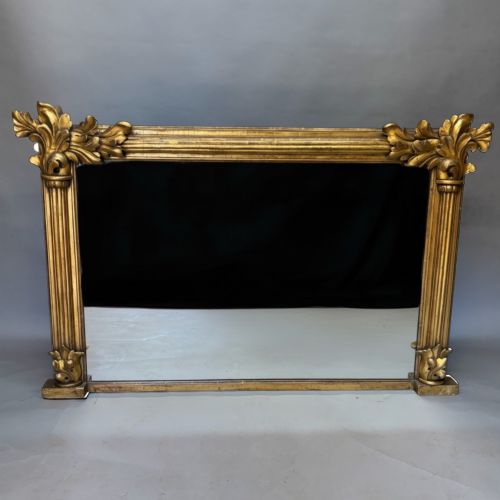
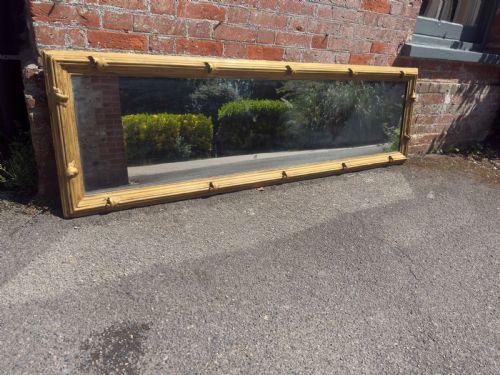
A large landscape wall mirror primarily takes the form of an overmantel mirror designed to sit above a mantelpiece, alongside standard horizontal wall mirrors. These pieces span periods from the Georgian and Regency eras through the Victorian and Edwardian periods, reflecting changing domestic tastes in English, Scottish, French, and Venetian workshops.
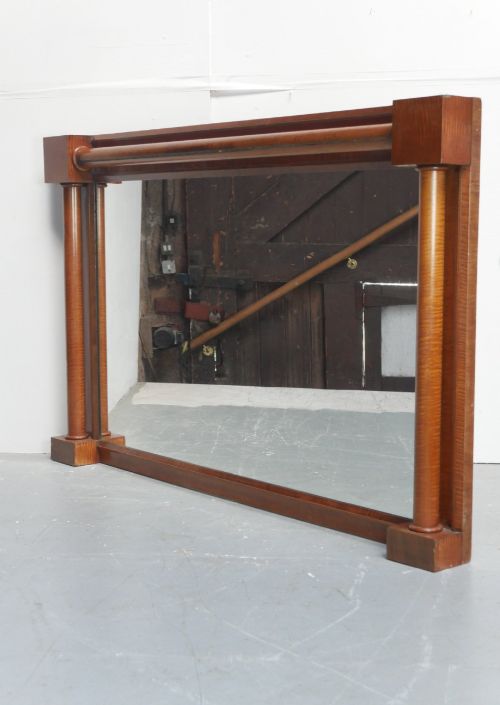
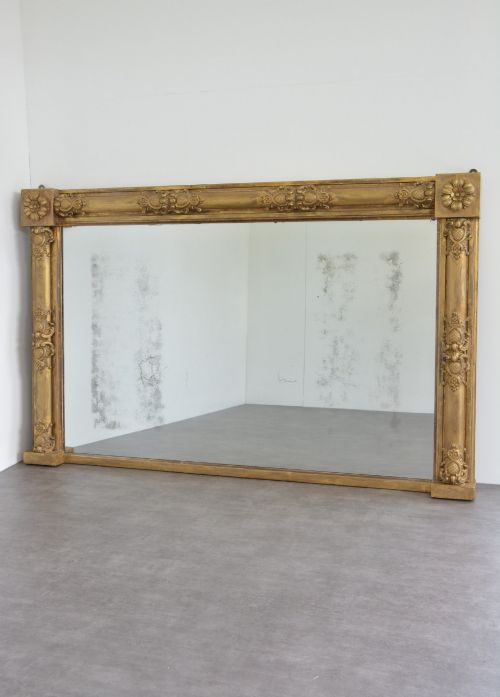
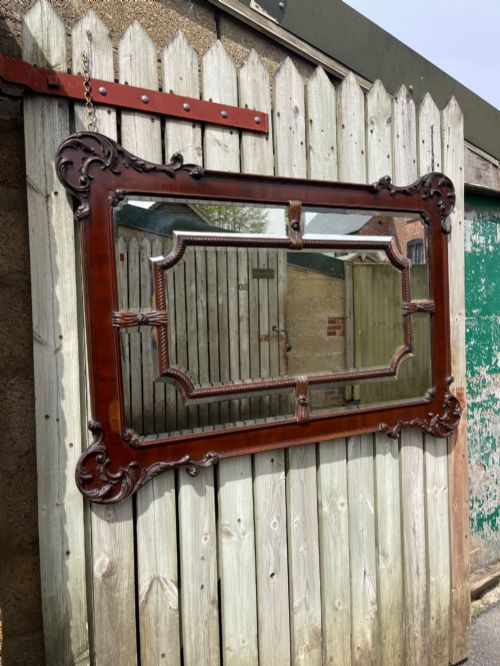
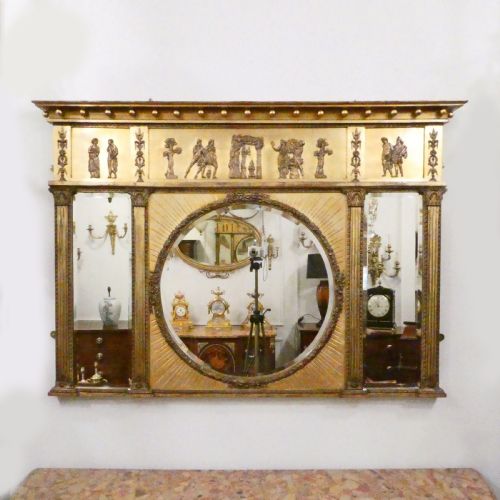
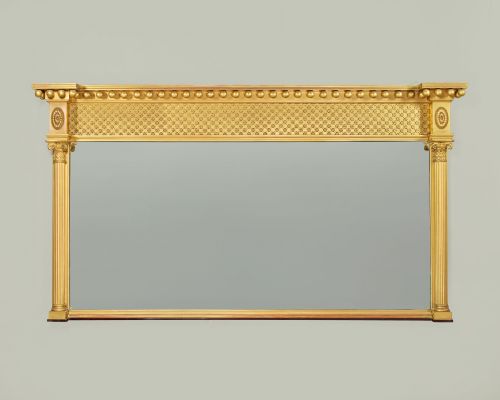
The dominant formats met on this page are substantial giltwood and gesso overmantels, often featuring tripartite glass plates, neoclassical motifs, or carved wooden frames. Walnut, mahogany, pine, and birds-eye maple variants also appear, offering alternative timber textures alongside heavily gilded surfaces.
How they were made
Carved wood and gesso provide the sculptural foundation for many frames, where plaster is built over a wooden base and shaped into intricate decorative details before receiving gold leaf or paint. Gilding techniques apply thin sheets of gold onto prepared surfaces, while other pieces rely on polished mahogany, burr walnut, or painted pine frames.
Mirror glass is set within these frames, sometimes exhibiting light foxing from age or retaining original silvering. Sectional and triptych formats divide the glass surface across multiple panels, secured within heavy wooden backing structures.
Large Landscape Wall Mirror Retail Price Guide 2026
Typical asking prices for large landscape wall mirror among the pieces listed under this phrase on Sellingantiques today, from the lower quarter to the upper quarter. They describe what is for sale here now, not the wider market.
A select few mirrors include carved Ho Ho birds perched atop the frame to watch over the room.
What varies in quality
The refinement of the carved ornamentation and the depth of the gesso moulding distinguish standard production from exceptional pieces. Crisp detailing in motifs such as scrolling foliage, birds, or neoclassical pilasters indicates superior craftsmanship by skilled carvers.
The integrity of the materials, from the selection of figured timbers like burr walnut and mahogany to the survival of original gold leaf and untouched mirror glass, determines the standing of an individual piece.
Ciceri and Co of Edinburgh
The Large Landscape Wall Mirror Glossary
- Gesso
- A plaster mixture applied to wood frames as a base for gilding or painting. It is built up in layers and carved while wet to create sharp decorative reliefs.
- Giltwood
- Timber that has been coated with gold leaf or gold paint. This finish creates a luminous surface that catches and reflects ambient room light.
- Overmantel mirror
- A large horizontal mirror specifically proportioned to hang above a fireplace mantel. These pieces often anchor the decorative scheme of a principal room.
- Triptych
- A mirror composed of three separate glass panels placed side by side. This configuration divides the reflection and widens the visual span of the frame.
- Foxing
- Age-related spots and discoloration appearing within the mirror glass plate. This chemical change creates soft dark speckles across the reflective surface.
Large Landscape Wall Mirror: Frequently Asked Questions
How do I hang a heavy overmantel mirror?
Due to their substantial weight, large landscape wall mirrors require secure attachment directly into structural wall studs or masonry using heavy-duty brackets.
Professional installation ensures the frame remains stable and safely supports the combined weight of the wood, gesso, and glass.
Where should I place a landscape mirror?
These mirrors find their traditional home positioned directly above a fireplace mantelpiece, where their horizontal format balances the hearth below. They also function effectively on main reception room walls to amplify natural light and create a sense of extended space.
Positioning them opposite a window maximises the reflection of daylight across the interior.
How do I date an antique mirror?
Dating relies on examining the construction materials, joinery techniques, and stylistic vocabulary of the frame, ranging from Regency neoclassical lines to Victorian carved gesso. The condition of the glass plate and backing boards also offers clues regarding the period of manufacture.
Certain motifs, such as specific bird carvings or ebonised finishes, align closely with specific nineteenth-century decades.