

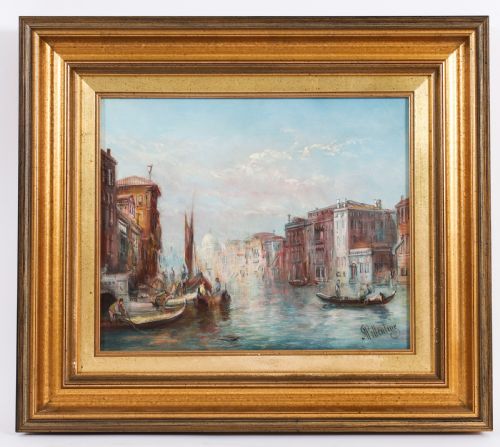
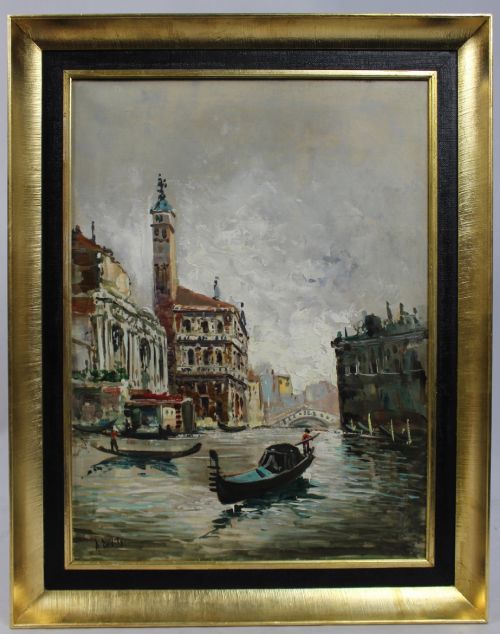
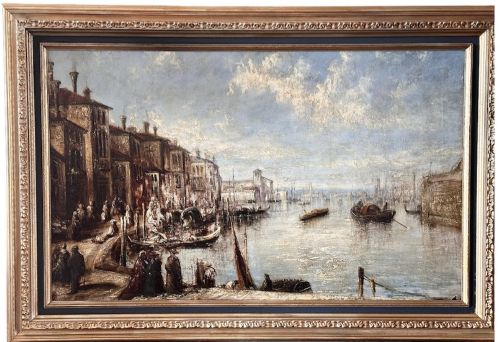
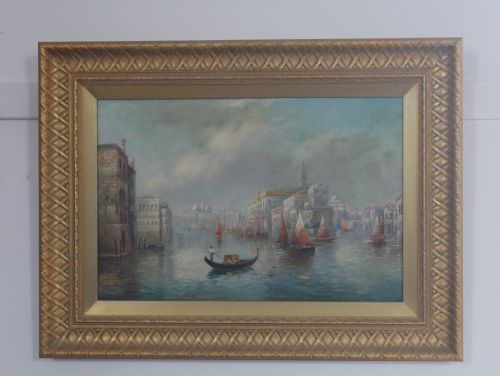

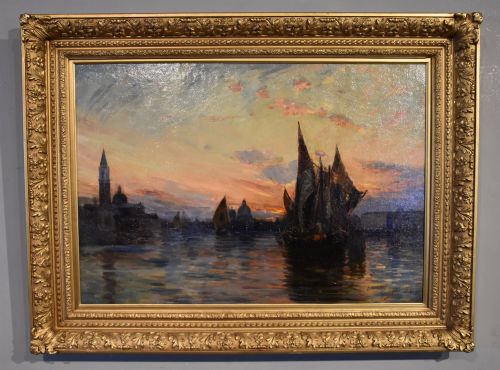


Framed Venetian Artwork
Framed venetian artwork captures the light and architecture of the lagoon through historic paintings and watercolours.
Framed Venetian Artwork
Framed venetian artwork encompasses historic paintings, watercolours and mixed media depictions of canals, palaces and lagoon scenes. Buyers searching this phrase encounter nineteenth-century watercolours, Victorian oil paintings and mid-century interpretations of the Grand Canal and the Doge's Palace.
The selections span distinct periods from the eighteenth century to the mid-twentieth century, capturing subjects such as the Bridge of Sighs, Santa Maria della Salute and gondoliers on the water. Works range from detailed townscapes by named artists to atmospheric impressions of light on old mansions.
Most pieces arrive ready to hang in period frames, frequently utilising giltwood or wood mouldings that complement the historic character of the imagery. These artworks connect interiors directly to the historic artistic traditions inspired by the city on the water.
Materials and Technique
Painters and watercolourists utilised oil on canvas, oil on board, and watercolour on paper to capture the shifting light and water reflections of the lagoon. Pigments were applied with brushwork ranging from fine architectural detail in Victorian works to broader expressionist strokes in mid-century pieces.
Supporting these works are traditional wooden supports, canvas stretched over wooden frames, and heavy paper sheets for watercolours. Frames are constructed from wood, frequently finished with gilt or gilding to enhance the visual depth of the artwork.
Distinctions in Quality
Quality rests upon the artist's ability to render the distinctive atmosphere, perspective and luminous water of the Venetian lagoon convincingly. Masterful handling of light upon historic stone structures and canal surfaces separates accomplished handwork from standard decorative output.
The integration of the artwork with its frame plays a role in overall execution, where period-appropriate giltwood enhances the visual presentation. The surety of the draughtsmanship, whether in a delicate watercolour or a substantial oil painting, determines the standing of the piece.
Alfred Pollentine·Francis Moltino·Thomas Hodgson Liddell·F J Aldridge·Claude Jousset·Antonietta Brandeis·Antoine Bouvard Senior·Jane Vivian·William Raymond Dommersen·Vittore Zanetti Zilla·Hercules Brabazon Brabazon·Richard Geiger·Frank Wasley·David Law·William Knox·George Stanfield Walters·Wilfred Knox
The Framed Venetian Artwork Glossary
- Grand Canal
- The main water-traffic corridor in Venice, frequently depicted in nineteenth-century paintings and watercolours. It provides the vantage point for views of historic palazzos and bridges.
- Giltwood
- Wood that has been coated with gold leaf or gold paint. Frames utilising this material are common in antique and period wall art.
- Watercolour
- A painting method in which the paints are made of pigments suspended in a water-based solution. Paper serves as the primary support for these translucent works.
- Impressionism
- An artistic style characterised by relatively small, thin yet visible brush strokes and an accurate depiction of light. Several mid-century works in this style capture Venetian scenes.
- Doge's Palace
- A palace built in Venetian Gothic style and a primary landmark of the city. It appears frequently as a central subject in townscape paintings.
Framed Venetian Artwork: Frequently Asked Questions
What periods do these paintings come from?
The listings include works originating from the eighteenth, nineteenth and mid-twentieth centuries. Victorian and Edwardian examples feature prominently alongside mid-century interpretations.
Each period brings distinct stylistic approaches to depicting the architecture and light of the lagoon.
How should I hang these artworks?
These pieces suit living rooms, studies and hallways where adequate wall space allows the frame and subject to stand alone. Natural light enhances the pigments of both oil paintings and watercolours without causing fading.
Ensure they are placed away from direct heat sources to protect the canvas, paper and wooden frames.
What subjects appear most frequently?
Views of the Grand Canal, the Doge's Palace, Santa Maria della Salute and the Bridge of Sighs dominate the scenes. Gondoliers navigating the waterways and historic Venetian mansions also recur across the works.
Artists focused heavily on capturing the unique atmospheric light reflecting off the canals.