
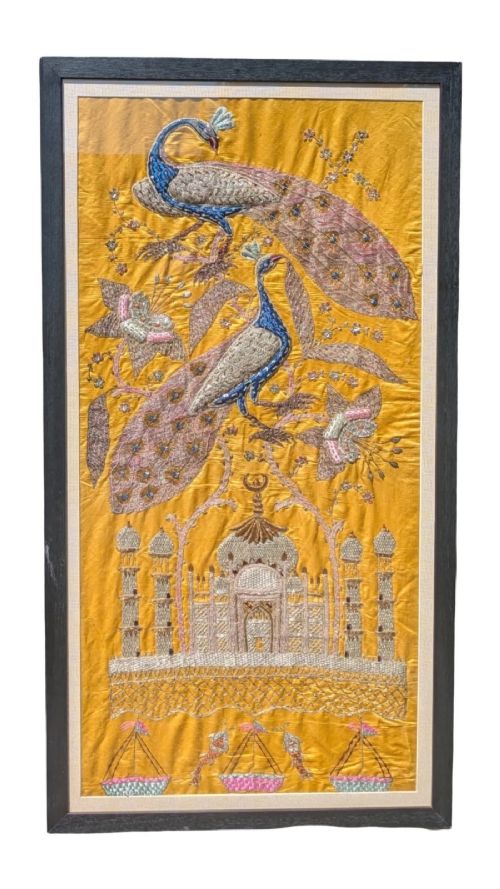
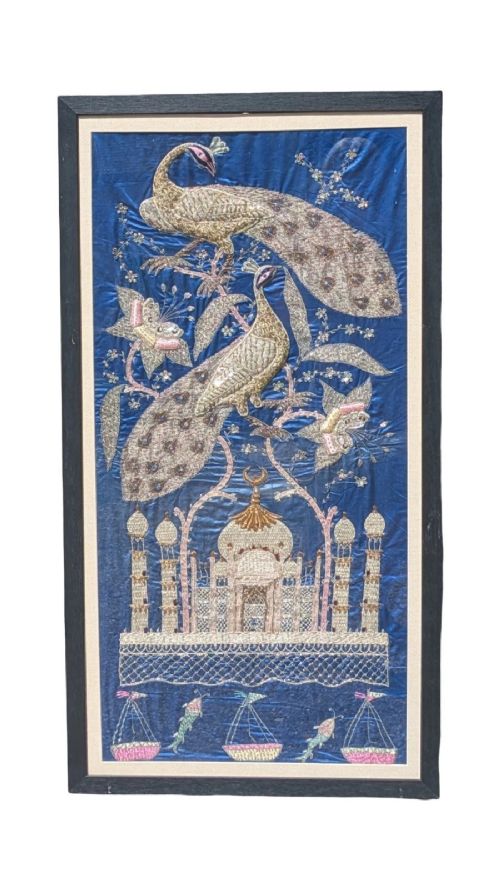
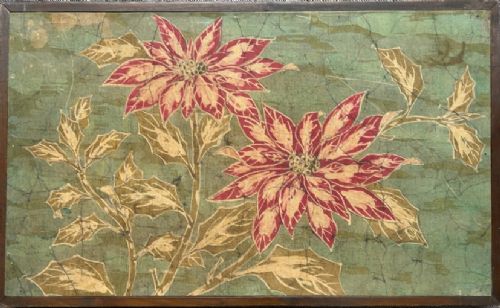
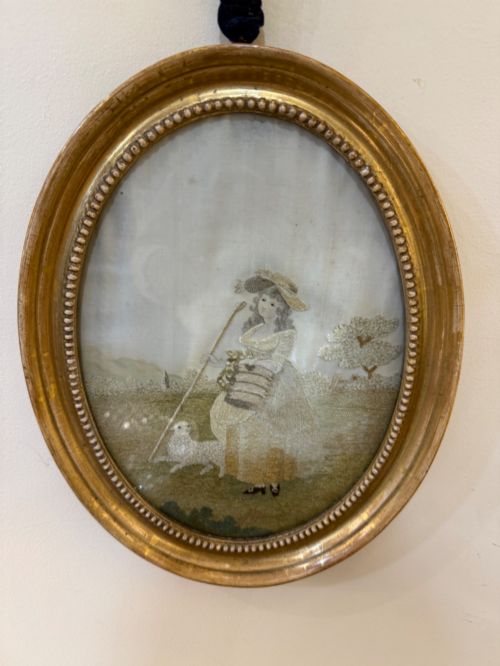
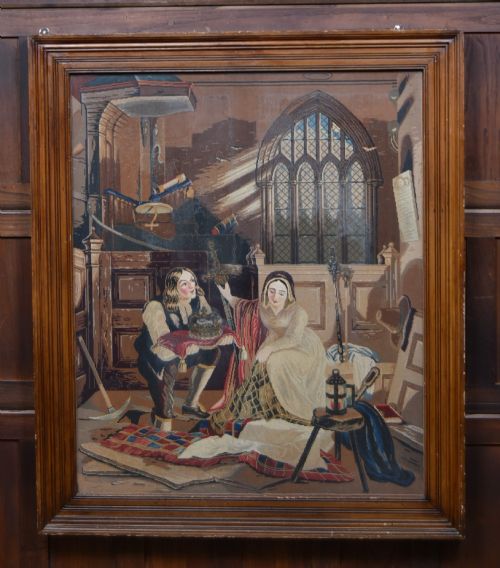

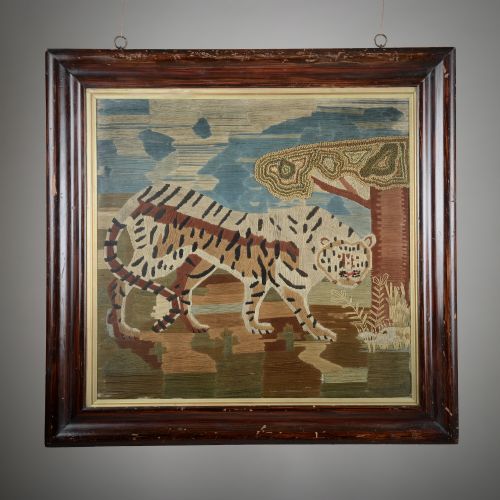
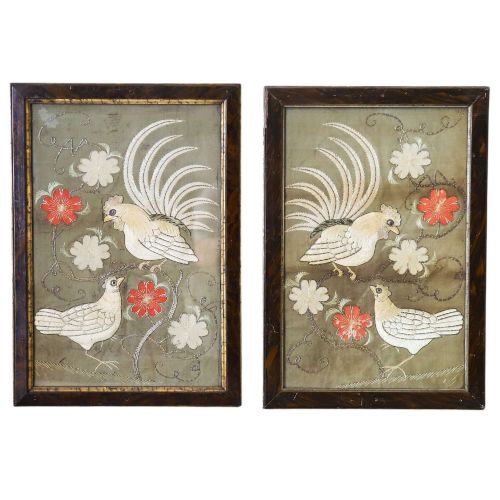
Framed Textile Art Panel
These framed textile art panel examples bring historical needlework, embroidery, and tapestry straight to the wall.
Framed Textile Art Panel
A framed textile art panel brings centuries of historical needlework, embroidery, and tapestry directly onto the wall. Collectors look for these pieces to display traditional handcrafts set behind glass or mounted in period timber frames.
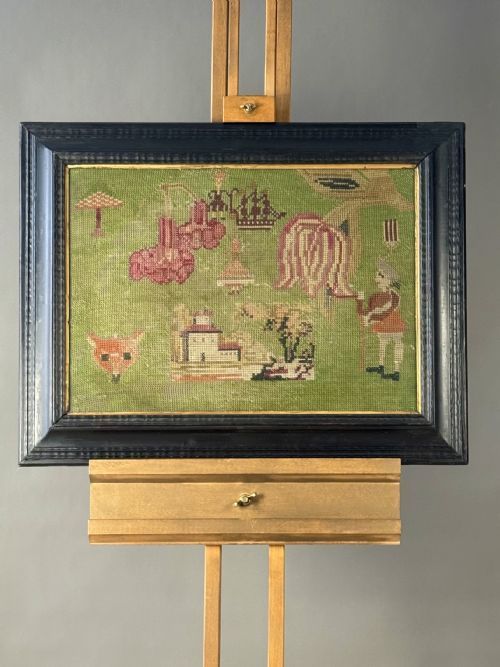
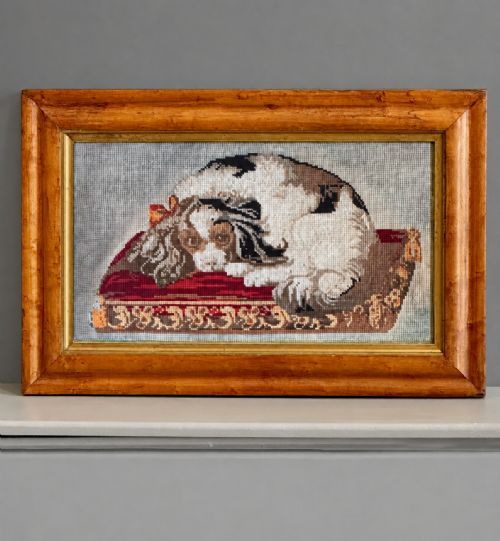
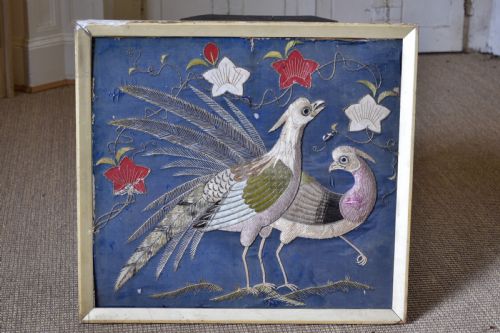
The selection ranges from early 17th century continental embroidered panels and Stuart stumpwork to 19th century Berlin work and silk samplers. Visitors most frequently encounter Victorian needlework pictures and Chinese silk embroideries from around 1900 on this page.
Makers and makers' hands varied from young girls working alphabet samplers to skilled ateliers producing large French tapestries and Ottoman embroidered fragments. Each object holds a distinct record of domestic skill or workshop production across different centuries.
Materials and construction methods
Makers utilised natural fibres including silk, wool, cotton, linen, and canvas as the foundation for intricate needlework and painting on silk. Metallic thread frequently appears alongside silk floss to add light and texture to 18th century pictures and panels.
The resulting textiles are protected behind glass and housed in wooden frames such as burr maple, faux tortoiseshell, or simple moulded mouldings. Some fragile fragments receive reinforcement by being mounted directly onto linen for safe display.
Listings feature textile art spanning from the 17th century to the mid 20th century, using silk, wool, linen, and metallic thread.
Factors determining quality
The refinement of the stitchwork and the complexity of the pictorial composition set superior examples apart from simpler domestic pieces. Finer execution in silk floss or metal thread on early panels indicates a higher tier of workmanship.
Condition and originality play a significant part, particularly the survival of the original timber frame and protective glass. Retaining clear colour in the silk or wool threads without excessive fading elevates the overall standard of the textile.
The Framed Textile Art Panel Glossary
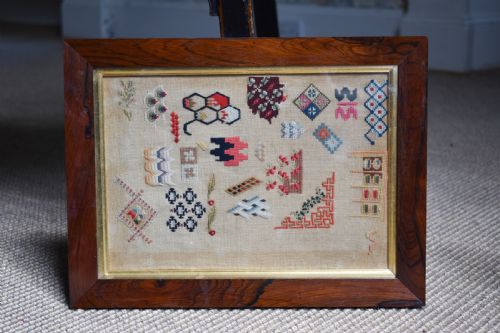
- Sampler
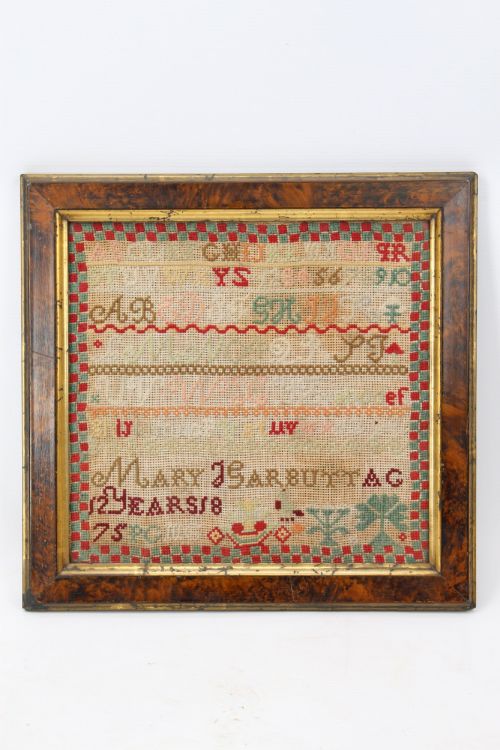
- A piece of needlework produced as a demonstration or test of skill in various stitches, often featuring alphabets and dates. These frequently record the name and age of the young maker.
- Stumpwork
- A raised form of embroidery popular in the Stuart period where figures and elements are padded over wooden or felt shapes. This technique creates a distinct three-dimensional effect on the panel.
- Berlin work
- A style of needlework using brightly coloured wool on canvas, charted on squared paper and popular during the 19th century. It allowed makers to create detailed floral and animal patterns.
- Rank badge
- A square embroidered insignia worn on official robes in imperial China, later framed for display. These panels often depict birds or animals worked in silk and metallic threads.
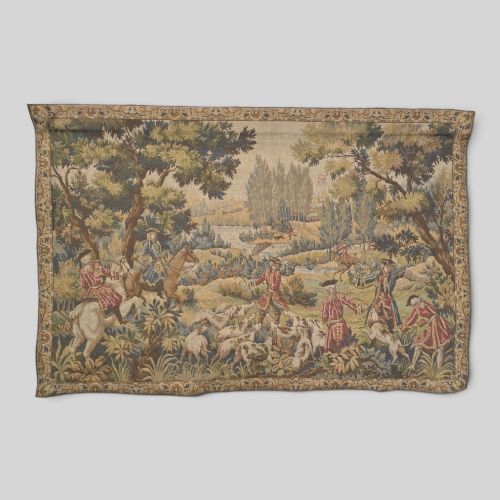
- Verdure tapestry
- A type of woven wall hanging or panel depicting a stylised landscape filled with foliage, trees, and occasionally animals. Surviving borders and fragments are frequently mounted as panels.
Framed Textile Art Panel: Frequently Asked Questions
How do I hang a textile panel safely?
Keep textile panels away from direct sunlight to prevent the silk, wool, and cotton threads from fading over time. Ensure the wall environment remains stable in temperature and humidity to protect the fabric fibres.
Use sturdy picture wire attached securely to the original or replacement wooden frame. Avoid hanging heavy framed pieces on vulnerable plaster without appropriate wall anchors.
What periods do these textile panels cover?
The pieces span multiple centuries, starting from 17th century stumpwork and Italian embroidered borders. Examples from the 18th century include pastoral farming pictures, samplers, and verdure tapestry fragments.
Later items cover 19th century Berlin work, Victorian alphabet samplers, and early 20th century Chinese silk panels and batik art. Each era uses distinct materials and stitching conventions characteristic of its time.
Are these panels mounted behind glass?
Many framed textile panels feature protective glass to shield delicate silk, wool, and metallic thread embroidery from dust and handling. This barrier helps preserve fragile fibres and prevents accidental snagging of loose stitches.
Larger tapestries and heavy wool work are generally displayed open without glass to showcase the texture of the weave. Fragmentary pieces are often mounted flat onto linen backing boards within the frame.
How can I tell an antique sampler apart?
Antiquity is often indicated by the type of linen ground, hand-spun threads, and the style of the alphabet or numeric lettering. Many samplers include worked signatures, dates, and the maker's age, such as Victorian examples from the 1870s or Georgian pieces from 1825.
Examine the reverse of the frame or panel if visible to inspect the ageing of the timber and backing materials. Early examples display hand-woven textiles and natural dyes distinct from modern reproductions.