

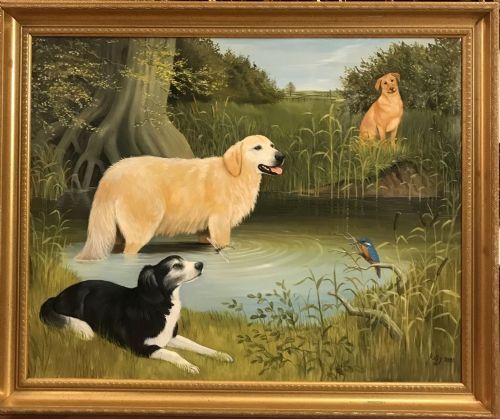


Framed Sporting Landscape
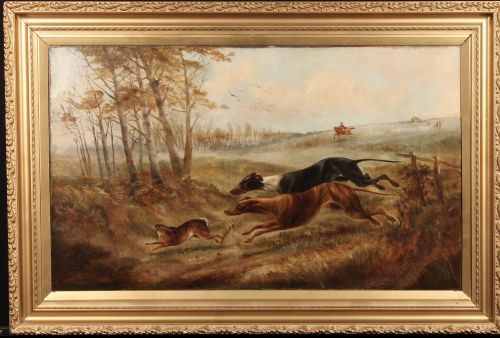
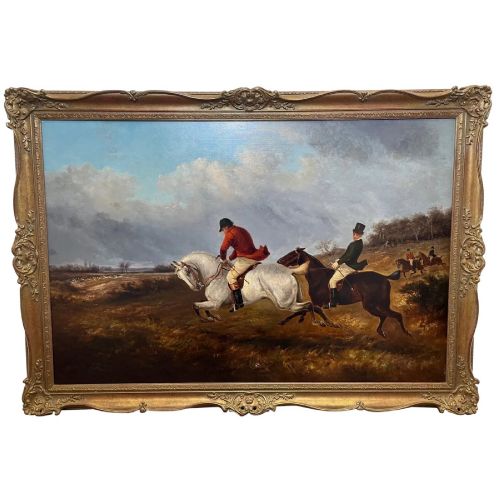
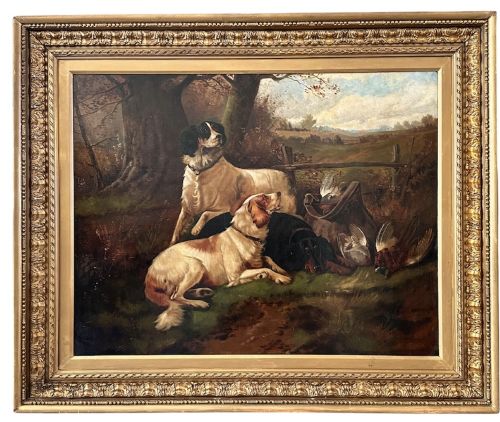
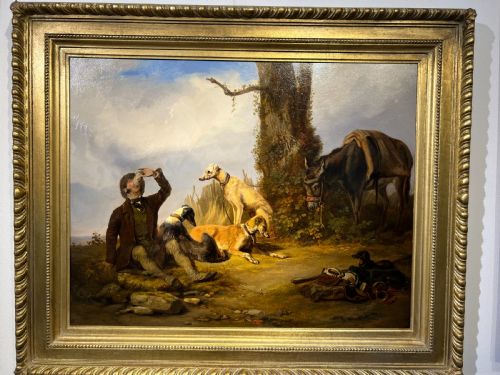
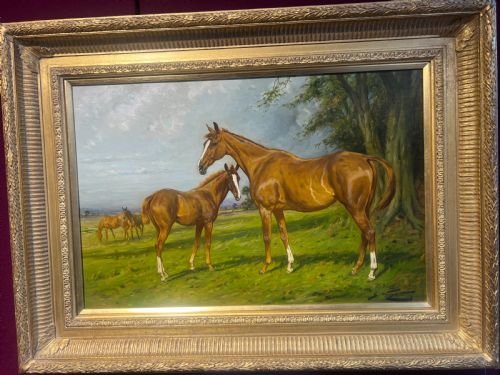
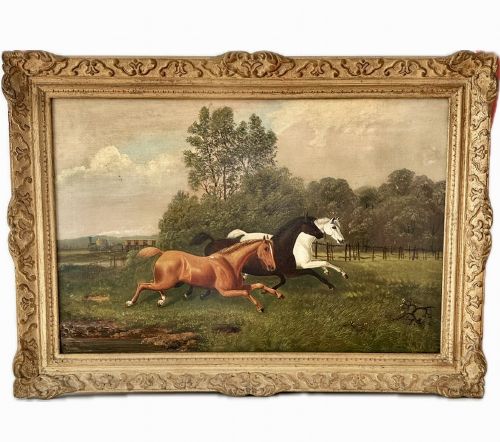
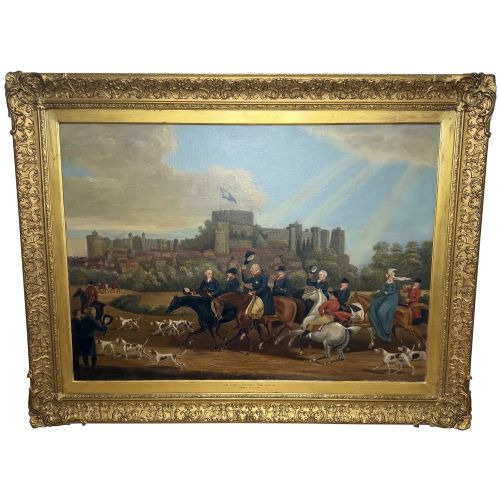
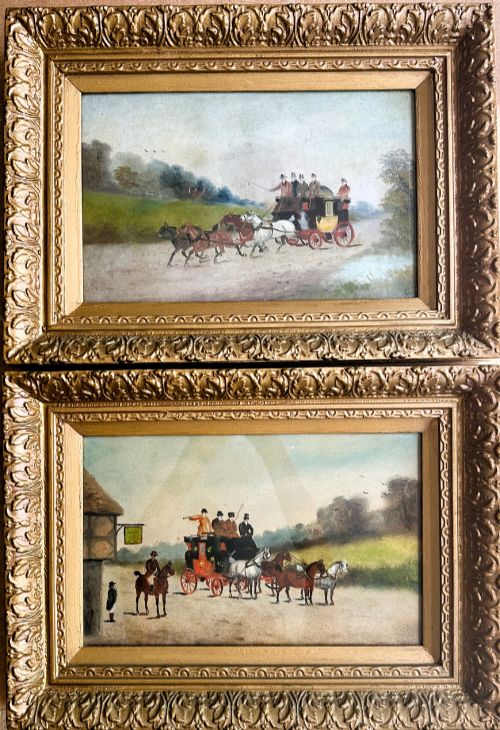
A framed sporting landscape captures the energy of the field, the hunt, and the open countryside in oil paint on canvas.
Framed Sporting Landscape
A framed sporting landscape brings together canine portraits, equestrian studies, and sweeping field scenes from the nineteenth and early twentieth centuries. Buyers seek these works to celebrate traditional rural pursuits and the animal subjects rendered by period painters.
The pieces on this page span the Victorian, Edwardian, and Regency eras, showcasing coaching scenes, fox hunting, and gun dogs at rest. Canvases range from intimate depictions of single hounds to large compositions featuring full hunt packs.
British sporting art forms the core of this selection, capturing specific breeds and rural landscapes with remarkable detail. These works preserve a distinct visual record of country life and sporting heritage.
How They Were Made
Artists painted these works primarily with oil paint on stretched canvas, building rich textures and deep tones for outdoor settings. Painters layered pigments to capture the sheen of a horse coat, the texture of a dog fur, and the atmospheric haze of a rural sky.
Makers housed these canvases within substantial wooden frames, frequently finished with gold leaf or giltwood to complement the rich palettes of the paintings. The combination of oil on canvas and gilded wood defined the presentation of fine art in period homes.
Listings feature oil paintings on canvas from the Victorian, Edwardian, and Regency periods, framed in wood and gold leaf.
What Varies in Quality
Quality rests upon the artist ability to render anatomy with precision, capturing the muscular tension of a galloping horse or the alert posture of a pointer. Superior brushwork brings life to the subject, distinguishing master animal painters from lesser contemporaries.
The composition of the surrounding landscape elevates a piece, integrating the human or animal subjects harmoniously into the fields, rivers, and snowstorms behind them. Original giltwood frames that retain their depth and finish also enhance the overall integrity of the work.
Thomas Smythe·John Sargent Noble·Sir Edwin Henry Landseer·George Wright·Edward Priestley·C R Breytle·Philip Rideout·John Emms·John Ferneley Senior·John Frederick Herring Senior·Arthur Wardle·C W Tuck·William Barraud·Philip Henry Rideout·Fannie Moody·Colin Graeme Roe·Clifton Tomson·Robert Cleminson·Paul Jones·Samuel Henry Alken·John Charles Tunnard·John Sanderson-Wells·Alfred Duke·Michael Lyne·Henri Schouten
The Framed Sporting Landscape Glossary
- Oil on Canvas
- A traditional painting technique where pigments bound in drying oil are applied to a woven fabric support. This method allows for subtle blending and rich colour depth.
- Giltwood
- Wood that has been coated with a thin layer of gold leaf or metallic powder. It provides a luminous border that accentuates the tones within the painting.
- Canvas
- A heavy woven fabric used as a surface for oil paintings. It is typically stretched tightly over a wooden frame before painting begins.
Framed Sporting Landscape: Frequently Asked Questions
How do I hang a large sporting painting?
Large oil paintings require secure wall fixings, typically anchored into wall studs to support the weight of the canvas and heavy wooden frame. Hang the piece at eye level to appreciate the detail in the brushwork.
Keep the canvas away from direct sunlight and heat sources to protect the oil paint and giltwood over time.
How can I tell the period of a painting?
The period can often be identified through the clothing styles of any human figures, the architectural details in the background, and the framing techniques used. Signatures and dates on the canvas provide direct evidence.
Stylistic conventions and the specific type of stretcher frame behind the canvas also offer clues to the age of the work.
Who were the main sporting artists?
Prominent sporting artists included painters who specialised in animal portraits and hunt scenes, such as John Emms and John Frederick Herring Senior. Their work captured horses and dogs with anatomical accuracy.
Many of these artists exhibited their oil paintings widely during the Victorian and Edwardian eras, establishing enduring standards for the genre.