
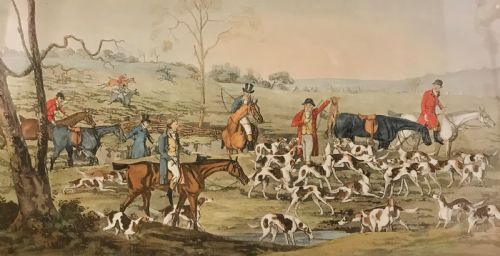


Framed Sporting Engraving
A framed sporting engraving captures the colour and movement of past field sports, horse racing and games through ink on paper protected beneath glass.
Framed Sporting Engraving
A framed sporting engraving brings the history of nineteenth century pursuits into rooms through framed prints, wall art and etchings. Buyers searching for a framed sporting engraving encounter works produced across the Georgian, Victorian and Edwardian periods.
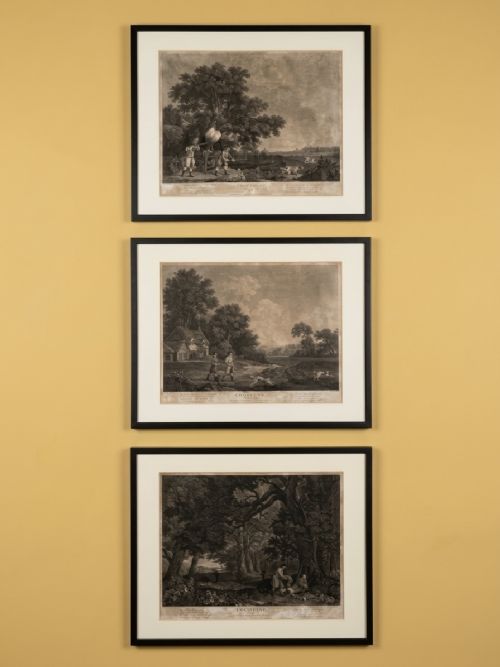
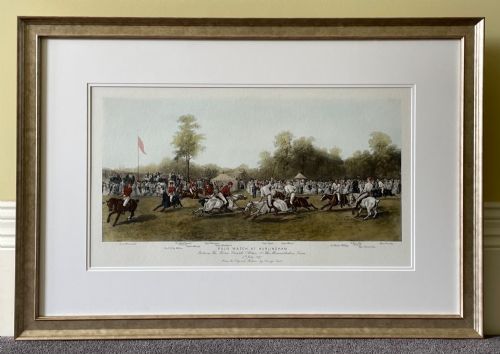
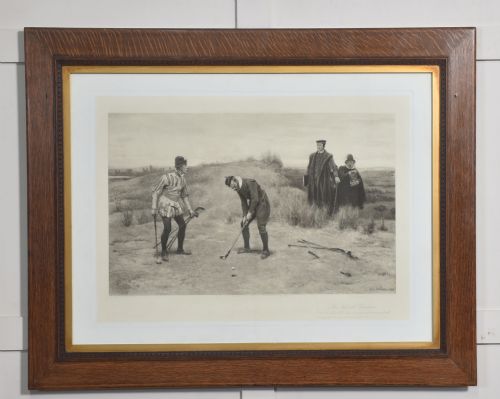
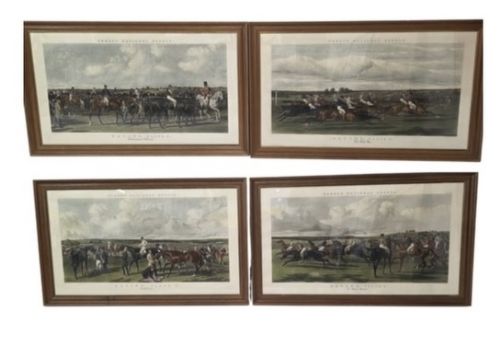
The subjects span horse racing, fox hunting, shooting scenes, polo matches and traditional pastimes like golf, billiards and cricket. Many examples appear in sets of four, while others survive as individual plates or pairs.
Most pieces derive from nineteenth century British publishing houses and country house collections. They combine paper prints with wood and gilt wood frames.
Materials and technique
Makers utilised paper as the primary medium for impressions created through engraving, etching, aquatint and lithography. Ink defined the foundational lines of horses, riders and hounds.
Watercolour was frequently applied by hand to add colour to monochrome prints, resulting in hand coloured engravings. Gold leaf enriched wooden mouldings and gilt wood frames.
Finished works were mounted behind glass within oak or gilt wooden frames to protect the delicate paper surface from atmospheric moisture and handling.
Listings feature paper prints and watercolours housed in oak, gold leaf and gilt wood frames across Georgian and Victorian periods.
What varies in quality
The standard of an impression depends on the crispness of the lines pulled from the original plate and the precision of the hand colouring. Early strikes display sharp detail in the figures and background landscapes.
The quality of preservation affects the visual balance of the piece, particularly where ink and paper have aged together. Original frames in oak or gilt wood contribute substantially to the integrity of the object.
H. Alken·J. C. Dollman·James Dobie·W. Dendy Sadler·Charles Hunt·Francis Calcroft Turner·Sam. Howitt·J F Herring
The Framed Sporting Engraving Glossary
- Engraving
- A printmaking technique where an artist cuts lines directly into a metal plate with a sharp tool. The resulting incisions hold ink to transfer the image onto paper.
- Aquatint
- An intaglio printmaking method that produces tonal areas resembling watercolour washes. It was widely utilised for nineteenth century sporting art.
- Lithography
- A planographic printing process based on the repulsion of oil and water. It allowed publishers to produce detailed pictorial scenes efficiently.
- Stipple engraving
- A method of creating images using dots rather than continuous lines. This technique rendered subtle tonal gradations in portraits and figures.
- Etching
- A process where acid bites lines into a metal plate protected by an acid resistant ground. Artists used this method to achieve free, expressive lines.
Framed Sporting Engraving: Frequently Asked Questions
How do I date a sporting engraving?
Dating relies upon published dates printed on the margin, paper watermarks and the stylistic conventions of the frame and costume. Many pieces carry publication inscriptions from the nineteenth century.
Comparing the subject matter with known sporting events of the Georgian and Victorian eras helps narrow the decade of production.
Were these always framed?
Publishers originally sold these prints unbound or in portfolios for collectors to bind or frame according to personal taste. Surviving period frames often date from the Victorian or Edwardian eras.
Many pieces were housed in oak or gilt wood frames to suit English country house interiors.
Why are some prints sold in sets?
Publishers frequently released sporting subjects in sets of four to document sequential moments of a hunt, race or match. Collectors prized complete sets for display in libraries and halls.
Keeping four matching frames together preserved the narrative sequence of the sport.
How should I care for framed paper art?
Paper and watercolour pigments require protection from direct sunlight to prevent fading of the ink and hand applied colour. Glass filters ultraviolet light but positioning away from windows remains essential.
Stable indoor humidity prevents the wooden frames and paper supports from warping over time.