




Victorian Hunting Print
These nineteenth-century depictions capture the energy of the field, offering a rich glimpse into rural tradition through framed paper and canvas.
Victorian Hunting Print
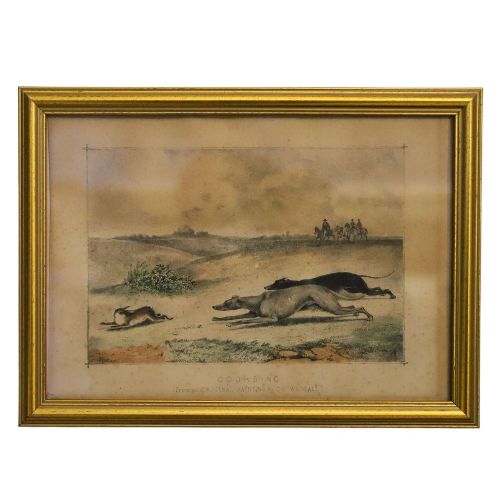
When you search for a victorian hunting print, you encounter a distinct visual record of nineteenth-century field sports, capturing hounds, huntsmen, and dramatic animal encounters. The pieces on this page span framed paper works, engravings, aquatints, and occasionally oil paintings or watercolours depicting pursuits like fox hunting and hare coursing.
Most examples originate from the nineteenth century, ranging from hand-finished aquatints to Vanity Fair lithographs and early photographs. They arrive ready to hang in wood or giltwood frames, often preserved behind glass to protect the paper from atmospheric damage.
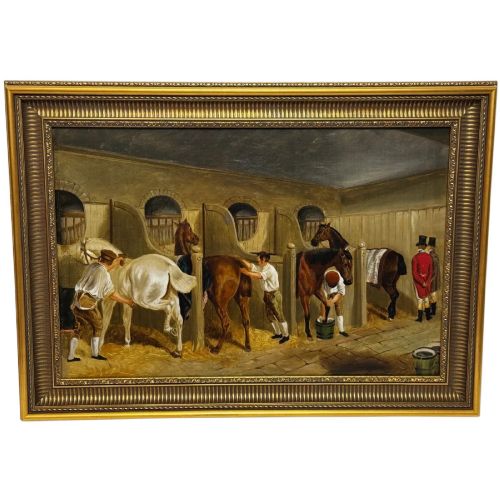
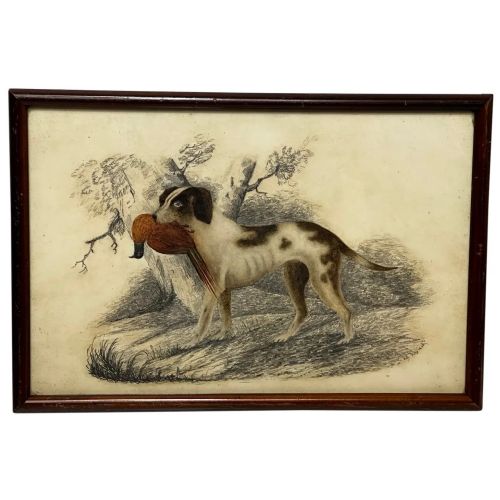
The subjects extend beyond traditional mounted chases to include gun dogs, stable scenes, and dramatic wildlife studies by notable artists of the period. This variety means you might select a single large plate or a matched set of four to furnish a traditional interior.
How they were made
The foundation of these works lies in traditional printmaking techniques, predominantly copperplate engraving and aquatint on paper, sometimes touched by hand with watercolour. Publishers often released these plates in series, utilising skilled engravers to translate original paintings by sporting artists onto the printing press.
Framing materials reflect the period, utilising wood and giltwood to house the works securely behind glass. Oil paintings and watercolours on this page are executed on canvas or paper support, demonstrating the standard media of nineteenth-century British fine art.
Object types range from framed engravings and aquatints to original oil paintings and watercolours.
What varies in quality
Quality rests significantly on the prestige of the original artist and the skill of the printmaker who translated the composition to the plate. Proofs and early impressions retain sharper lines and finer detail than later printings from worn plates.
The preservation of the paper and the vibrancy of any hand-applied watercolour wash also dictate the standing of a piece. Original period framing under glass contributes to the survival of the paper, protecting the integrity of the work over generations.
C. H. Weigall·Charles Faulkner·Herbert Dicksee·Charles Hunt·Francis Calcroft Turner·J F Herring·Frank Dadd·Henry Thomas Alken·J. Harris
The Victorian Hunting Print Glossary
- Aquatint
- A variant of etching that produces areas of tone rather than lines, allowing publishers to replicate the appearance of watercolour washes. This method was widely used for nineteenth-century sporting prints.
- Engraving
- A printmaking technique where an artist cuts lines directly into a metal plate using a sharp tool. It yields crisp, precise details essential for capturing the complex figures of horses and hounds.
- Lithograph
- A planographic printing process based on the repulsion of oil and water, utilised extensively for nineteenth-century published plates and book illustrations.
- Giltwood
- Wood that has been coated with a thin layer of gold leaf or gilt paint, commonly used for the decorative frames enclosing these works.
- Hand-finished
- A term describing prints that received individual touches of watercolour by hand after the mechanical printing process was complete.
Victorian Hunting Print: Frequently Asked Questions
What is a Victorian hunting print?
It is a nineteenth-century artwork depicting field sports, equestrian pursuits, or wildlife, typically produced as an engraving, aquatint, or lithograph.
These pieces document the visual culture of rural sporting life and were frequently published in series to be framed for country houses and studies.
How were these prints coloured?
Many printed plates received their colour by hand after the initial ink transfer, using watercolour washes applied by studio assistants.
This technique added vibrancy to the jackets of huntsmen and the landscape details while keeping production costs manageable for publishers.
Are these prints usually framed?
Most examples survive within period wood or giltwood frames, frequently protected behind glass to preserve the fragile paper beneath.
Original framing adds historical context, though collectors occasionally find loose sheets ready for bespoke framing.
How do I care for a paper print?
Keep paper works out of direct sunlight to prevent the fading of both the printing ink and any hand-applied watercolour washes.
Maintaining stable indoor humidity prevents the paper from warping and protects the wooden frames from drying out.
What subjects besides fox hunting appear?
The genre encompasses hare coursing, gun dogs with game birds, stable scenes, and dramatic wildlife encounters involving hounds.
Artists of the period also recorded breakfast gatherings and social scenes connected to the equestrian calendar.