



Framed Silk Sampler
A framed silk sampler brings centuries of domestic needlework into the modern room, capturing personal histories in thread.
Framed Silk Sampler
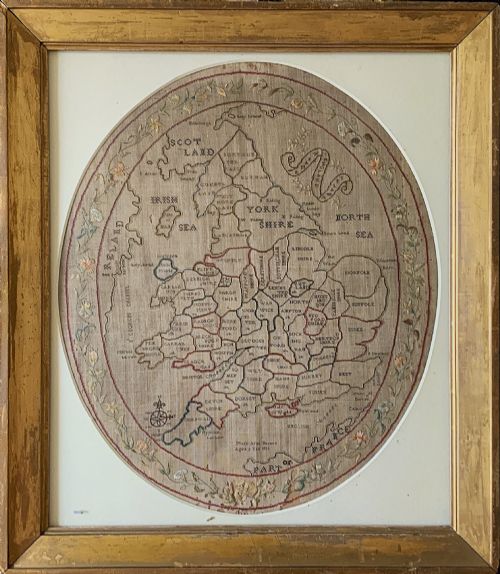
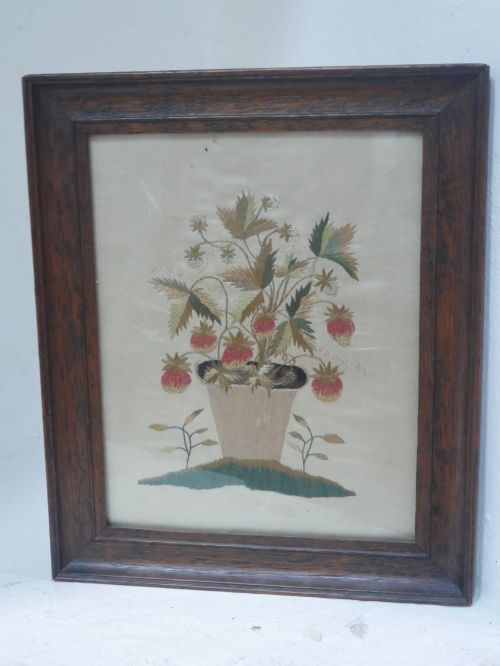
A framed silk sampler is a piece of historical textile art executed by hand, most frequently seen here in Georgian and 19th-century examples. These works range from intricate maps of England and Wales to religious texts like the Lord's Prayer and botanical studies such as a pot of strawberries.
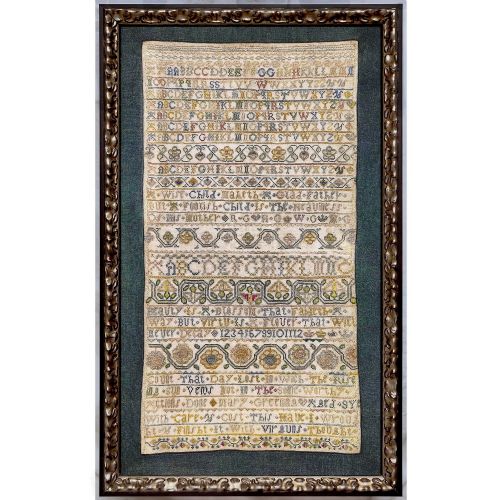
Makers recorded on this page include young stitchers like nine-year-old Mary Banion and older students working in school settings, such as Rachel at the Oswestry National School. Pieces span from late 17th-century band samplers to Edwardian technique displays.
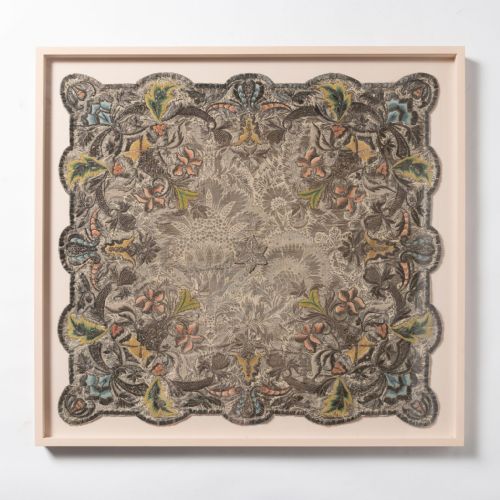
The dominant forms are needlework pictures, map samplers, and traditional alphabets or text panels preserved behind glass in period wood frames. Each surviving piece records the hand of a specific individual, often noting their age and the date of completion.
Materials and Technique
The primary foundation of these works is linen cloth, upon which makers employed silk thread, silk floss, and wool to build their designs. Needlepoint and embroidery stitches formed the pictorial scenes, maps, and lettering.
Finished textiles were stretched and mounted within wood frames, often protected behind glass to shield the delicate threads from environmental damage and dust. Early examples utilise specialised band sampler layouts, while later pieces incorporate pictorial storytelling and cartography.
Several makers carefully recorded their exact ages in thread, ensuring nine-year-old Mary Banion and twelve-year-old Mary Mason remain immortalised.
Assessing Quality
Quality rests upon the precision of the needlework and the complexity of the composition, distinguishing simple practice pieces from ambitious pictorial maps and narrative scenes. The clarity of the lettering and the preservation of the silk thread dictate the visual impact of the textile.
The survival of original wood framing and protective glass contributes significantly to the integrity of the piece. Works that retain documented maker details, dates, and legible inscriptions hold greater historical resonance.
The Framed Silk Sampler Glossary
- Band sampler
- A narrow horizontal strip of diverse embroidery stitches worked as a reference or display of skill. These early forms precede the broader pictorial compositions of later periods.
- Map sampler
- An educational embroidery depicting geographical regions, commonly England and Wales, executed by young scholars. They combine cartographic accuracy with decorative needlework.
- Silk floss
- Unspun silk fibres used to create smooth, lustrous areas of colour within a needlework picture. This material catches the light differently than standard wool or cotton threads.
- Needlepoint
- A form of canvas work where yarn or thread is stitched through a stiff open-weave ground to cover the entire foundation. It provides durability and structure to historical panels.
- Linen
- A strong textile woven from flax fibres that serves as the traditional ground fabric for needlework samplers. Its even weave allowed stitchers to count threads precisely.
Framed Silk Sampler: Frequently Asked Questions
What is a framed silk sampler?
A framed silk sampler is an antique textile work created by hand using silk thread and other fibres on a linen foundation. These pieces were often produced by young women as educational exercises or decorative displays.
Preserved behind glass in period wood frames, they record dates, names, and domestic scenes from the 17th century onwards.
How do I date a sampler?
Dating relies heavily on inscribed dates, maker signatures, and stylistic markers such as lettering fonts, subject matter, and framing materials. Georgian and 19th-century examples frequently state the exact year and the age of the maker.
Earlier 17th-century and 18th-century pieces often utilise band formats and distinct script styles that separate them from later Victorian schoolwork.
Where were these samplers made?
Many samplers originated in English homes, dame schools, and establishments such as the Oswestry National School or the Lozells Establishment. Young girls stitched them under instruction to demonstrate proficiency in needlework, literacy, and geography.
Some continental examples, such as early Italian embroidery, also appear within the wider tradition of historical textile art.
How should I display my sampler?
Samplers require placement away from direct sunlight to prevent the silk threads and linen grounds from fading. Maintaining stable indoor humidity protects the fragile organic materials from degradation.
Keeping the historic frame and glass intact ensures the textile remains secure against atmospheric dust and physical wear.