



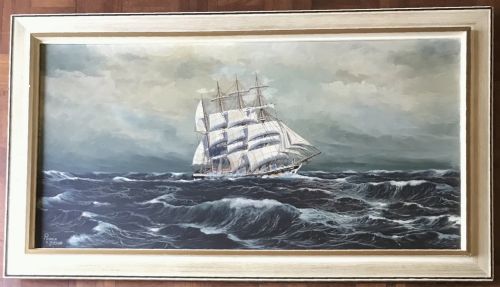

Framed Ship Painting
A framed ship painting captures the power of the sea, spanning Victorian merchant vessels to Edwardian steamships.
Framed Ship Painting
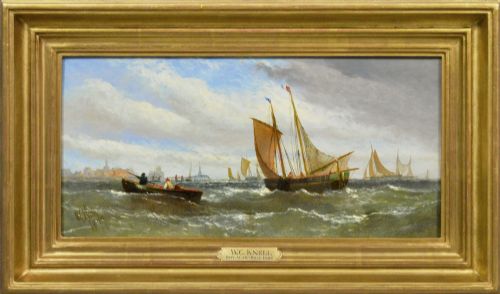
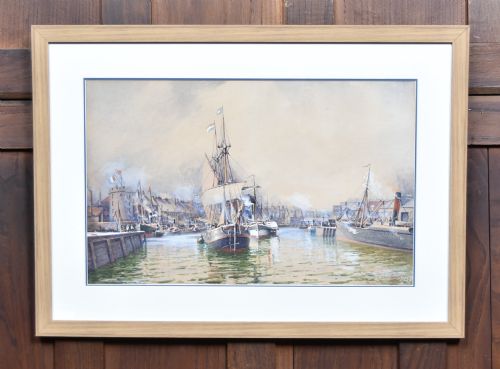
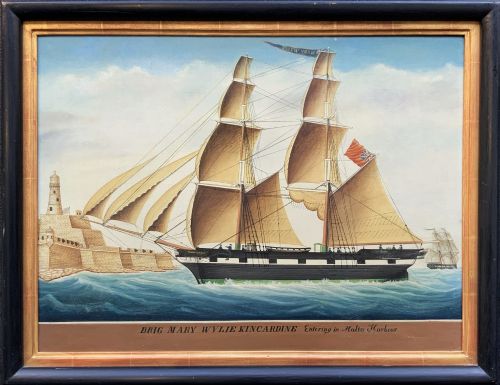
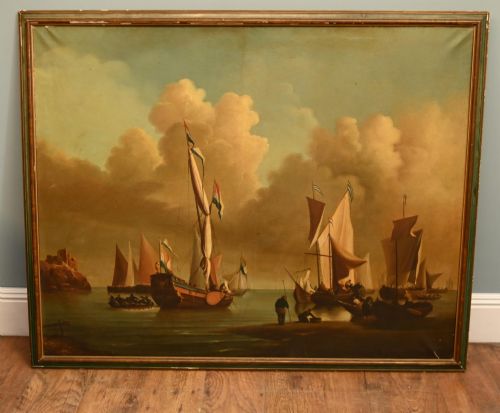
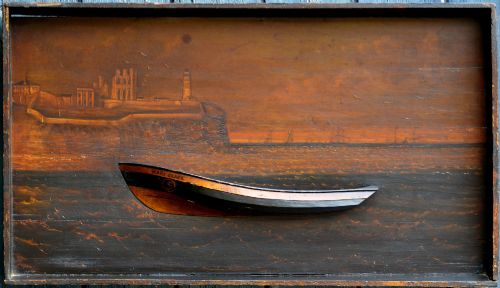
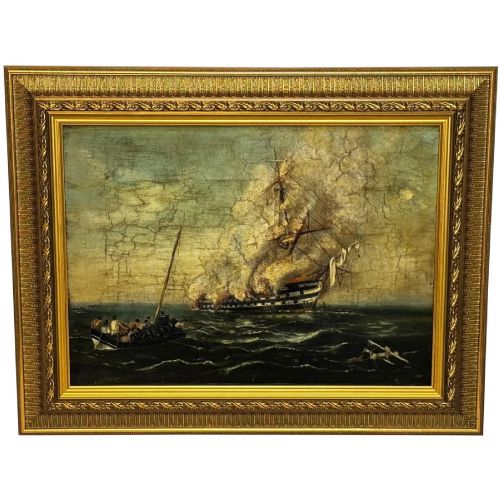
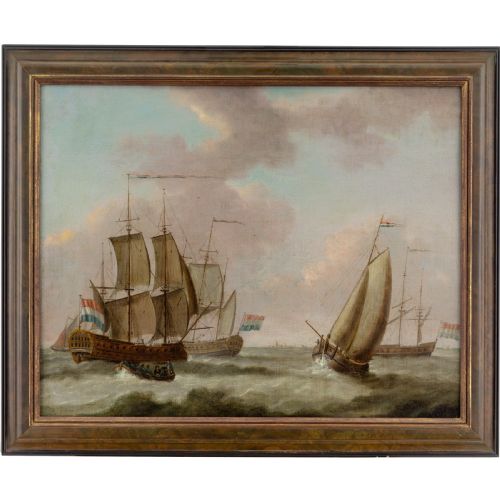
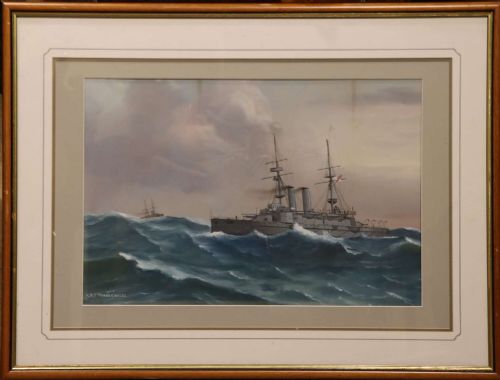
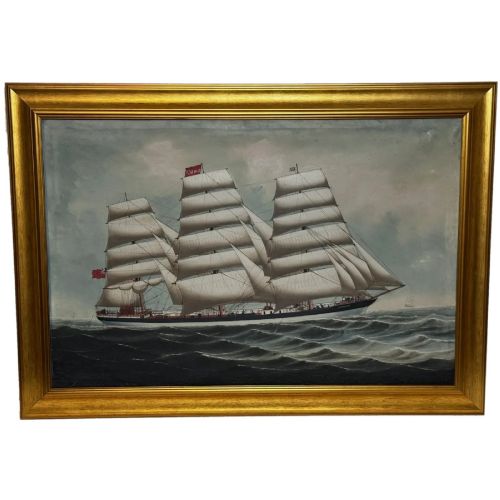
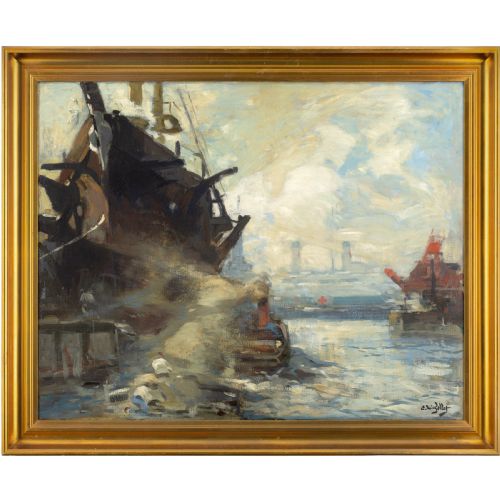
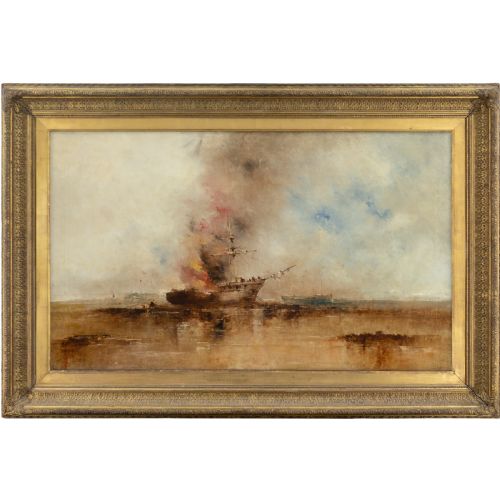
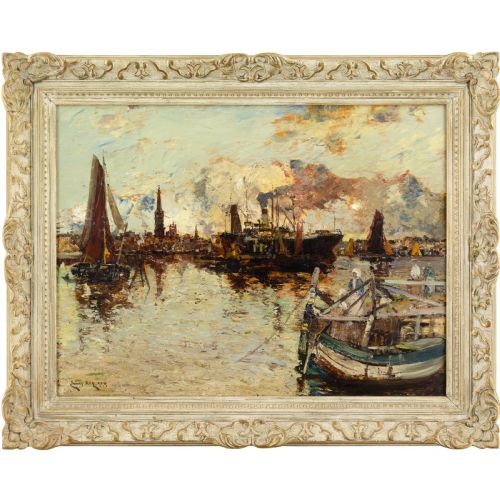
A framed ship painting depicts maritime subjects ranging from sailing vessels in heavy seas to harbour scenes and naval portraits. Buyers encounter works that document specific historical ships, local ports, and dramatic coastal weather events.
The pieces on this page originate predominantly from the nineteenth and early twentieth centuries, encompassing Victorian and Edwardian periods as well as later twentieth-century interpretations. Common formats include oil on canvas, board, watercolour, and gouache housed in wood and gilt frames.
Materials and Technique
Artists relied primarily on oil paint applied to canvas or wood panels, alongside watercolours and gouache on paper, to capture the shifting colours of water and sky. These mediums allowed painters to build texture when rendering turbulent waves, billowing sails, and billowing smoke from steamships.
Presentation relied heavily on wood frames, frequently finished in gilt, which provided structural support and visual focus for maritime watercolours and oil paintings alike.
Framed Ship Painting Retail Price Guide 2026
Typical asking prices for framed ship painting among the pieces listed under this phrase on Sellingantiques today, from the lower quarter to the upper quarter. They describe what is for sale here now, not the wider market.
Listings feature wood frames, oil paint, watercolour, and gouache across periods from the early eighteenth century to the mid-twentieth century.
Assessing Quality
Quality rests in the precision of the vessel's rigging and hull structure, which distinguishes works by artists with maritime experience from generalized depictions. The handling of light on water and the atmosphere of coastal skies further separate routine decorative works from accomplished fine art.
Condition of the medium and frame preservation also influence the standing of a piece, particularly regarding stability of the canvas and the integrity of gilt wood moulding.
William Woolard·Hans Harlander·Eugène-Louis Gillot·William McAlpine·Reginald Arthur Borstel·John Rose Miles·James Kay·William Broome·Bernard Gribble·Frank William Scarbrough·Paul Bret·Bernard Benedict Hemy·John Wilson Carmichael·Lai Fong·Richard B. Spencer·Alexander Harwood
The Framed Ship Painting Glossary
- Brig
- A two-masted, square-rigged sailing vessel commonly documented in nineteenth-century maritime art.
- Gouache
- An opaque watercolour medium used by artists to build solid blocks of colour and fine detail in maritime scenes.
- Barque
- A sailing ship with three or more masts, where the fore-mast and main-mast are square-rigged and the mizzen-mast is fore-and-aft rigged.
- Seascape
- A work of art that depicts the sea, distinct from inland landscapes.
Framed Ship Painting: Frequently Asked Questions
What periods do these paintings cover?
The selection spans from the eighteenth century through the Victorian and Edwardian eras into the mid-twentieth century. Most examples date from the nineteenth and early twentieth centuries.
Works from these eras reflect changing maritime technology, transitioning from wooden sailing ships to steam-powered vessels.
How do I identify the ship in a painting?
Many maritime paintings include inscribed titles on the canvas, stretcher bars, or frame plaques detailing the vessel's name and location. Researching port registries and historical flags aids identification.
Rigging configuration and ship type provide initial clues for naval historians.
Where should I hang a marine painting?
These works suit spaces with stable humidity away from direct sunlight to protect watercolours and oil pigments. Wall placement benefits from eye-level hanging to appreciate fine rigging details.
Pairing them with traditional wood furnishings complements their historical context.
What mediums were used for these artworks?
Artists utilised oil paint on canvas and board, alongside watercolours and gouache on paper. Wood and gilt frames complete the presentation of these pieces.
Each medium offers a distinct texture for rendering water and weather.