
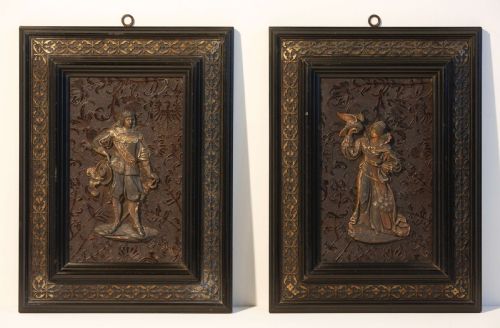


Framed Sculpture Wall Art
Framed sculpture wall art brings tactile depth to interiors through relief plaques, carved panels, and mounted casts.
Framed Sculpture Wall Art
When you search for framed sculpture wall art, you encounter a diverse gathering of three-dimensional wall works including bronze and white metal relief plaques, marble portrait carvings, and carved hardwood panels. These pieces span the eighteenth, nineteenth, and early twentieth centuries, reflecting Neoclassical, Renaissance Revival, and Victorian tastes.
The selection on this page relies heavily on wall art, wall plaques, relief sculptures, and framed prints. You will find items such as classical portrait engravings, religious shadowboxes, and framed griffin sculptures presented within protective wooden or ebonised frames.
Originating across Europe and the Indian Raj period, these objects bridge the gap between traditional sculpture and wall hanging decoration. They offer a tangible connection to historical craftsmanship through materials like plaster, bronze, glass, and velvet.
How they were made
Makers utilised casting techniques for metals, producing bronze, bronzed copper, and white metal relief plaques alongside gilded elements. Plaster and marble were carved or cast to create crisp portrait reliefs and figural scenes, often set against velvet backdrops or within wooden frames.
Woodworking craftsmanship appears in carved walnut wall panels, ebonised wood frames, and jigsaw woodwork relief paintings. Engravings on paper were executed by skilled hands, preserving classical antiquities and historical figures within glass-fronted enclosures.
An amusing Dutch fanfare jigsaw woodwork relief painting brings unexpected rustic humour to a category otherwise dominated by solemn classical deities.
What varies in quality
The definition and depth of the carving or casting set the standard for these works, separating crisp, detailed relief sculpture from softer, worn examples. The precision in chasing metal plaques or chiselling marble and wood dictates the visual impact of the piece.
Framing and mounting integrity also contribute to overall quality. Original ebonised wood frames, intact glass panels, and well-preserved velvet backings enhance the historical context and physical preservation of the wall art.
Simon François Ravenet·W Roffe·Gian Federigo Bonzagna·James Basire
The Framed Sculpture Wall Art Glossary
- Relief sculpture
- A sculptural technique where figures project from a flat background surface. This form allows carvers and casters to create depth while maintaining a wall-mounted format.
- Ebonised wood
- Timber treated to resemble ebony through a dark staining or finishing process. It provides a stark, contrasting border that accentuates lighter marble and metal reliefs.
- Shadowbox
- A deep, glass-fronted framed box designed to protect and display three-dimensional objects. It creates a controlled environment for delicate items like religious folk art.
- Gilded bronze
- Bronze metal coated with a thin layer of gold leaf or gold paint. This treatment adds a lustrous finish that highlights the intricate details of figural plaques.
Framed Sculpture Wall Art: Frequently Asked Questions
What is the difference between a relief plaque and an engraving?
Relief plaques are three-dimensional sculptural works where figures project outward from a flat surface, fashioned from materials such as bronze, marble, plaster, or carved wood. They interact with light and shadow to create depth.
Engravings are two-dimensional printed works on paper created by incising lines into a metal plate. While they may be displayed in similar framed formats, they rely on ink and line work rather than physical mass.
How should I clean glass-fronted shadowboxes and framed panels?
Clean the glass exterior using a soft cloth and a gentle glass cleaner sprayed onto the cloth rather than directly onto the frame. This prevents moisture from seeping behind the glass and damaging internal elements.
Dust carved wooden frames and relief surfaces very gently with a dry, soft-bristled brush. Avoid harsh chemical polishes or excessive moisture, especially on exposed plaster, unsealed wood, or metallic finishes.
Are these pieces suitable for bathroom or kitchen display?
Bathrooms and kitchens experience high humidity and fluctuating temperatures that can damage antique organic materials. Moisture causes wood to warp, paper engravings to fox, and metals to corrode.
Display these works in stable environments with moderate humidity and away from direct sunlight. Protecting them from environmental extremes preserves the integrity of the wood, paper, and delicate metal patinas.