

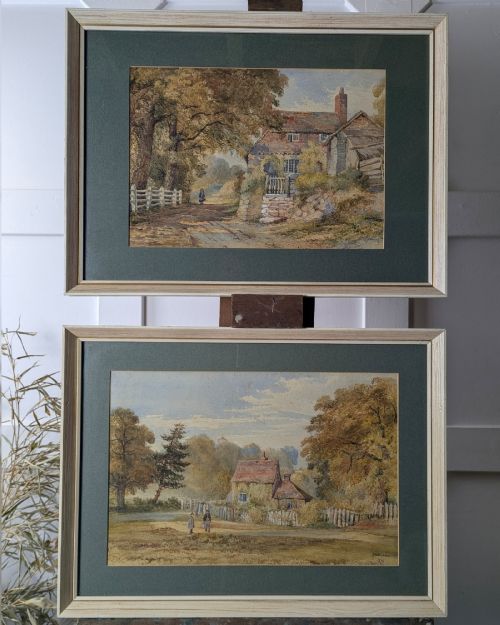
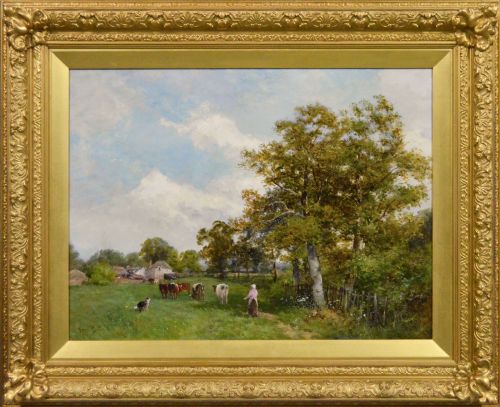
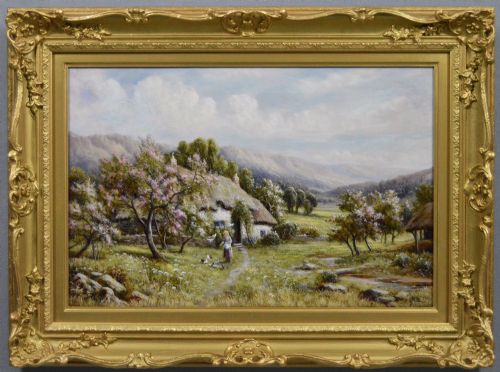
Framed Rural Landscape Painting
A framed rural landscape painting brings nineteenth-century country life indoors through pastoral scenes rendered in oil and watercolour.
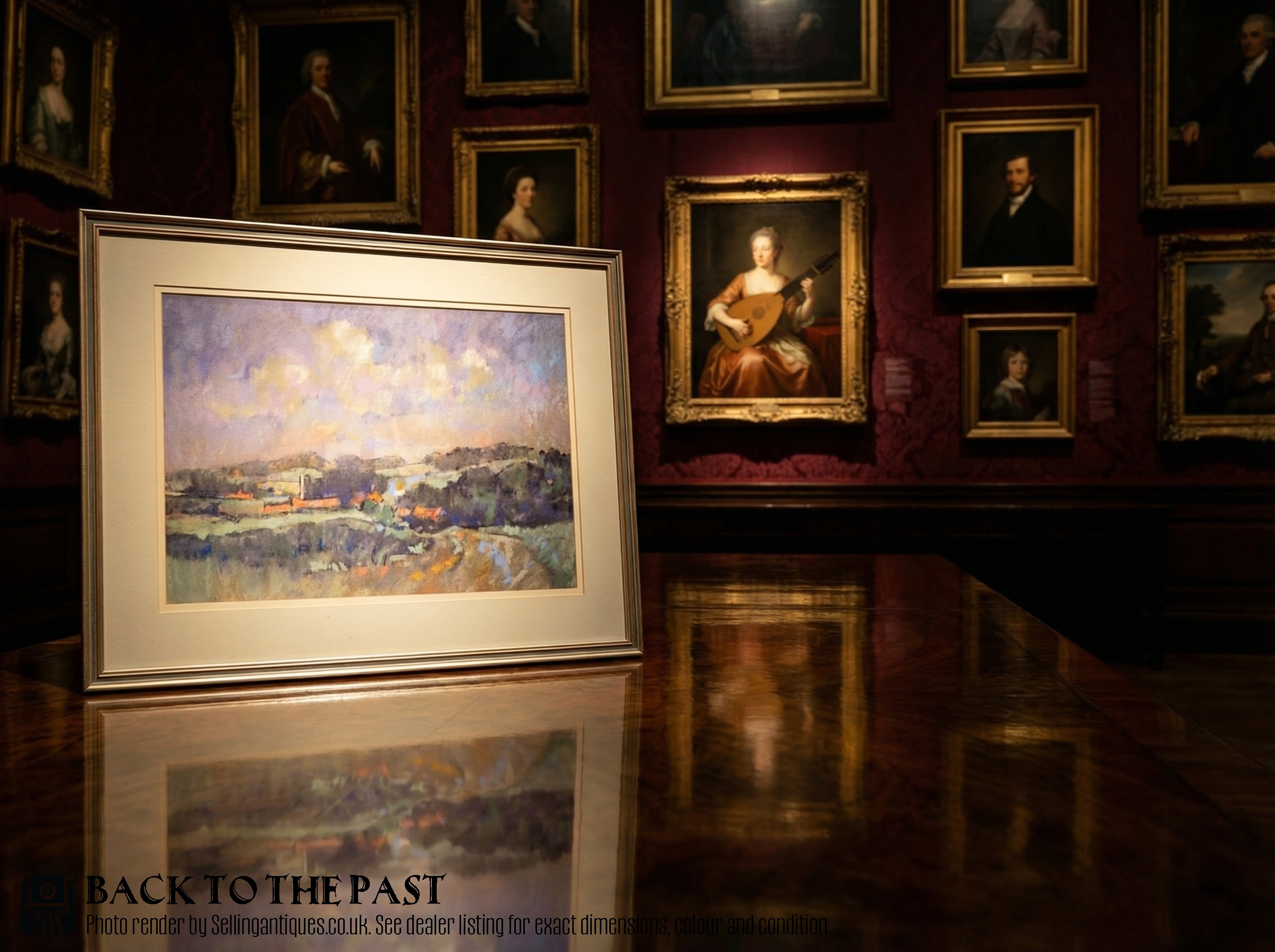
Framed Rural Landscape Painting
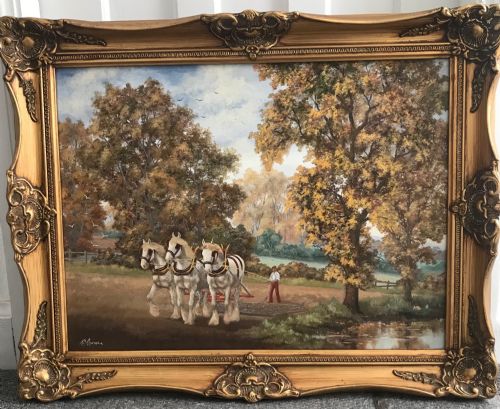
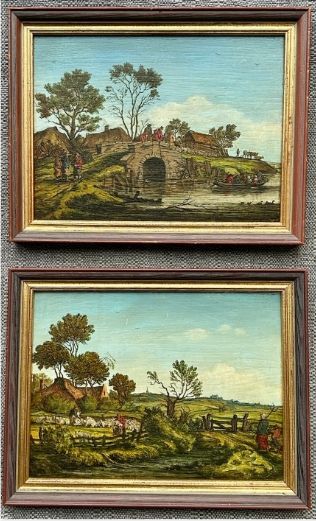
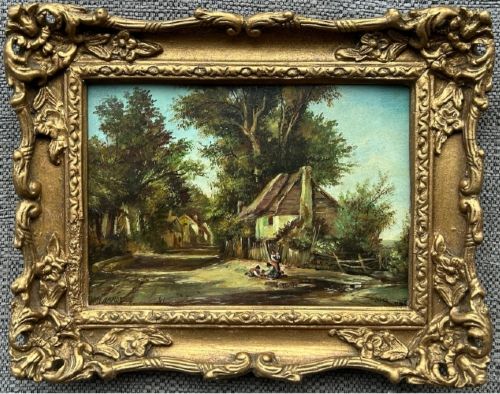
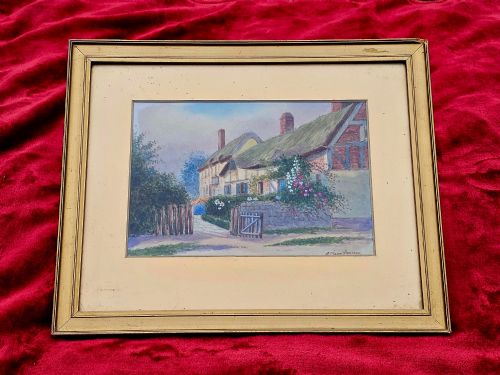
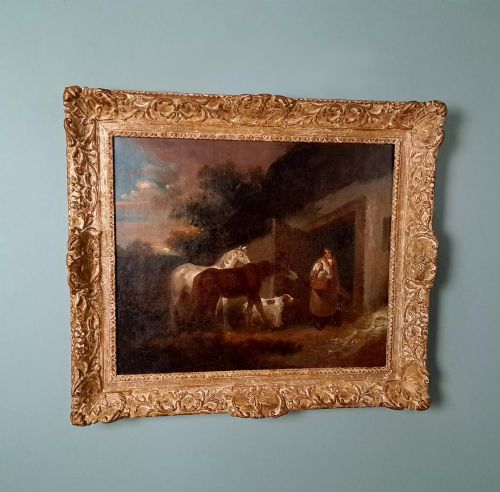
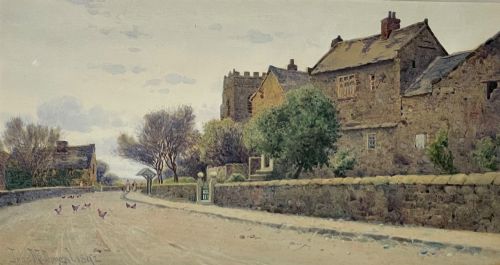
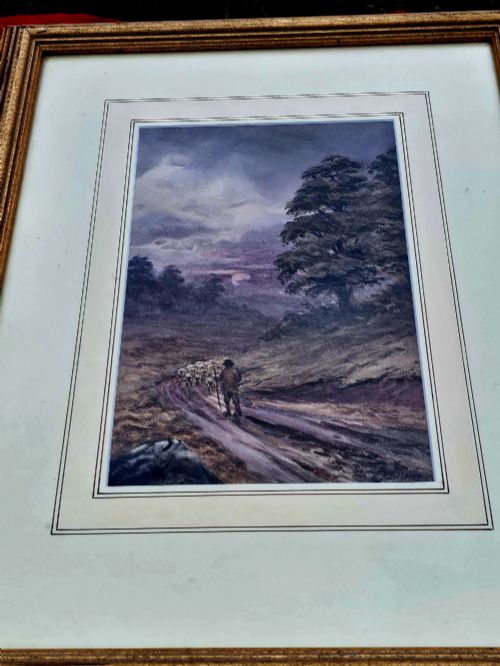
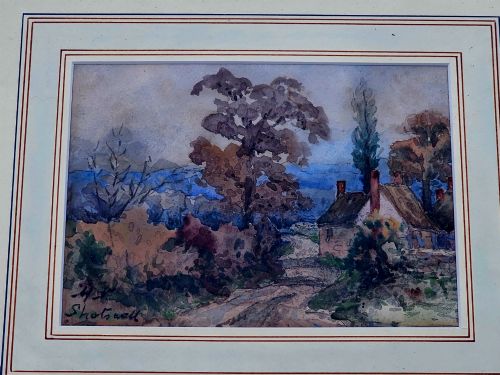
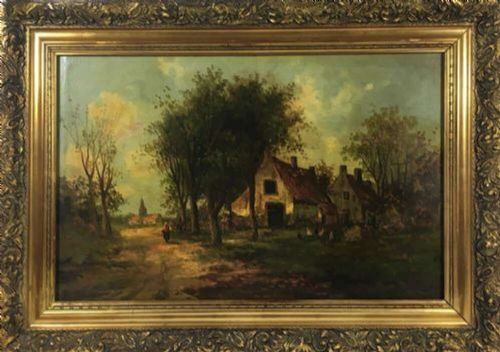
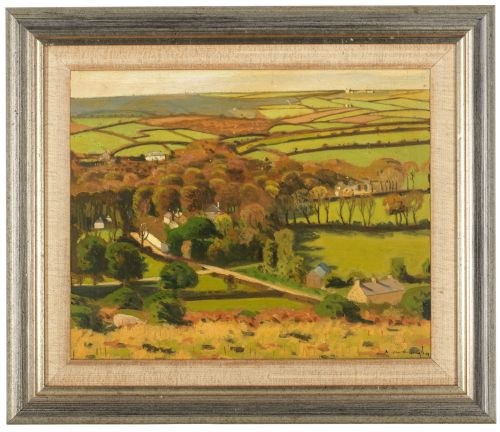
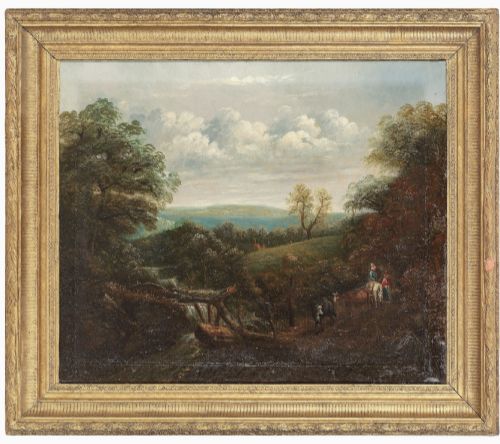
A framed rural landscape painting depicts countryside scenes including harvest fields, cottages, rivers, and livestock from the nineteenth and early twentieth centuries. These artworks capture agrarian life through the eyes of Victorian, Edwardian, and British Impressionist painters.
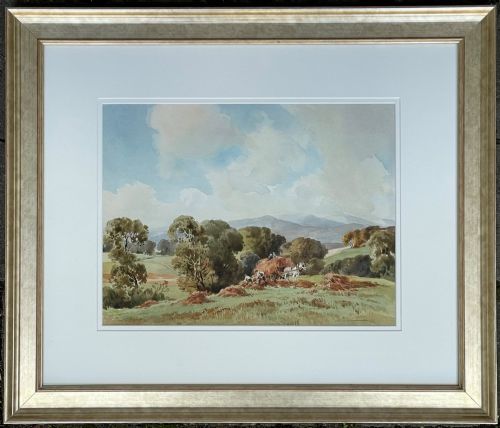
Most examples found here utilise traditional media such as oil on canvas, oil on wood panel, or delicate watercolour on paper. The compositions range from detailed nineteenth-century realism to looser impressionistic interpretations of British and European countryside.
Materials and methods
Artists painted on stretched canvas, wooden panels, card, or heavy paper using oil or watercolour pigments. Oils allowed for rich, layered brushwork that built texture in fields and skies, whilst watercolour provided translucent washes for lighter atmospheric effects.
Framing typically involved wood and gilt mouldings designed to protect the paper or canvas and complement the domestic interiors of the period.
Framed Rural Landscape Painting Retail Price Guide 2026
Typical asking prices for framed rural landscape painting among the pieces listed under this phrase on Sellingantiques today, from the lower quarter to the upper quarter. They describe what is for sale here now, not the wider market.
British Impressionism and Victorian realism represent prominent styles within the available rural landscape paintings.
Qualities of the work
Quality rests upon the confidence of the brushwork, the handling of natural light, and the accuracy of proportion in figures, animals, and foliage. Stronger pieces reveal a skilled understanding of perspective and depth within the rural setting.
The integration of the original wooden or gilt frame with the painting influences the overall integrity of the piece.
GEORGE GRAHAM·Percy Lancaster·William Howard Hardy·A. Marie Parsons·William Joseph Shayer Senior·John McDougal·EJ Letheren·Robert Morson Hughes·Robert A. Nottingham·David Bates·Robert John Hammond·Charles Houben·Walter Heath Williams·Th.Thibault·John Horace Hooper·Raymond Booth·Frederick Walker·Eric Brown·Ernest Higgins Rigg·George Oyston·Frederick James Kerr·Umberto Volpato·William Greaves·Miles Birkett Foster·Herman S Melville
The Framed Rural Landscape Painting Glossary
- Oil on canvas
- Pigment suspended in drying oil applied to a woven fabric support. This technique allowed artists to work with rich colours and build textured surfaces.
- Watercolour
- Paint consisting of colour suspended in a water-soluble binder applied to paper. It creates transparent washes that capture delicate light.
- Wood panel
- A rigid wooden support used by artists instead of canvas. These panels frequently date from the nineteenth century and provide a firm foundation for detailed oil paint.
- Gilt wood
- Wood coated with a thin layer of gold leaf or metallic paint. It was commonly utilised for traditional picture frames during the Victorian era.
Framed Rural Landscape Painting: Frequently Asked Questions
What periods do these paintings come from?
The works primarily span the nineteenth and early twentieth centuries, encompassing the Victorian and Edwardian eras. Painters of these periods focused heavily on pastoral scenes, farming communities, and unspoilt countryside.
Later pieces extend into the mid-century, reflecting changing artistic interpretations of rural life while maintaining traditional subjects like harvest fields and cottages.
How should I display them at home?
These artworks suit traditional and transitional interiors, particularly spaces decorated with natural wood furniture and neutral wall colours. Hanging them at eye level in living areas or hallways allows the detail of the landscape to be appreciated.
Direct sunlight should be avoided to protect both the paper or canvas and the original gilt or wood frames from fading over time.
Are watercolours different from oil paintings?
Waterworks utilise paper supports and transparent pigments, resulting in lighter, more delicate compositions that generally require protective glass framing. Oil paintings use canvas or wood panels with heavier paint applications that yield greater texture and depth.
Both mediums document rural life but offer entirely different visual textures and methods of capturing light.
How do I identify the school or style?
Styles range from Victorian realism and the Norwich School to British Impressionism, identifiable through brush technique and treatment of light. Realist works emphasise fine detail in figures and foliage, whereas impressionistic pieces favour looser brushstrokes and atmospheric mood.
Signatures, artist inscriptions on the reverse, and regional subject matter often help pinpoint the origin of the artwork.