

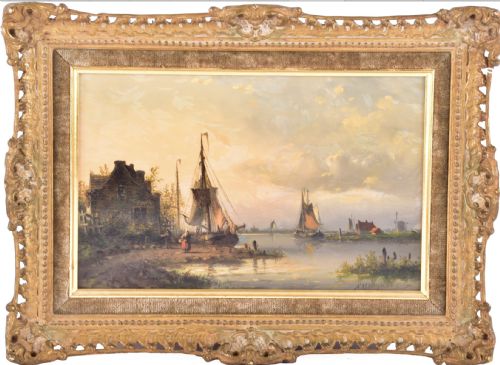
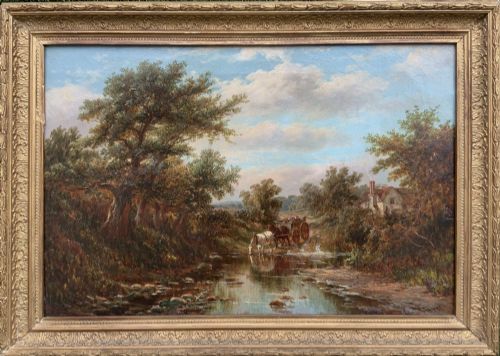
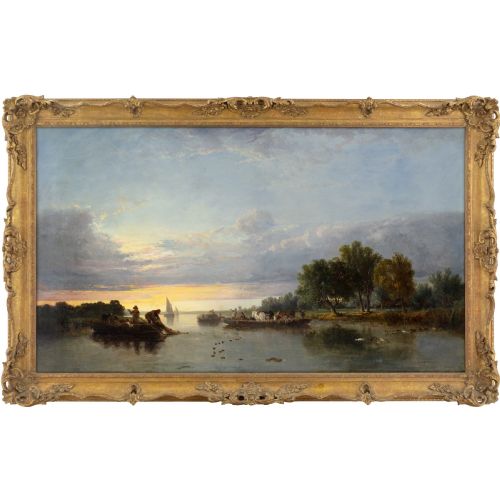

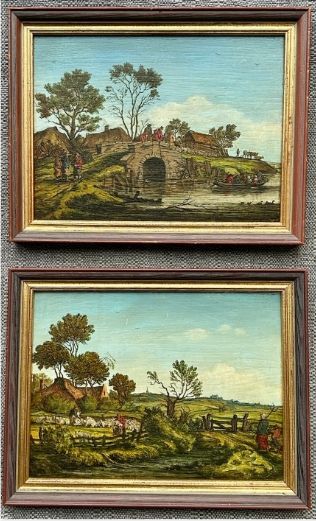

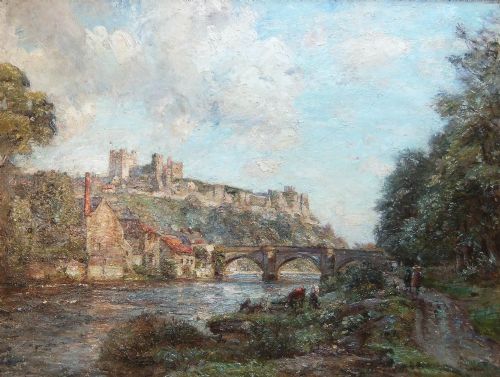
Framed River Scene Oil
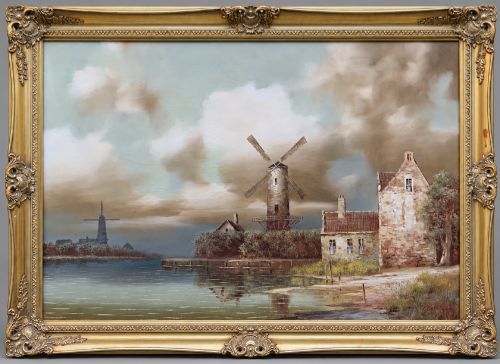
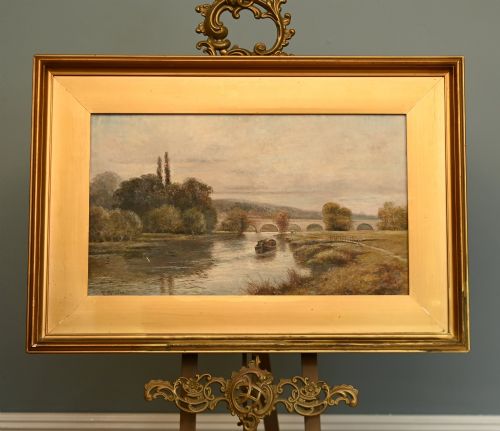
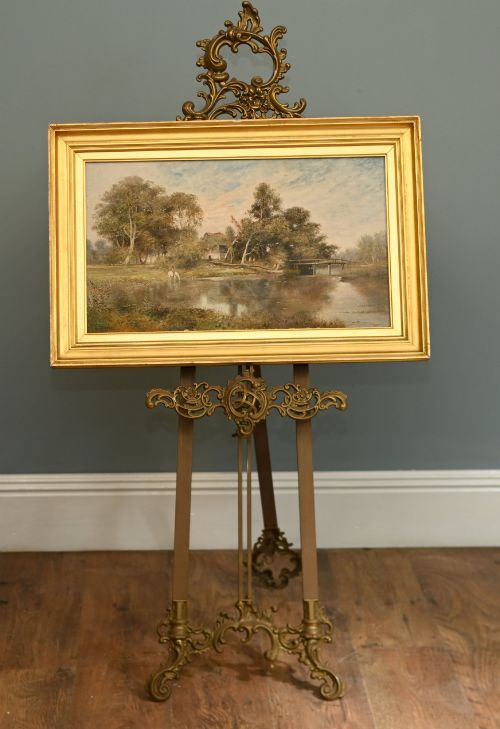
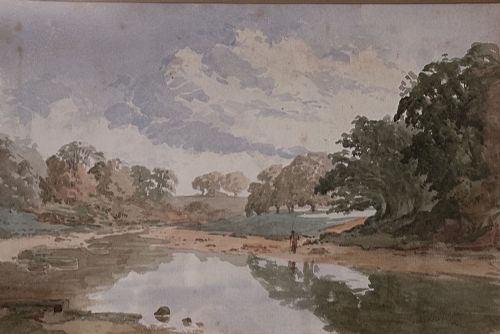
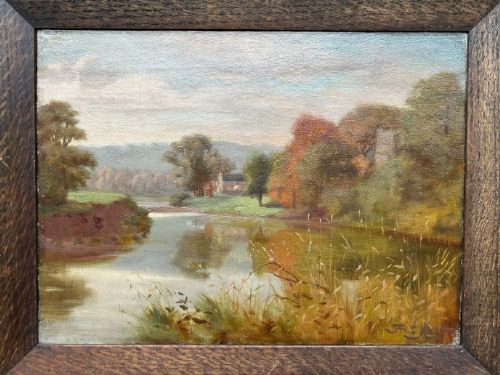
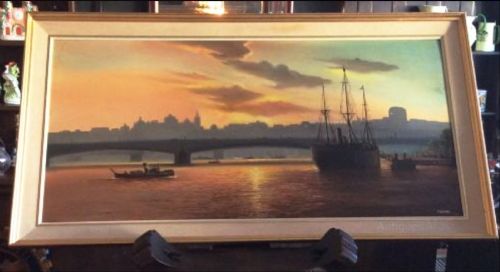
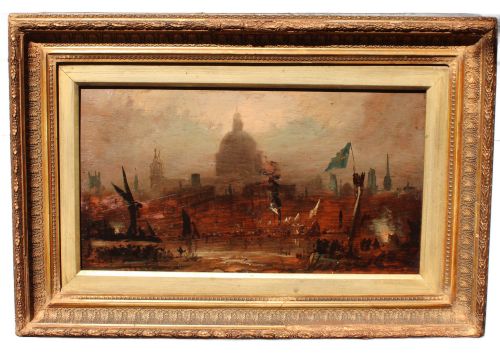
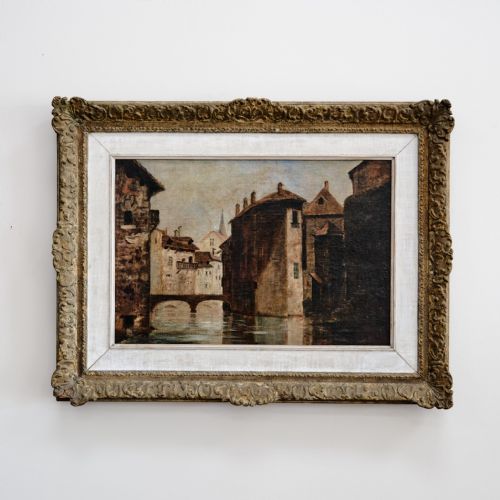
These framed river scene oil works capture flowing water, quiet banks and historic bridges across multiple centuries.
Framed River Scene Oil
A framed river scene oil presents pastoral waterways, industrial ports and frozen canals painted across the nineteenth and twentieth centuries. These artworks record specific locations like the Thames, the Teme and Dutch waterways alongside imagined picturesque vistas.
Buyers encounter Victorian British School canvases, Edwardian rural studies and Dutch manner compositions. Many retain their original period housings, ranging from simple timber mouldings to ornate moulded gesso frames.
The subjects span quiet fishermen on riverbanks, figures ice skating in the Dutch tradition, and panoramic bridge views. Canvas, wood panels and oil boards constitute the primary supports for these regional landscapes.
Materials and Construction
Artists painted primarily with oil paint on stretched canvas, wood panels or board supports. These mediums allowed painters to layer pigments, build impasto textures and capture the shifting light on water.
Surviving works are typically housed in wood frames finished with gesso and gilt. These surrounds protect the perimeters of the canvas or panel while providing a decorative architectural border.
Listings feature river scenes spanning the nineteenth and twentieth centuries, executed in oil on canvas, wood and board.
Qualities of Execution
Quality rests in the handling of light, atmosphere and perspective within the painted composition. Skilled brushwork distinguishes a convincing rendering of water and sky from a formulaic regional copy.
The preservation of the original gilt frame significantly impacts the integrity of the piece. Frames with intact gesso enrich the presentation of the oil painting they enclose.
Nicolaas Martinus Wijdoogen·Thomas Thomas·Edward Williams·George Graham·W Klombeck·Frederick Marriott·Henri Ottmann·Herbert Royle·Florence Adelina Hess·T C Hofland·Henry H Parker·Sydney Yates Johnson·Hubert Wellington·Archibald Kay·Thomas Baker·André Prévot-Valéri·Arthur Herbert Rigg
The Framed River Scene Oil Glossary
- Oil on Canvas
- Pigment mixed with drying oil applied to a woven fabric support stretched over a wooden frame. This combination allows for varied brushstrokes and surface textures.
- Gesso
- A plaster mixture applied to wood or canvas to create a smooth, absorbent surface for painting or gilding. It forms the foundation for decorative frame mouldings.
- Impasto
- Paint applied thickly to a canvas, standing out from the surface so that brush or palette knife marks remain visible. This technique adds physical depth to water and foliage.
- Wood Panel
- A rigid wooden board utilised as a support for oil paintings prior to and alongside stretched canvas. Panels offer a stable surface that resists punctures.
- Tondo
- A circular painting or relief sculpture. This format presents river landscapes within a curved boundary.
Framed River Scene Oil: Frequently Asked Questions
How do I identify the period of a river painting?
Examine the canvas preparation, stretcher construction and framing style alongside the clothing and architecture depicted in the scene. Nineteenth-century works often feature hand-carved gilt frames and distinctive canvas weaves.
Signatures, artist registry records and inscriptions on the reverse of the panel provide further chronological markers. Comparing the brushwork style to known regional schools helps narrow the date of creation.
Are these paintings on canvas or wood?
Both supports appear frequently across these listings. Canvas stretched over a wooden frame was standard for larger works, while smaller studies often utilised wood panels or oil boards.
Each support method influences how the paint ages and interacts with environmental humidity. Wood panels require stable humidity conditions to prevent warping of the painted surface.
How should I display an antique oil painting?
Position the framed artwork away from direct sunlight and heat sources to protect the oil pigments and the underlying canvas or wood. Stable indoor temperatures prevent the gesso frame from cracking.
Ensure the wall fixings safely support the combined weight of the painting and its heavy wood frame. Hanging the piece at eye level allows optimal viewing of the brushwork and details.
What does British School mean on a listing?
This designation refers to an artist who worked within Britain or followed the artistic traditions of British landscape painting during a specific era. It groups works where the exact hand remains unidentified but the regional style is clear.
Such attribution connects the artwork to established nineteenth-century or Edwardian painting movements. It highlights the geographic origin and stylistic context of the landscape.