


Framed Windmill Wall Art
Framed windmill wall art brings rustic charm into your home through historic paintings of Dutch landscapes and Norfolk broads.
Framed Windmill Wall Art
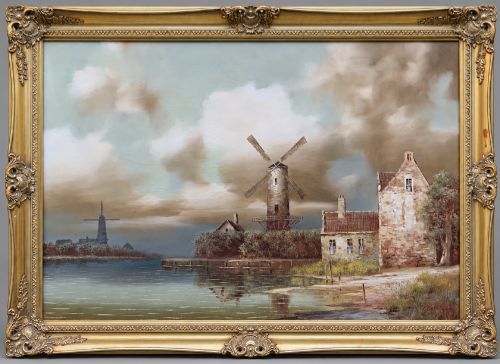
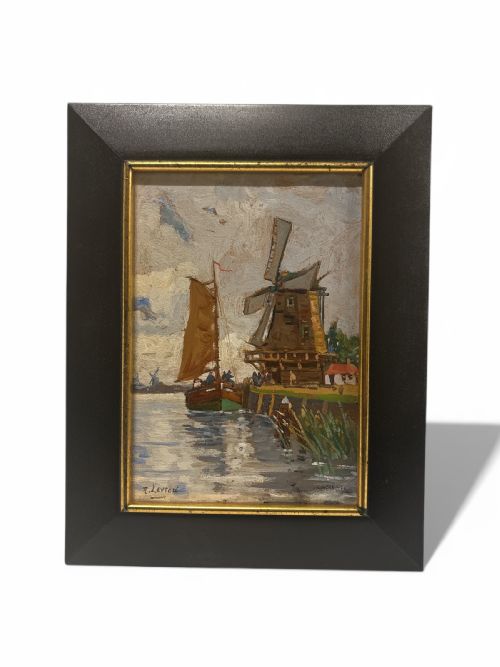
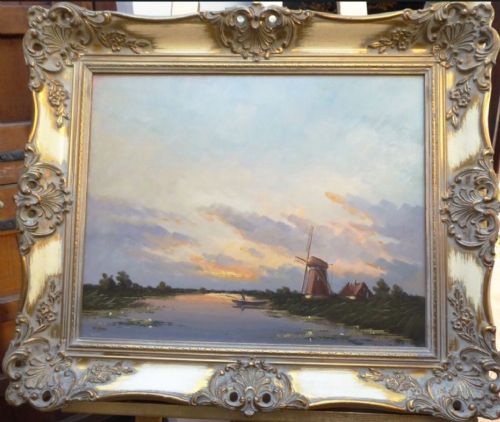
When you search for framed windmill wall art, you encounter oil paintings and watercolours depicting historic windmills set against rivers, canals, and flatland fields. These works capture pastoral scenes ranging from Dutch landscapes to English broads and marshes, typically preserved in period frames.
Most examples originate from the nineteenth and twentieth centuries, spanning Victorian, Edwardian, and post-war periods. You find works executed in styles such as the Dutch School, impressionism, and the Norwich School, focusing on agricultural pumping mills and coastal watermills.
The selection includes both substantial large-scale oils on canvas and intimate watercolours on paper. Certain pieces incorporate framed picture clocks or traditional wood panels, reflecting diverse European marine and rural artistic traditions.
How these artworks were made
Painters utilised oil paint on canvas or wood panel, alongside watercolour applied to paper, building up textures to render water, sky, and masonry. Canvas supports provide a durable ground for thick pigment, while wood panels offer a rigid surface suited to detailed nineteenth-century landscapes.
Listings feature works spanning the nineteenth and twentieth centuries, including Victorian watercolours and post-war impressionist oil paintings.
What varies in quality
Quality depends upon the artist's ability to capture atmospheric light and natural movement in the sky and water surrounding the windmill. Works by recognised painters exhibit superior handling of perspective and colour harmony compared to naive or anonymous school productions.
The condition of the original gilt frame and the preservation of the paint surface influence the overall character of the piece. Intact nineteenth-century frames and stable canvas grounds maintain the historical integrity of the artwork.
Thomas Bush Hardy·Jan van Couver·William Tatton Winter·Edward Seago·Pieter Cornelis Dommersen·Kershaw Schofield
The Framed Windmill Wall Art Glossary
- Oil paint
- A slow-drying paint made from pigment suspended in a drying oil, commonly linseed. This medium allows artists to blend colours smoothly and create rich textures.
- Watercolour
- A paint method where coloured pigments are suspended in a water-soluble binder. It is typically applied to paper to produce translucent washes of light.
- Gilt wood
- Wood carved and coated with a thin layer of gold leaf or metallic powder. This treatment enhances frames with a bright, reflective finish.
- Dutch School
- A collective term for seventeenth-century to nineteenth-century painters working in the Netherlands. They are renowned for realistic landscapes, seascapes, and coastal windmills.
- Norwich School
- A regional group of British artists influenced by Dutch landscape traditions. They painted local scenery, rivers, and windmills in Norfolk.
- Pumping mill
- A type of windmill designed to drain water from low-lying marshland into canals. These structures frequently appear as focal points in regional landscapes.
Framed Windmill Wall Art: Frequently Asked Questions
How do I hang framed windmill wall art?
Hang these pieces securely using appropriate wall fixings matched to the weight of the wood frame and canvas. Position the artwork at eye level in a room with stable humidity away from direct sunlight.
Ensure the hanging wire or brackets on the back of the frame are strong enough to support the painting safely. Leave adequate space around the frame so the landscape composition can be viewed clearly.
What is the difference between oil and watercolour windmill art?
Oil paintings feature thick pigments applied to canvas or wood panels, offering rich textures and deep colour tones. Watercolours utilise translucent paints on paper, creating lighter, more luminous atmospheric effects.
Oils generally require sturdy frames with canvas supports, while watercolours need protection behind glass to prevent moisture damage. Both mediums capture historic landscapes but achieve different visual depths.
Where were these windmill paintings made?
Many of these artworks originate from the Netherlands, depicting traditional canals, coastal shores, and flatland polders. Other pieces record English scenes, particularly the Norfolk broads and regional marshes.
Artists travelled across Britain and Europe to paint working agricultural mills, resulting in diverse regional interpretations. The specific location often influences the architectural style of the windmill shown.
How do I care for antique windmill paintings?
Protect the artwork by keeping it away from extreme temperature fluctuations and damp environments that could harm the canvas or paper. Dust the frame gently with a dry, soft cloth without applying harsh cleaning products.
Avoid placing paintings in direct sunlight to prevent the oil or watercolour pigments from fading over time. Consult a professional conservator if the canvas or gilt frame requires cleaning.