





Framed River Impressionist Art
Framed river impressionist art captures moving water and changing light through loose brushwork, offering timeless views of canals, riverbanks and bridges.
Framed River Impressionist Art
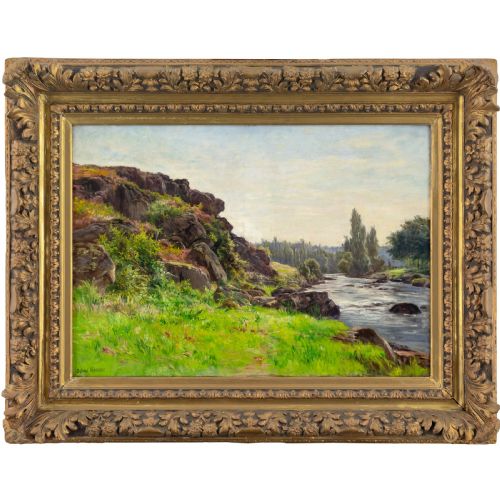
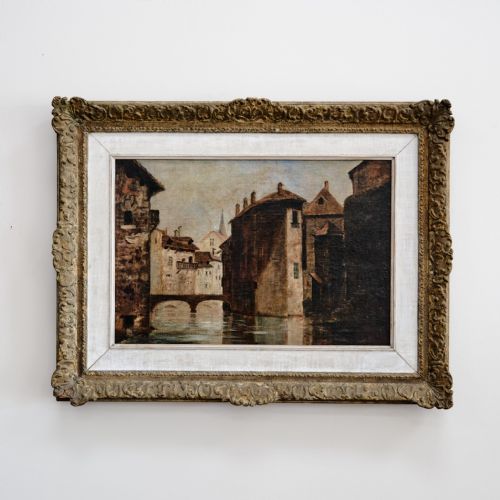
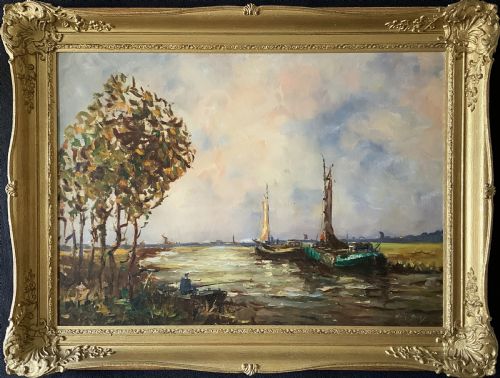
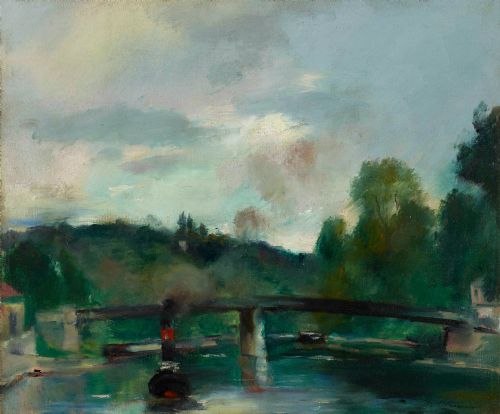
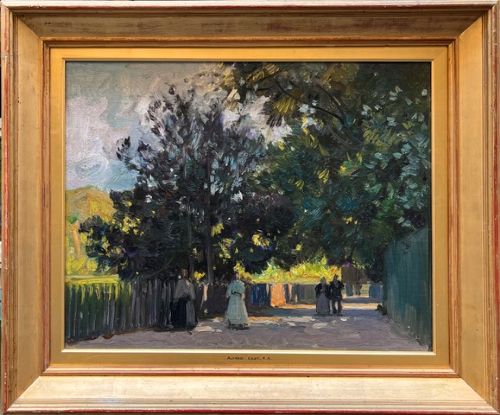
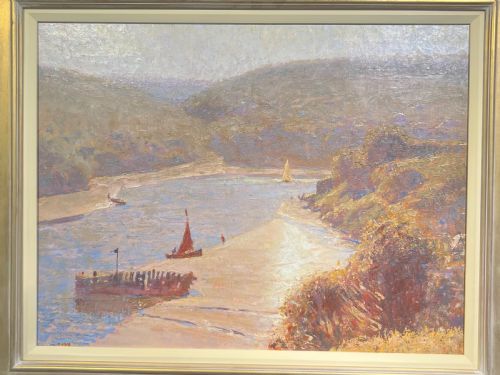
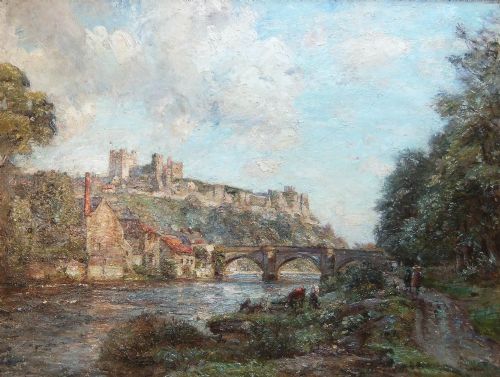
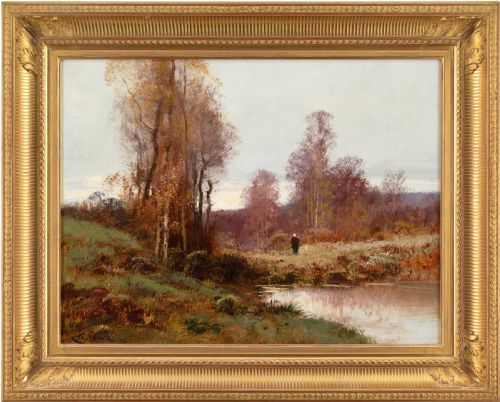
These works focus primarily on waterways, canals and river paths depicted through the lens of British Impressionism, French Impressionism, Post-Impressionism and the Barbizon School. Buyers encounter scenes ranging from quiet Yorkshire streams and Scottish waterways to Parisian riverbanks along the Seine.
The selections span from the nineteenth century through the mid-twentieth century, including the 1900s, 1910s, 1920s, 1930s, 1940s, 1950s and 1960s. Canvases and wood panels frequently arrive already housed in traditional gesso and gilt wood frames that complement the painterly brushwork.
Most pieces document pastoral or urban river life featuring figures fishing, crossing footbridges or mooring boats. The physical formats consist predominantly of oil paintings alongside select watercolours and pastels.
Materials and Techniques
Artists painted primarily with oil paint on stretched canvas or directly onto wood panels, building texture with varied brushstrokes and occasional impasto. Watercolours and pastels appear on paper grounds for lighter compositional studies.
Surrounding frames are typically constructed from wood and finished with moulded gesso and gilt layers to enhance the visual depth of the painting.
Several canvases preserve actual river dust and tiny studio particles trapped beneath the varnish over a century ago.
Assessing Artistic Quality
Quality rests upon the confidence of the brushwork and the artist's ability to render the play of light upon water and surrounding foliage. Stronger examples display a purposeful handling of paint that evokes atmosphere rather than rigid detail.
The integration between the artwork and its frame matters considerably, as period gilt wood and gesso mouldings contribute to the overall presentation and survival of the piece.
George Graham·Gabriel Mathieu·Willem Bos·Henri Ottmann·Sir Alfred East·Herbert Royle·Paul Désiré Trouillebert·Florence Adelina Hess·Hubert Wellington·Archibald Kay·Charles Clair·André Prévot-Valéri·Arthur Reginald Smith·Mario Pinetti·Arthur Herbert Rigg·Ron Folland·Owen Bowen·E A Minardo·David Watts·William Grant Murray·Maud Raphael Jones·Phyllis Morgans·Berthe des Clayes·Armand Guillaumin·William Tatton Winter
The Framed River Impressionist Art Glossary
- Impressionism
- A nineteenth-century painting style focused on capturing transient visual impressions through rapid brushwork and unblended colour. Artists prioritized natural light and outdoor scenes over academic finish.
- Barbizon School
- A mid-nineteenth-century French art movement dedicated to naturalistic landscape painting. Practitioners worked directly from nature, emphasising atmospheric conditions and rural river settings.
- Impasto
- Paint applied thickly to a canvas or panel so that it stands proud of the surface. This technique preserves the physical gesture of the brush and catches real light.
- Gesso
- A plaster-like mixture applied to wooden frames as a base for subsequent gilding or painting. It provides a smooth, sculptable surface for ornate decorative mouldings.
- Gilt Wood
- Timber framing coated with thin gold leaf or metallic powder over a prepared ground. It adds warmth and reflective quality around the perimeter of the artwork.
Framed River Impressionist Art: Frequently Asked Questions
How do I date an oil painting?
Dating relies on stylistic markers, artist active years, and framing materials recorded in the documentation. Canvas preparation and stretcher construction also offer chronological clues.
Comparing brushwork conventions to known regional movements helps narrow the decade of creation.
What is the Barbizon School?
The Barbizon School refers to French painters who worked near the village of Fontainebleau in the mid-nineteenth century. They championed direct observation of rural landscapes and river valleys.
Their focus on natural light directly influenced later impressionist developments.
Are these frames original?
Frames often date to the period of the painting, utilising traditional wood, gesso and gilt construction methods. Some pieces retain their initial maker settings while others have been matched to contemporary surrounds.
Examining the corner joints and surface wear reveals the age of the moulding.
How should I hang oil paintings?
Oil paintings on canvas or panel benefit from stable interior wall locations away from direct sunlight and excessive humidity. Proper picture wire and wall anchors suited to the weight of the gilt frame ensure secure installation.
Maintaining moderate room temperatures prevents warping in the wooden supports.