






Framed Religious Plaque
These framed religious plaque examples offer small-scale devotion and centuries of craftsmanship for domestic interiors.
Framed Religious Plaque
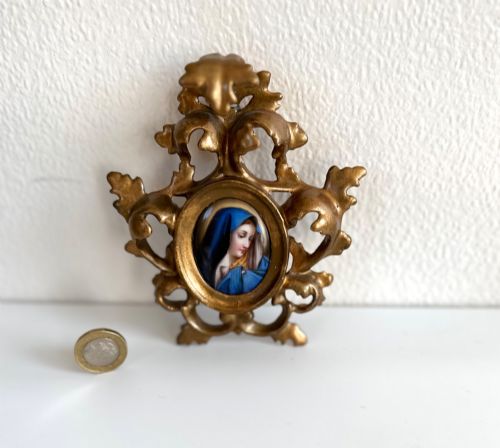
A framed religious plaque provides a portable or wall-hung focal point for private worship and contemplation, spanning centuries of European Christian art. When searching for a framed religious plaque, buyers encounter everything from miniature painted portraits of the Madonna to intricate metal reliefs and carved devotional scenes.
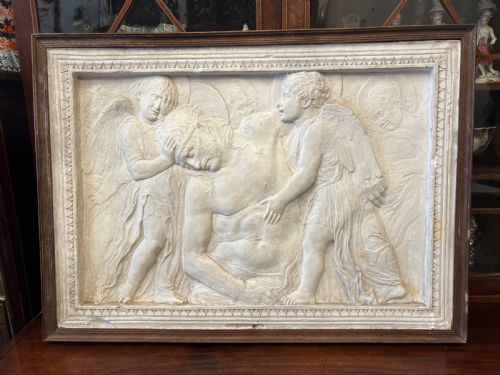
The pieces on this page originate from diverse European traditions, including Italian, Spanish, French, and English workshops. Forms range from small shadowboxes and framed porcelain panels to bronze plaques and marble relief sculptures.
Victorian and Edwardian iterations appear frequently, alongside earlier examples from the seventeenth and eighteenth centuries. Materials shift from humble oak frames holding mother-of-pearl signs to elaborate velvet-backed or gilt metal settings.
What varies in quality
Quality rests in the execution of the central artwork and the integrity of its housing, distinguishing workshop productions from mass examples. Finely rendered hand-painted details and crisp cast bronze or plaster show superior technical skill compared to simpler printed or photographic signs.
The coherence of the frame also dictates overall value, with period-matching wood and glass mounts preserving the object better than later replacements. The renown of the original artist being copied, such as Raphael or Donatello, often elevates the ambition of the piece.
Framed Religious Plaque Retail Price Guide 2026
Typical asking prices for framed religious plaque among the pieces listed under this phrase on Sellingantiques today, from the lower quarter to the upper quarter. They describe what is for sale here now, not the wider market.
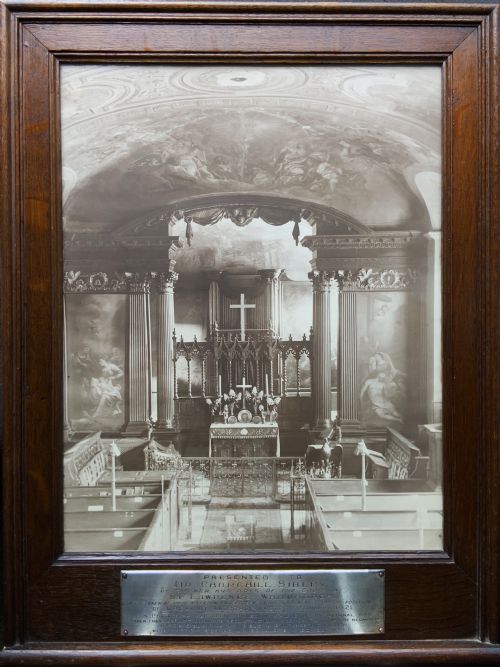
One altar photograph carries the heavy scent of old incense trapped in its oak grain for a century.
The Framed Religious Plaque Glossary
- Ex Voto
- A votive offering given to a saint or divinity, typically placed in a church or chapel as a token of gratitude or devotion. These Italian metal hearts often feature stamped or embossed ornamentation.
- Icon
- A religious work of art, most commonly a painting or panel, from Eastern Christian and certain Catholic traditions. The subject is typically Jesus Christ, Mary, or a saint.
- Shadowbox
- A deep, glass-fronted framed box that allows the display of three-dimensional objects, relics, or layered devotional items. This housing protects fragile elements from dust and damage.
- Veil of Veronica
- A Christian relic consisting of a cloth bearing the likeness of the face of Jesus. Depictions of this subject often appear in nineteenth-century devotional art.
Framed Religious Plaque: Frequently Asked Questions
How do I hang a heavy framed plaque?
Most heavier pieces featuring marble, bronze, or thick oak frames require secure wall anchors and picture wire rated for substantial weight. Ensure the fixing matches your wall type to protect the structural integrity of both the frame and the relief.
Lighter shadowboxes and fabric-mounted plaques often use standard picture hooks, but balancing the weight is essential since many older frames are heavier on one side due to hand-carved elements.
Are these plaques from churches?
Some items originate directly from ecclesiastical settings, such as altar components or church furnishings repurposed for domestic devotion. Other pieces were created specifically for private home shrines and personal prayer.
Examining the reverse often reveals clues about provenance, including mounting brackets, altar stamps, or old collection labels that hint at their previous liturgical life.
How should I clean glass and metal frames?
Dust wooden and gilt metal surrounds gently with a dry, soft brush to avoid damaging fragile finishes or flaking paint. Avoid harsh chemical cleaners that can strip patinas from bronze or discolour antique velvet.
Glass fronts can be cleaned with standard window fluid applied to a cloth rather than sprayed directly onto the frame, preventing moisture from seeping into the artwork behind.
What periods do these pieces come from?
The selection spans several centuries, running from seventeenth-century icons and eighteenth-century Limoges enamels through to nineteenth-century Victorian revivals. Edwardian and early twentieth-century examples also appear regularly.
Dating relies on stylistic clues, framing techniques, material composition, and any documented attribution to makers or historical artistic traditions.