

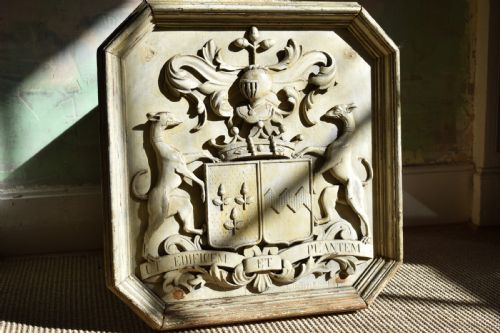
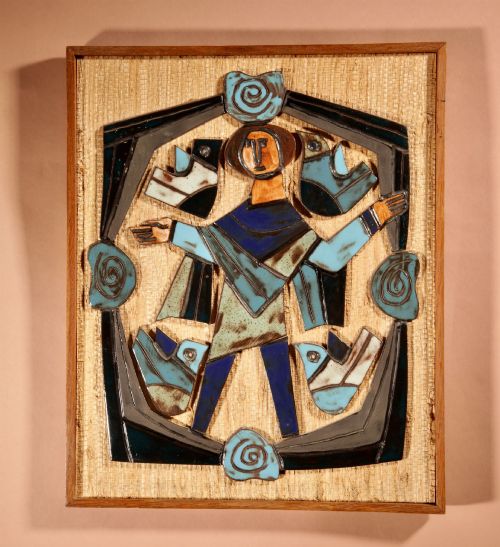
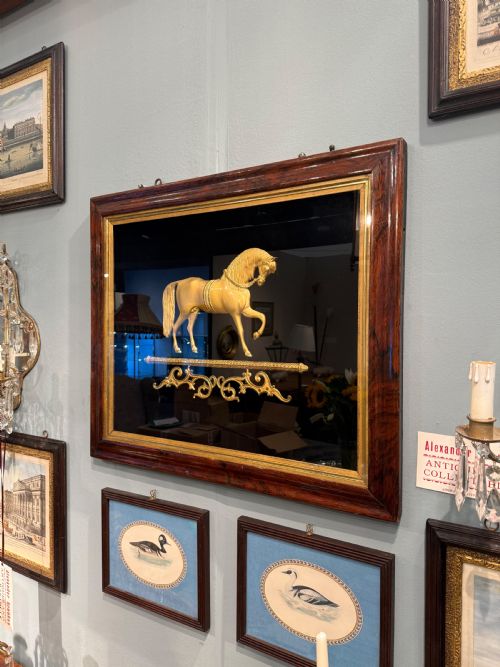
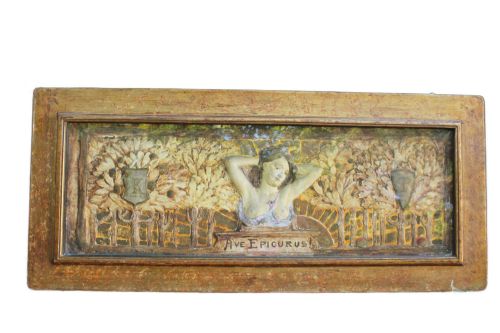
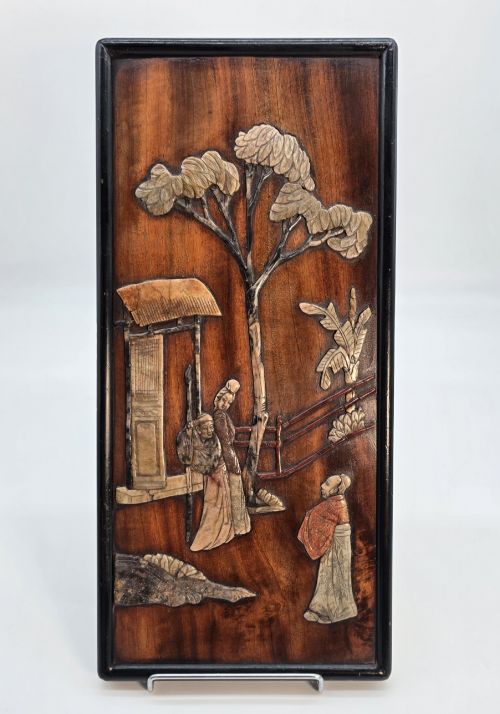


Framed Relief Plaque
When you search for a framed relief plaque, you are hunting for sculptural wall art that brings depth and historic character directly into a room.
Framed Relief Plaque
A framed relief plaque combines three-dimensional sculptural modelling with a dedicated boundary, turning portraits, classical scenes, and heraldry into self-contained wall art. When browsing this selection, you encounter wall plaques, roundels, and framed panels designed to hang directly at eye level in domestic interiors.
The objects span multiple periods from the eighteenth century through the early twentieth century, encompassing Victorian creations, Arts and Crafts designs, and Grand Tour souvenirs. Formats range from modest circular frames housing cast metal portraits to large wooden wall panels carved with deep relief figures.
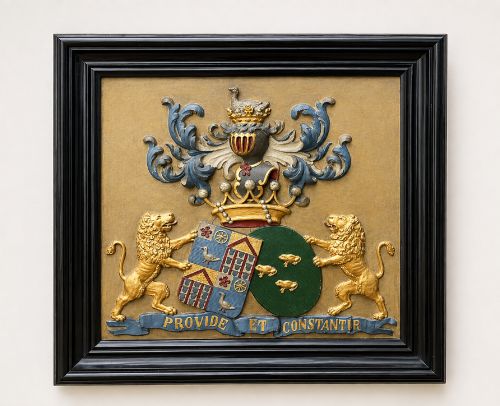
Makers and workshops across Britain and continental Europe produced these pieces to commemorate public figures, depict mythological narratives, or record family lineage. They function primarily as decorative focal points, utilising frames of rosewood, walnut, or giltwood to separate the relief from the surrounding wall.
Materials and Techniques
Metals form a substantial portion of these works, utilising bronze, copper, brass, and white metal shaped through casting, chasing, and bronzing techniques. Cast lead and gilded bronze frequently appear in roundels, while silver and solid gold mountings accent smaller sculptural cameos.
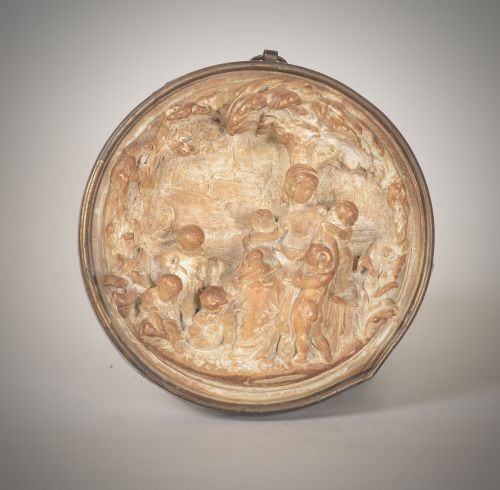
Plaster, porcelain, and earthenware dominate the ceramic and moulded entries, seen in polychrome plaster reliefs, Wedgwood jasperware cameos, and Minton pate-sur-pate plaques. Artisans also worked directly in hard materials, carving portraits and scenes into ivory, marble, Welsh slate, hardwood, and shell.
Framing materials complete the construction, with makers housing the central sculptures in turned mahogany, rosewood, oak, and giltwood frames. Many pieces incorporate secondary mounting materials, such as velvet or silk backing boards behind glass, to protect the delicate relief surfaces.
Framed Relief Plaque Retail Price Guide 2026
Typical asking prices for framed relief plaque among the pieces listed under this phrase on Sellingantiques today, from the lower quarter to the upper quarter. They describe what is for sale here now, not the wider market.
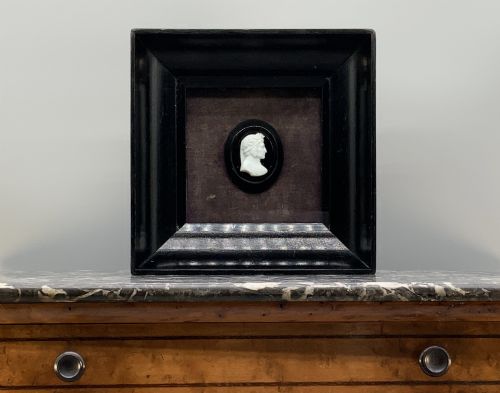
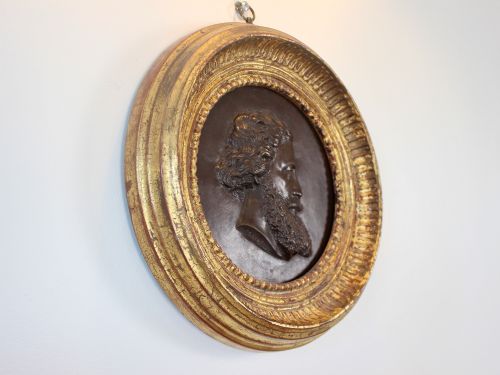
Prime Minister Benjamin Disraeli rubs shoulders with Napoleon and a pair of fighting men in this eclectic cast of historic wall reliefs.
Distinctions in Quality
Material selection and mounting integrity further divide the standard of execution, from solid cast bronze and hand-carved marble down to basic bronzed plaster. The integration between the central relief and its housing matters significantly, as original matching frames of rosewood, walnut, or giltwood retain the intended aesthetic harmony better than later replacements.
Sherwin and Cotton·Minton·Wedgwood·Reginald Robert Tomlinson
The Framed Relief Plaque Glossary
- Relief
- Sculpture where the figures project from a flat background. High relief stands out strongly from the plane, while bas-relief remains shallow.
- Grand Tour
- Eighteenth and nineteenth-century travels undertaken by European elites. Souvenirs included carved stone plaques and portrait profiles.
- Pate-sur-pate
- A ceramic decorating method where liquid white clay is painted layer upon layer onto a contrasting body. This builds up a cameo-like relief before firing.
- Roundel
- A circular panel or frame. These frequently enclose portrait profiles or heraldic motifs.
Framed Relief Plaque: Frequently Asked Questions
How do I hang a heavy bronze or marble plaque safely?
Heavy plaques require secure wall anchors rated for the specific weight of the stone, metal, and wooden frame combined. Ensure the hanging wire or mounting brackets on the back of the frame are fastened directly into the structural wooden or metal elements rather than decorative trim.
Distribute the weight evenly across two separate wall hooks if the plaque is particularly wide or massive. This prevents the frame from tilting and protects the wall surface over time.
Were these plaques originally meant for walls or furniture?
Most pieces in this category were designed specifically as wall art, plaques, or sculptural roundels to be displayed in domestic rooms. Some smaller ivory or ceramic examples originated as cabinet pieces or table top items before receiving later frames for wall hanging.
Examine the reverse of the piece for original suspension loops, hanging rings, or mounting studs. Their placement confirms whether the maker intended the object for vertical display from the outset.
How can I tell a nineteenth-century cast from a modern reproduction?
Nineteenth-century metal casts typically exhibit hand-chased finishing marks, natural oxidation, and genuine wear patterns consistent with age. Modern reproductions often display uniform machine finishing, artificial patination, and lack the crisp detail of period foundry work.
Examine the framing and backing materials as well, as older pieces use period woods, hand-cut screws, and aged paper backings that differ markedly from contemporary manufacturing methods.