

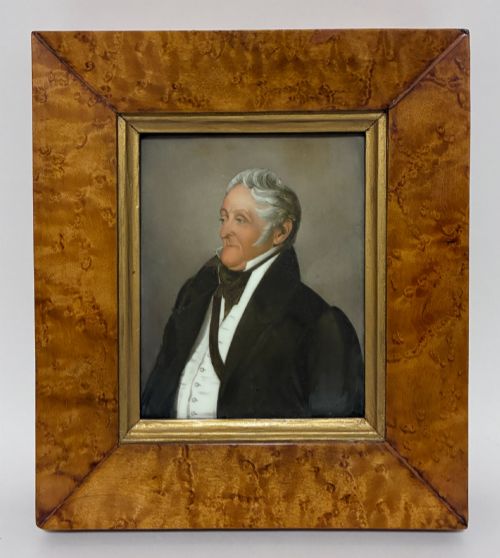
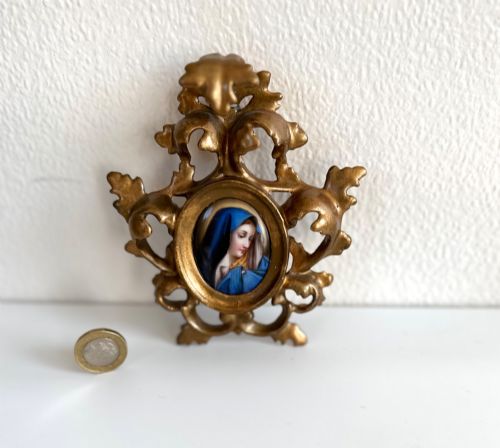
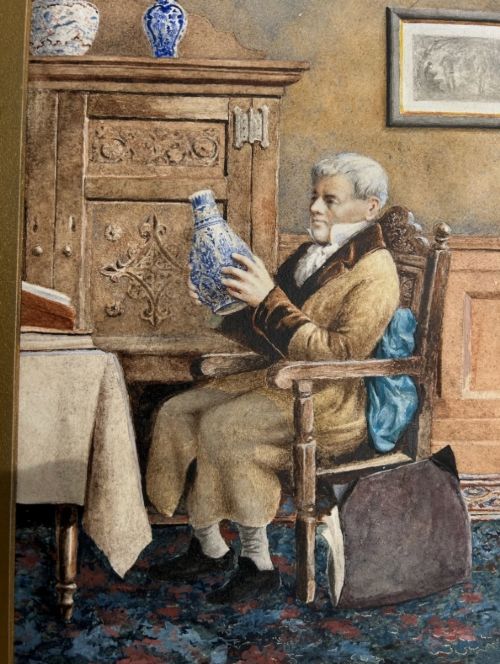


Framed Porcelain Portrait
These framed porcelain portrait pieces combine meticulous painting with period framing, offering a tangible link to historical likenesses.
Framed Porcelain Portrait
A framed porcelain portrait is a painted likeness fired onto ceramic or enamel support and mounted within a protective border, designed primarily as wall art or a cabinet miniature. When buyers search for a framed porcelain portrait, they encounter pieces ranging from Victorian miniatures of religious subjects to larger European and Chinese plaques depicting historical figures and dignitaries.
The selection on this page demonstrates various historical interpretations, including nineteenth-century European works, Victorian pieces, and twentieth-century examples such as Republic Period Chinese plaques. These items manifest as wall plaques, decorative plaques, and miniature portraits set inside timber, giltwood, or ormolu frames.
Buyers are most likely to meet nineteenth-century painted porcelain plaques featuring female subjects, royal figures like Queen Louise of Mecklenburg-Strelitz, or traditional portraits set behind glass. Such objects reflect both European manufactory output and broader international traditions of ceramic painting.
How they were made
Mounting the finished ceramic required specialised framing techniques, utilising carved wood, giltwood, or cast ormolu mounts to secure the plaque. Some smaller portrait miniatures also incorporate glass panels to protect the delicate painted surface from dust and damage.
Framed Porcelain Portrait Retail Price Guide 2026
Typical asking prices for framed porcelain portrait among the pieces listed under this phrase on Sellingantiques today, from the lower quarter to the upper quarter. They describe what is for sale here now, not the wider market.
Even an emperor needs good company when sharing a wall with nineteenth-century European royalty.
What varies in quality
Quality in these works resides in the fineness of the brushwork and the precision of the facial expression, where master painters achieved subtle gradations of skin tone and shadow. The distinction between standard commercial output and superior execution lies entirely in the lifelike rendering of the subject and the clarity of the enamel firing.
The quality of the housing matches the plaque itself, with superior pieces housed in heavy carved frames, giltwood surrounds, or chased ormolu mounts rather than plain timber. The integration of maker marks or signatures further distinguishes pieces produced by established European manufactories from anonymous workshop output.
KPM·Berlin·Limoges·Henry Stacy Marks
The Framed Porcelain Portrait Glossary
- Porcelain
- A hard, white ceramic material composed of kaolin, feldspar, and quartz, fired at high temperatures to create a dense, non-porous body. It serves as the smooth canvas for detailed miniature portraiture.
- Ormolu
- Gilt bronze or brass cast and chased to produce ornamental mounts, frequently used for framing nineteenth-century plaques. This metallic border adds weight and decorative richness to the presentation.
- Plaque
- A flat, thin ornamental plate of porcelain or enamel intended for wall hanging or inset mounting. These ceramic surfaces allowed artists to paint detailed likenesses with lasting durability.
- Miniature portrait
- A small-scale painting executed with fine detail, in this context rendered on porcelain and secured within a protective frame. Such items were often designed for intimate display or personal devotion.
Framed Porcelain Portrait: Frequently Asked Questions
What periods do framed porcelain portraits come from?
These pieces predominantly date from the nineteenth century, encompassing Victorian interpretations alongside earlier and later examples.
Twentieth-century additions include Republic Period Chinese plaques and early twentieth-century decorative pieces.
How were these portraits displayed originally?
Many examples functioned as wall art, suspended in domestic interiors using integrated carved wood or giltwood frames.
Smaller formats, such as miniature portraits, were frequently kept on desks, incorporated into cabinets, or hung in intimate spaces.
Are all porcelain portraits signed by the artist?
Signatures appear on select pieces, occasionally accompanied by factory marks indicating the place of manufacture.
Many high-quality plaques remain unsigned, bearing only the stylistic and technical characteristics of specific European or Asian workshops.
What subjects are typically depicted?
Common subjects include historical figures, royalty such as Queen Louise of Mecklenburg-Strelitz, and idealized female portraits.
Religious figures, including depictions of the Madonna, also appear alongside traditional Chinese emperors and dignitaries.