
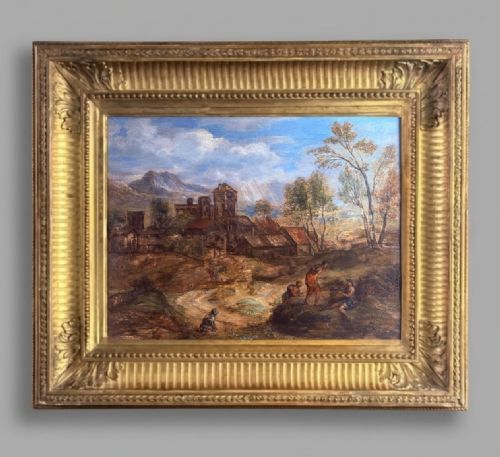
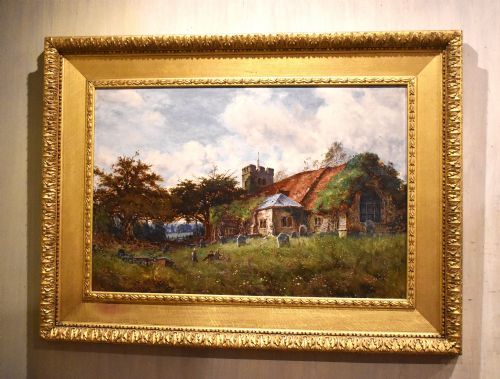
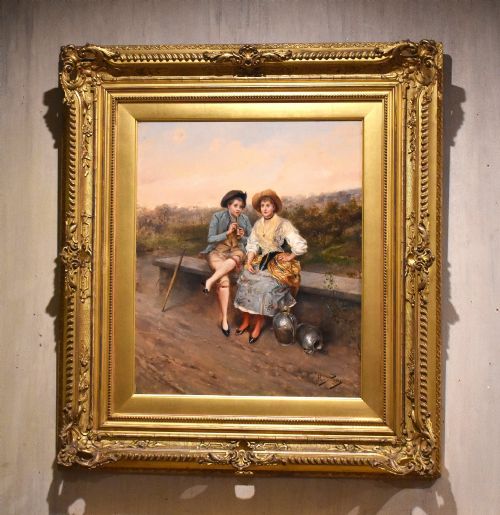
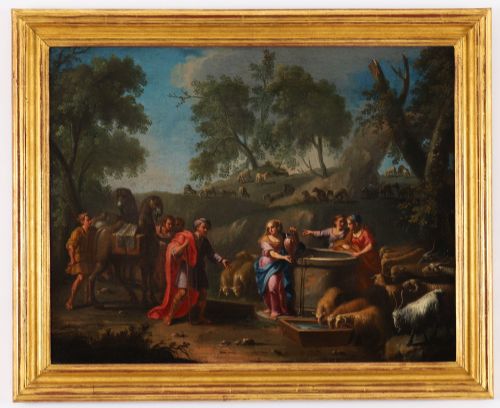
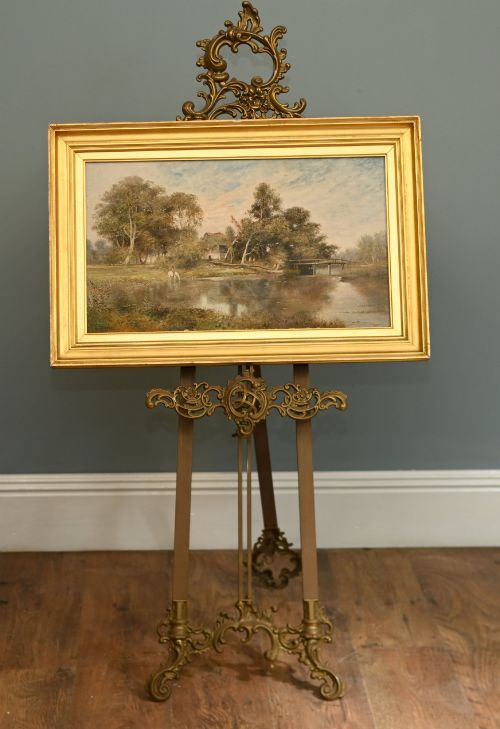
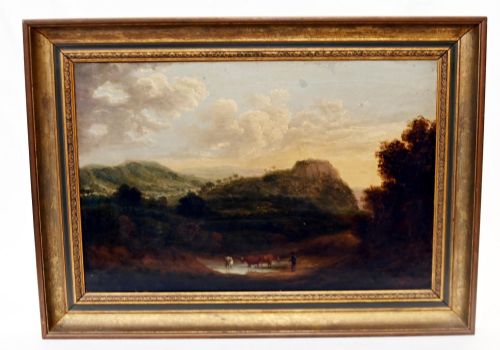
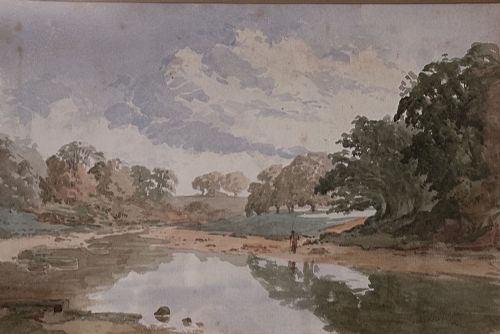
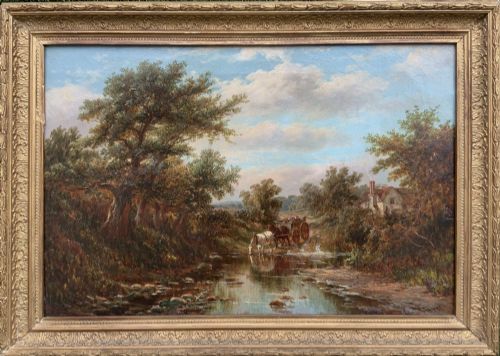
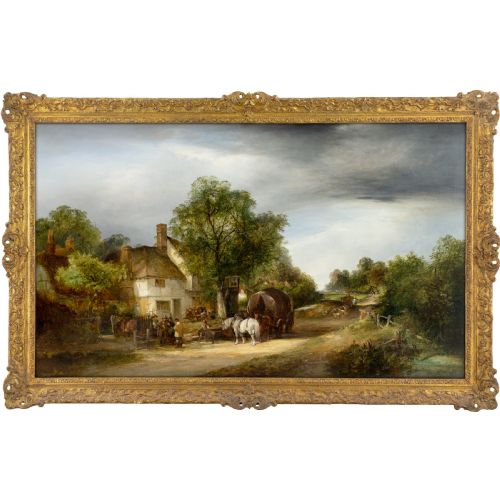
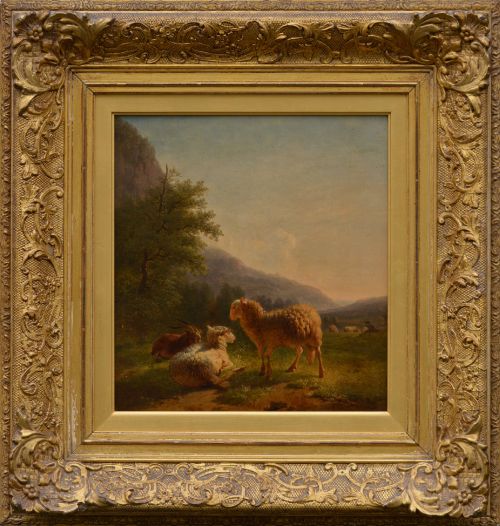


Framed Pastoral Oil Landscape
A framed pastoral oil landscape brings rural quiet, rustic livestock, and gentle countryside into a room through traditional canvas and paint.
Framed Pastoral Oil Landscape
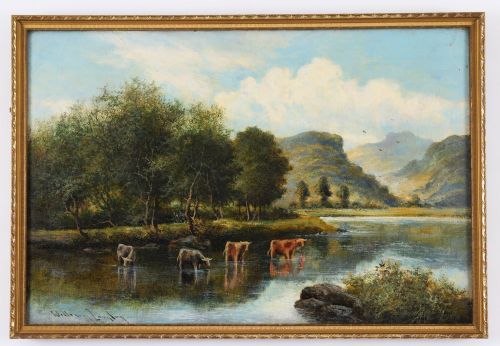
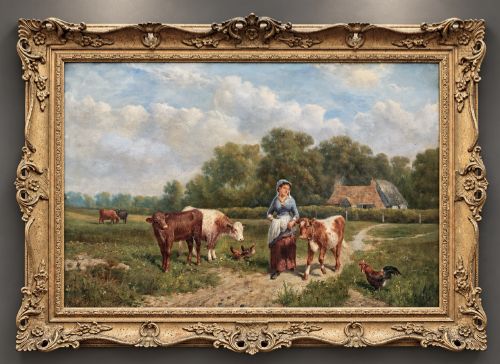
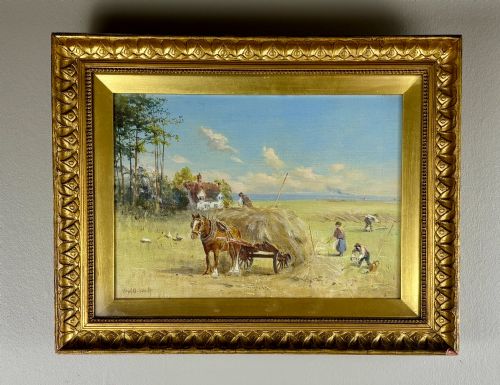
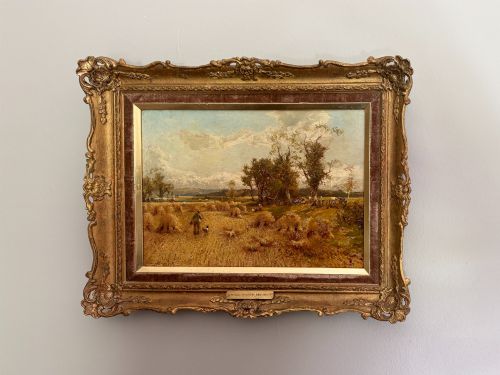
A framed pastoral oil landscape captures scenes of rural life, agricultural work, and domestic animals across centuries of artistic tradition. You will frequently encounter nineteenth-century British and European works depicting shepherds, cattle, and harvest fields.
The compositions span simple wood panels and large canvas surfaces enclosed within ornate surrounds. These rural views reflect changing artistic movements from Georgian realism to Victorian pastoralism and early twentieth-century impressionism.
Materials and construction
Artists painted primarily using oil on woven canvas or prepared wood panels, applying layered oil paint to build depth in skies and foliage. These supports rested within wooden frames finished with moulded gesso and gilt layers.
Makers shaped the heavy frames using carved wood and plaster ornament, often applying gold leaf or metallic paint to the decorative borders. The physical interaction between the oil medium and the textured ground created durable surfaces that survived centuries.
Cattle and sheep appear with surprising frequency, often gazing directly out of the canvas as if posing for the artist.
Judging quality
Quality rests upon the artist's handling of light, anatomical precision in animals and figures, and the harmony of the composition. Skilled brushwork distinguishes thoughtful naturalist observation from hurried decorative production.
The integrity of the original giltwood frame and the stability of the canvas support influence the overall standard of a piece. Well-preserved surfaces retain subtle tonal transitions without heavy restoration obscuring the underlying paint.
Eugène Verboeckhoven·Thomas Sidney Cooper·David Bates·Henry Schouten·George Morland
The Framed Pastoral Oil Landscape Glossary
- Oil on canvas
- A painting technique where oil-based pigments are applied to a stretched woven fabric support. This combination allows for rich blending and textured impasto work.
- Giltwood
- Timber that has been coated with a thin layer of gold leaf or metallic powder. It provides a reflective border for traditional landscape paintings.
- Gesso
- A paint mixture consisting of a binder mixed with chalk, gypsum, or pigment. It served as a smooth preparation layer for wooden panels and frame mouldings.
- Barbizon School
- A mid-nineteenth-century French art movement focused on tonal realism and direct observation of nature. Painters in this circle preferred rustic outdoor scenes over grand historical subjects.
- Grand Tour
- A cultural journey through continental Europe undertaken by wealthy young men to collect art and antiquities. Resulting paintings often recorded idealised Italian scenery.
Framed Pastoral Oil Landscape: Frequently Asked Questions
What defines a pastoral oil painting?
A pastoral oil painting depicts rural scenes, agricultural labour, and domesticated animals within a countryside setting. These works emphasise a calm, rustic relationship between humans, animals, and nature.
Subjects frequently include shepherds with flocks, cattle resting by rivers, and figures near harvest fields. The style aims to evoke a peaceful escape from industrial life.
How do I date an antique oil painting?
Dating relies on examining the canvas weave, stretcher construction, nail types, and the framing materials. Stylistic clues in clothing and agricultural tools also provide reliable chronological markers.
Pigment analysis and artist signatures offer further confirmation, though many nineteenth-century works follow established traditional formulas that span several decades.
Where should I hang these paintings?
These landscapes suit traditional living rooms, studies, and dining spaces where natural light enhances the warm oil tones. Pair them with period furniture to maintain a consistent historical interior.
Keep paintings away from direct sunlight, heating vents, and damp walls to protect both the canvas and the delicate giltwood frame from environmental damage.
How do I care for framed oil art?
Dust frames and canvas surfaces gently using a soft, dry brush without applying liquid cleaners. Avoid touching the painted surface to prevent natural oils from damaging the pigment layers.
Maintain stable room humidity and temperature to prevent the wood panel or canvas from warping and the gesso frame from cracking over time.