


Framed Original Sporting Art
Framed original sporting art brings the movement and atmosphere of the field, track and ring directly onto the wall.
Framed Original Sporting Art
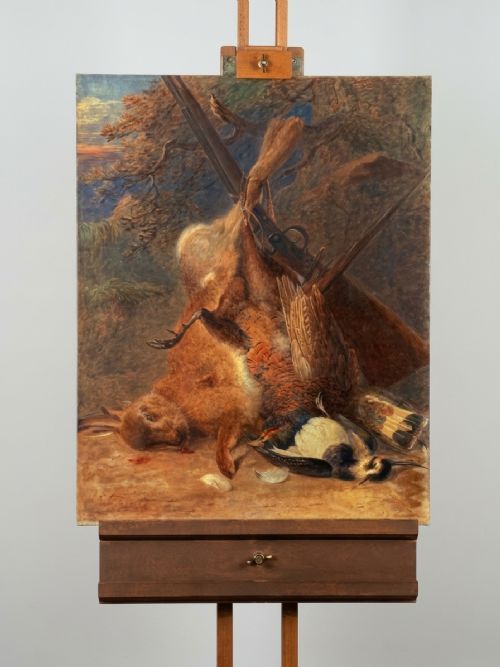
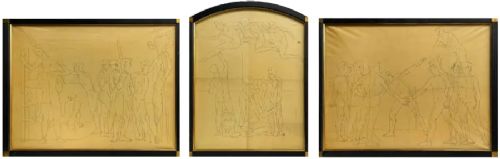
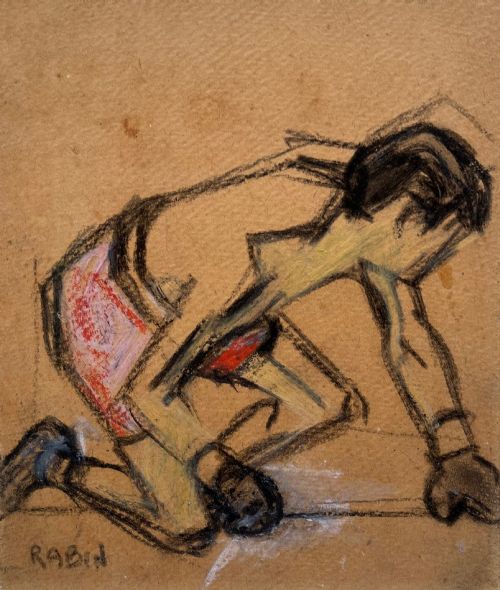
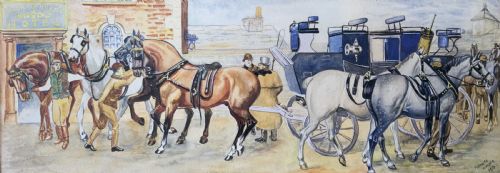
Buyers seeking framed original sporting art encounter works depicting horses, hounds, racing, hunting and athletic competition created across the nineteenth and twentieth centuries. The selection on this page centres on paintings, watercolours, pastels, drawings and original prints dating from the Victorian and Edwardian eras through to the mid-century modern period. These pieces record historical sports and field pastimes through the hands of period artists.
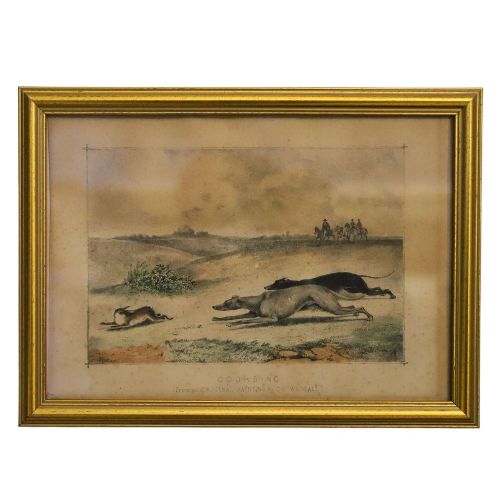
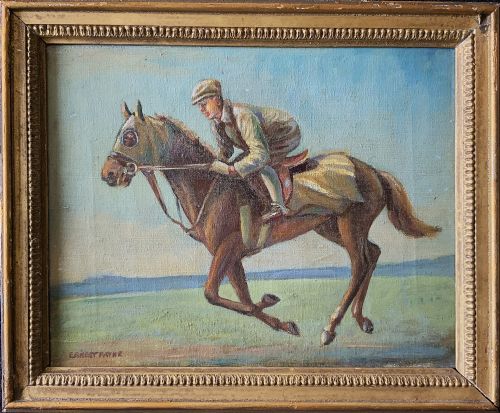
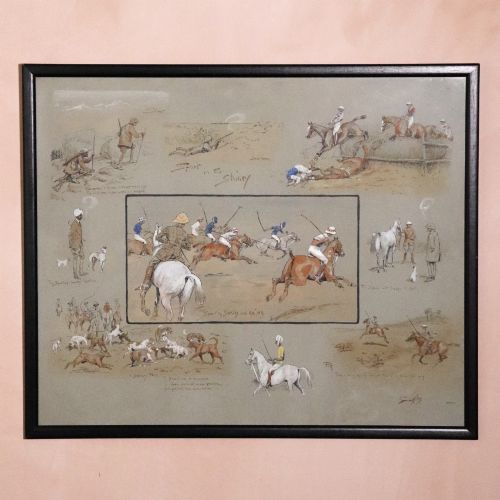
The versions met most frequently range from early nineteenth-century watercolours and oils of horses and hounds to mid-century racing scenes and twentieth-century prints by notable sporting illustrators. Subjects span horse racing, fox hunting, coursing, polo, snooker and motoring, mounted behind glass or set into wood frames with gold leaf accents. Each object brings a distinct record of athletic and field history into domestic spaces.
Materials and technique
Artists working in this field applied oil paint to canvas or wood panels, and watercolours, bodycolour, gouache or pastels onto paper. Works on paper frequently incorporate chalk, pencil and ink, often finished under protective glass within wooden frames. Gold leaf appears on framing elements, providing a formal border to oil paintings and watercolours alike.
Printmakers utilised techniques such as etching and lithography to produce original prints, which were then hand-coloured or issued as limited editions. Support materials range from standard artist paper to heavy card and tinted drawing paper. The physical construction combines traditional framing methods, wood mouldings and protective glazing to preserve fragile paper and canvas works.
Listings span the nineteenth and twentieth centuries, incorporating works from the Edwardian era and the mid-century modern period.
What varies in quality
Quality separates across these works according to the sureness of the draftsmanship and the artist's command of animal anatomy and motion. Superior examples capture the specific tension of a racehorse at full stretch or the precise conformation of a hound, whereas lesser pieces rely on stiff posture and formulaic composition. The vitality of the brushwork or pencil stroke dictates the visual energy of the piece.
The preservation of the medium also determines distinction. Original watercolours and pastels retaining their initial pigment saturation without fading or paper discolouration stand above compromised examples. Furthermore, period frames that complement the exact decade of the artwork contribute significantly to the integrity of the piece.
George Sydney Shepherd·John Ferneley Senior·John Rattenbury Skeaping·Cecil Charles Windsor Aldin·Arthur Wardle·Herbert Dicksee·Michael Lyne·Samuel Spode·Henri Schouten
The Framed Original Sporting Art Glossary
- Bodycolour
- Watercolour paint mixed with a white pigment to render it opaque, allowing artists to build solid highlights and dense passages.
- Lithography
- A planographic printing process based on the antipathy of oil and water, utilised to produce multi-coloured sporting prints.
- Etching
- A printmaking method where lines are bitten into a metal plate with acid before ink is applied and transferred to paper under pressure.
- Gouache
- A heavy, water-soluble paint similar to watercolour but rendered opaque by the addition of fine chalk.
- Pastel
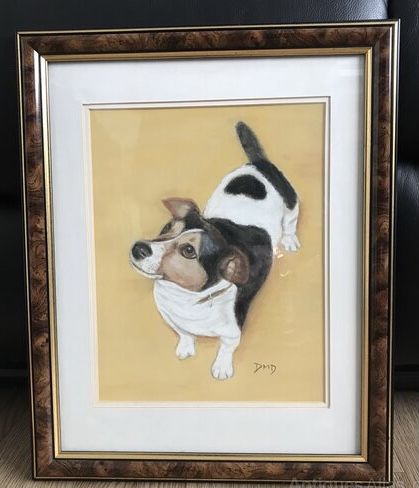
- A dry medium of powdered pigment bound into sticks, producing rich, velvety marks directly upon tinted or textured paper.
Framed Original Sporting Art: Frequently Asked Questions
What subjects appear in sporting art?
The category encompasses depictions of horse racing, fox hunting, coursing, polo, greyhounds, shooting, boxing and motoring. Artists recorded these pursuits through portraits of individual animals, active hunt packs and competitive events.
These subjects reflect the social history of British and European field sports from the nineteenth century onward. Works range from intimate pastel drawings of dogs to large oil paintings of champion horses.
How do I date a sporting artwork?
Dating relies upon costume details, vehicle types, architectural elements and the specific artistic conventions of the period. Signatures, dates inscribed by the artist, and framing styles also provide clear chronological markers.
Additionally, the medium and paper types offer clues to the era of production. Comparative study of known works by period artists helps narrow the decade of creation.
Where should I hang sporting art?
These works suit libraries, studies, hallways and living rooms, traditionally pairing with wood panelling and traditional interiors. Mid-century pieces also sit comfortably within more contemporary spaces.
Protection from direct sunlight is essential to prevent fading in watercolours, pastels and coloured prints. Stable indoor humidity preserves both the paper supports and the wooden frames.
Are prints considered original?
Original prints are struck from plates, stones or blocks created by the artist's own hand during the period, rather than being modern mechanical reproductions. Etchings and lithographs produced in this manner are recognised as original works of graphic art.
Such prints often carry signatures or inscriptions from the artist denoting their authenticity. They represent a distinct branch of period printmaking separate from later commercial posters.