

Framed Oriental Antiques
Framed oriental antiques bring rich narrative detail and historic colour to an interior through panels, scrolls, and mirrors preserved behind glass.
Framed Oriental Antiques
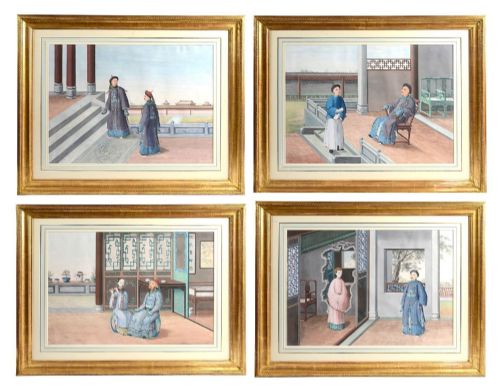
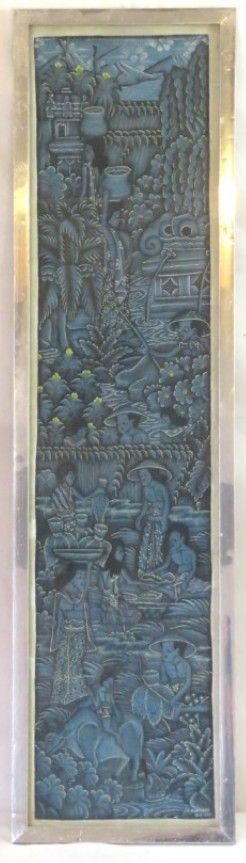
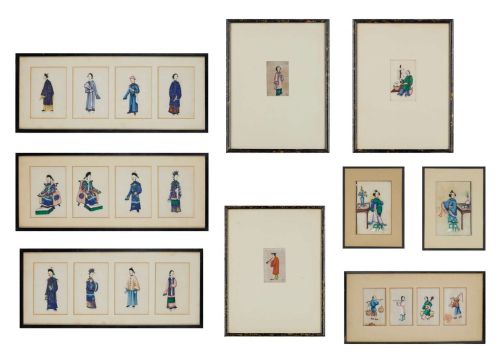
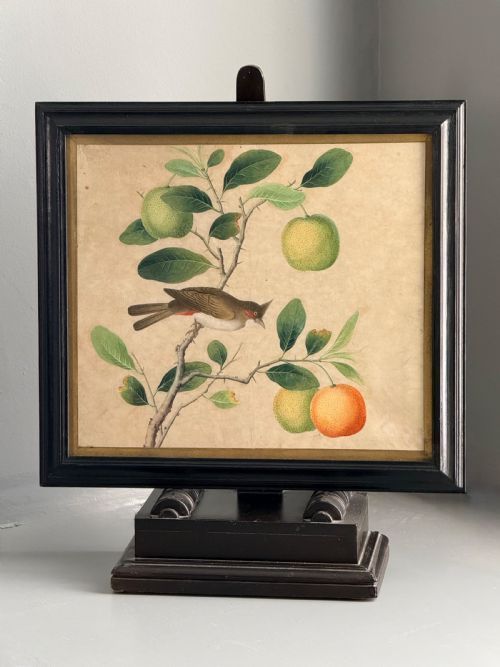
Framed oriental antiques span diverse wall art, mirrors, and textiles produced across Asian and Middle Eastern traditions. Buyers encounter delicate pith paper paintings, silk embroideries, and woodblock prints safely housed behind glass.
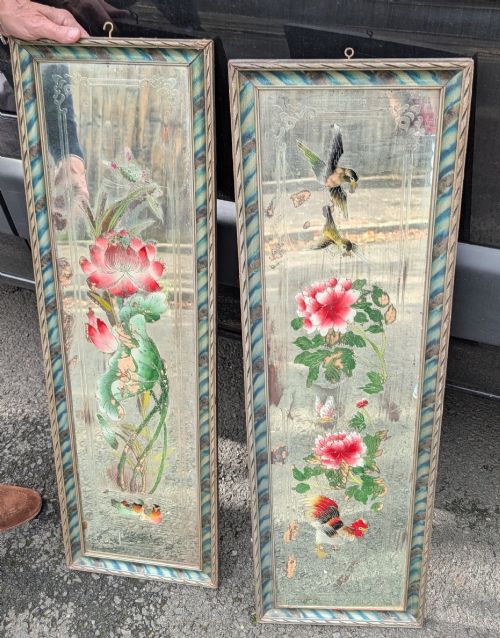
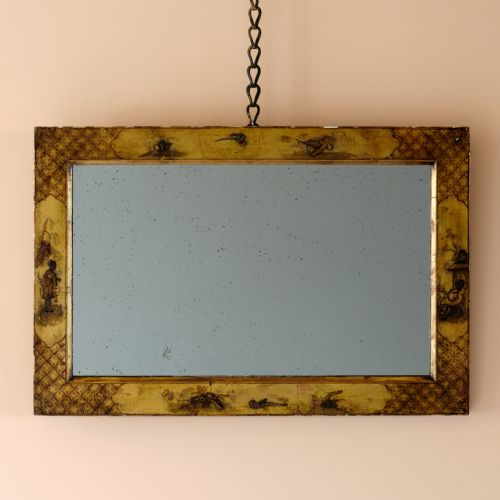
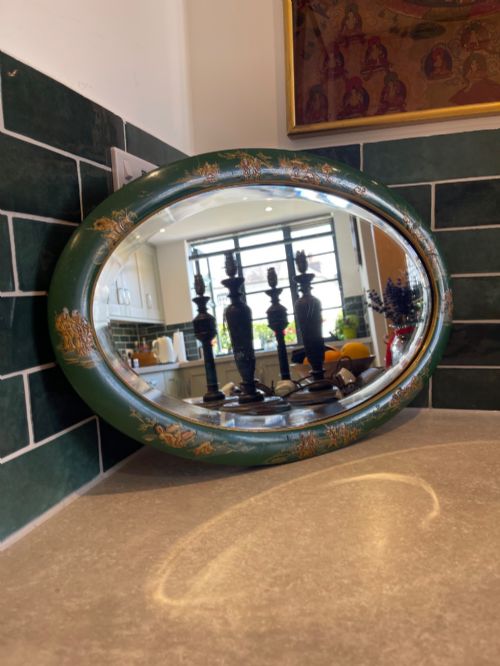
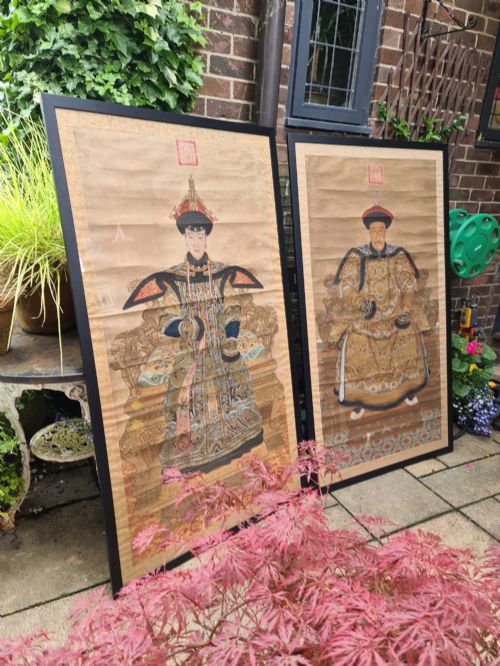
The selection ranges widely from nineteenth century Chinese ancestral scrolls and reverse glass paintings to Japanese woodblock prints and intricate Chinoiserie mirrors. These pieces bring layered historic narrative and decorative presence directly onto the wall.
Originating from periods including the Qing dynasty, Victorian, and Edwardian eras, these works reflect traditional craftsmanship tailored for both domestic display and export markets. Each piece captures a distinct regional aesthetic through enduring materials.
How they were made
Makers utilised natural materials such as wood, silk, paper, and gouache, often mounting fragile textiles and paintings under protective glass. Frames were constructed from timber, sometimes finished with red lacquer, brass details, or ebonised surfaces.
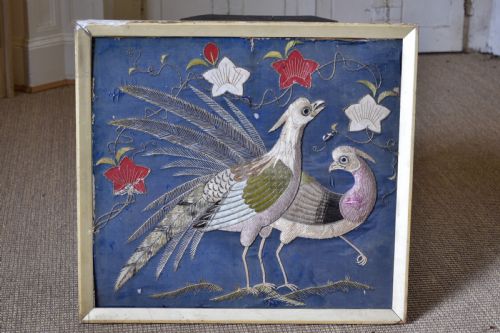
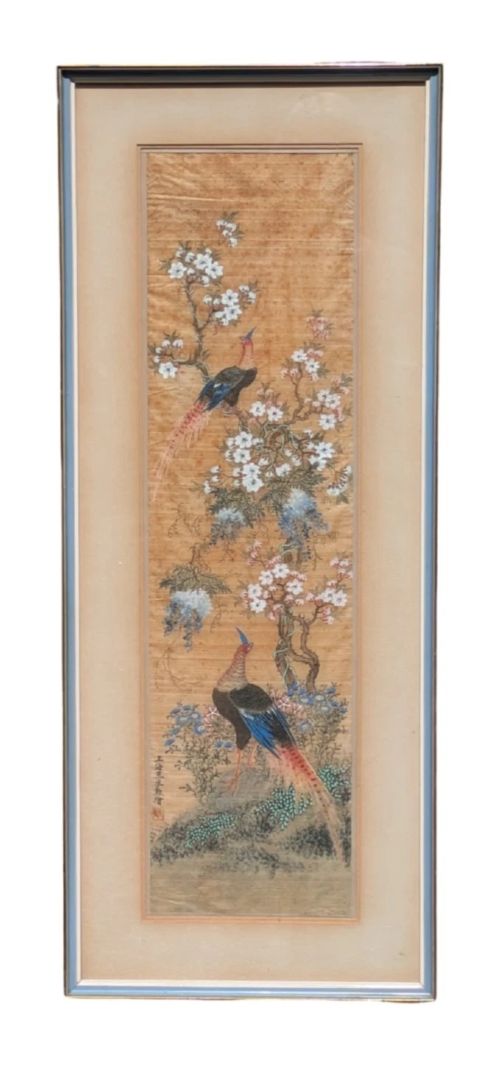
Artisans applied ink, watercolours, and gouache onto specialised surfaces like pith paper and woven silk to achieve fine detail. Embroidery panels relied on meticulous hand-sewn threads depicting figures, dragons, and floral motifs.
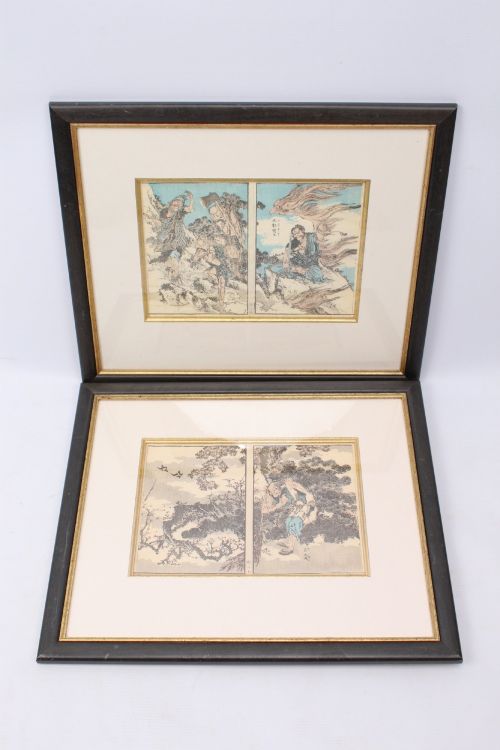
Woodblock printing involved carving multiple blocks to apply successive layers of ink onto paper, producing vivid multi-coloured scenes. Reverse paintings on glass required artists to paint the image backwards directly onto the rear surface so it appeared correctly from the front.
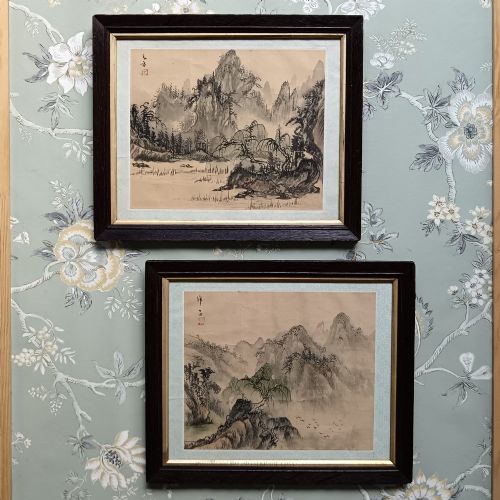
A solitary snow leopard peers out from an early twentieth century Chinese scroll, keeping watch over a collection dominated by serene landscapes.
What varies in quality
Quality rests heavily on the crispness of the original brushwork, the intricacy of the needlework, and the preservation of delicate pigments under glass. Superior examples retain their vibrant original colour without excessive fading or paper degradation.
The integrity of the mounting and the survival of original frames distinguish finer items from later replacements. Skill in execution marks the difference between standard decorative export goods and masterworks by known traditions.
Hokusai·Kitagawa Utamaro·Warwick Goble·Frederick Goodall RA
The Framed Oriental Antiques Glossary
- Pith paper
- A delicate material cut from the pith of the Tetrapanax papyrifer plant, commonly used for nineteenth century Chinese export watercolours. It possesses a velvety texture that absorbs gouache and ink with striking brilliance.
- Chinoiserie
- European theatrical interpretation of Chinese and East Asian artistic traditions, popular in furniture, mirrors, and decorative schemes. This style often employs lacquered surfaces and gilt motifs.
- Reverse painting on glass
- A technique where the artist paints directly onto the back of a glass panel, viewing the correct composition from the front. This method creates a glossy, luminous finish unique to the medium.
- Woodblock print
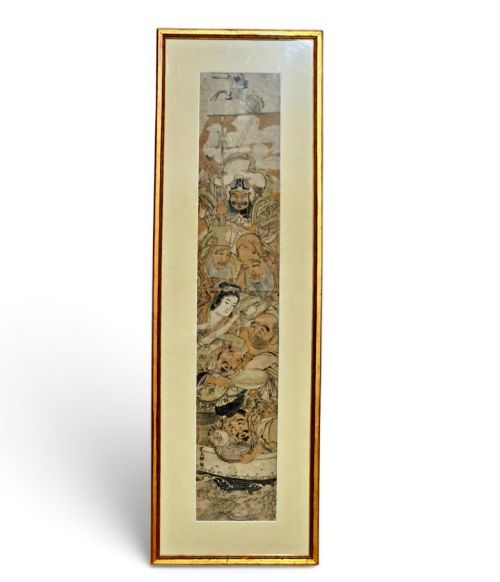
- A relief printing method where an image is carved into a block of wood, inked, and pressed onto paper. Japanese examples often demonstrate exceptional precision in line and colour separation.
- Ancestral scroll
- A formal portrait or lineage painting mounted on fabric scrolls for hanging in traditional settings. These depict respected forebears and incorporate detailed garments and symbolic attributes.
Framed Oriental Antiques: Frequently Asked Questions
How do I hang heavy framed silk scrolls?
Heavy framed scrolls and reverse glass paintings require secure wall anchors suited to the weight of the timber frame and glass. Hang them away from direct sunlight to protect delicate silk threads and fugitive watercolours from fading.
Ensure the hanging wire or brackets on the reverse match the load capacity of your wall fixings. Professional picture hooks distribute the weight evenly across the structure.
How should I clean antique glass frames?
Clean the glass gently using a soft cloth and a mild glass cleaner sprayed onto the cloth rather than directly onto the frame. This prevents moisture from seeping under the edge and damaging the paper or silk artwork inside.
Keep moisture away from wooden, lacquered, or gilt frames to protect the original finish. Dust carved wooden elements regularly with a dry, soft brush.
What is the difference between pith paper and rice paper?
Pith paper is a spongy, cellular material sliced from the pith of a specific plant native to southern China. It absorbs watercolour and gouache readily, creating a velvety depth unlike standard paper.
Rice paper is a common misnomer often applied to various Asian papers made from mulberry, bamboo, or hemp fibres. True pith paper retains a characteristic thickness and fibrous texture when examined closely.
How do I identify a reverse glass painting?
Reverse glass paintings present a glossy, reflective surface where the imagery appears trapped beneath a clear layer of glass. The brushstrokes lie on the rear face, protecting the paint from atmospheric dust and direct contact.
Look closely at the edges where the glass meets the frame to observe the layered nature of the medium. The colours often exhibit a distinct brilliance because the light passes through the glass to illuminate the pigment.