

Framed Miniature Wall Art
Framed miniature wall art comprises small-scale paintings, portraits and plaques that bring concentrated detail and intimacy to domestic spaces.
Framed Miniature Wall Art
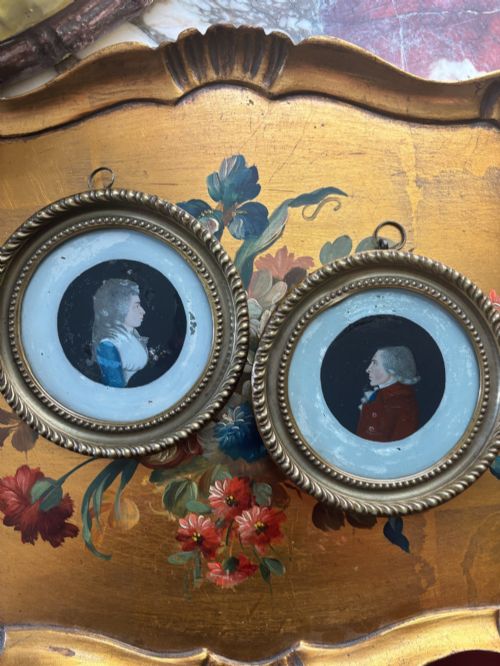
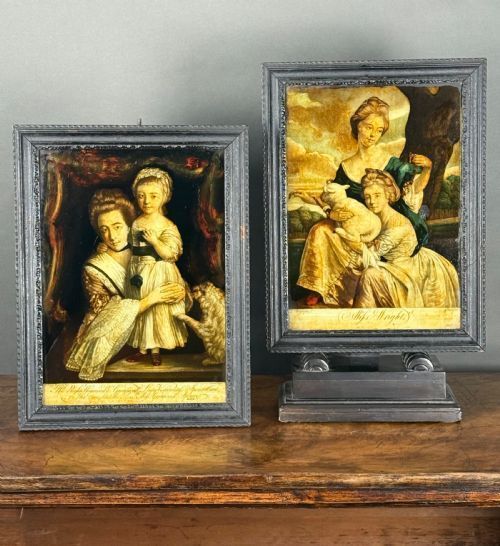
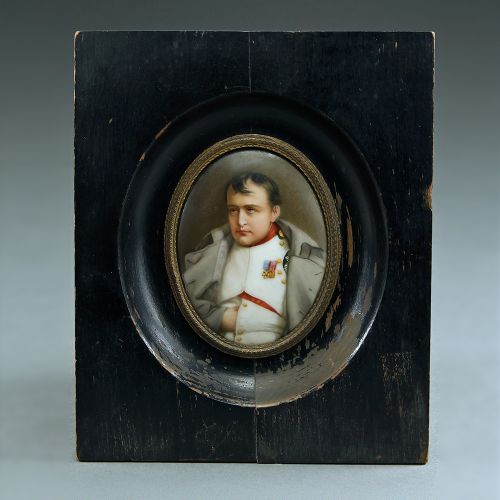
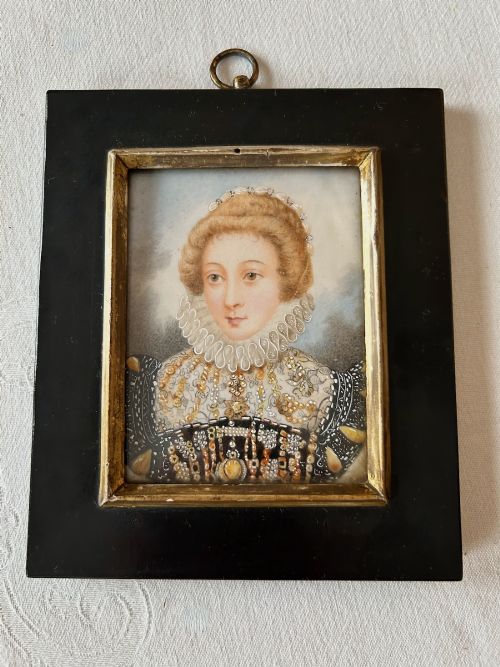
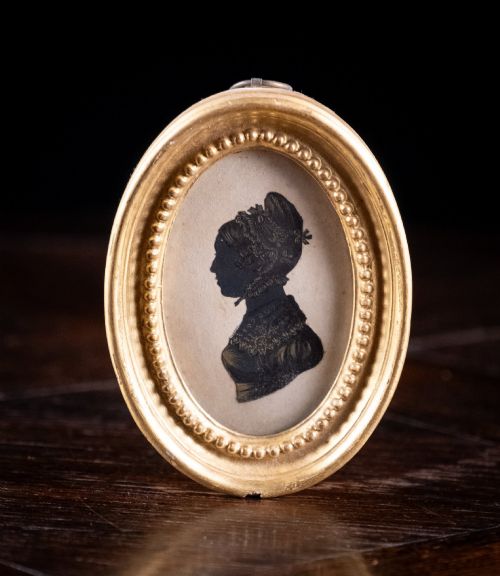
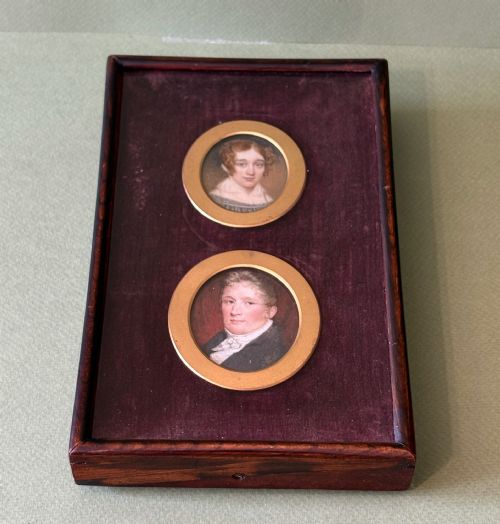
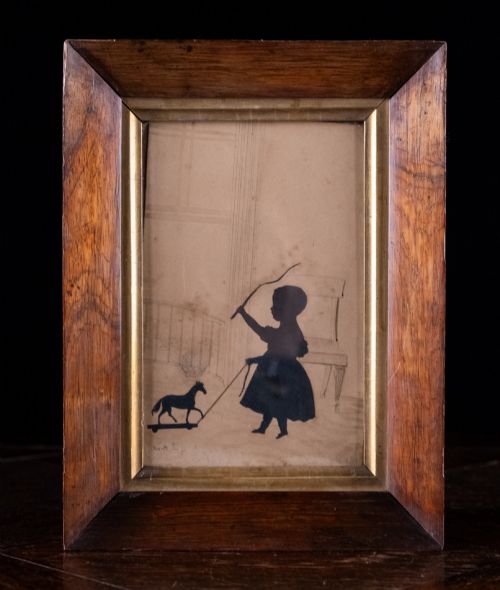
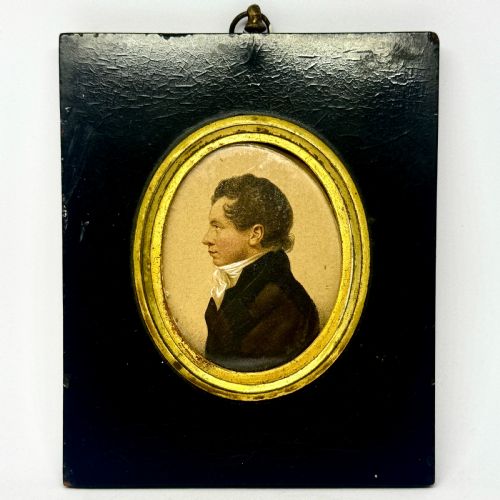
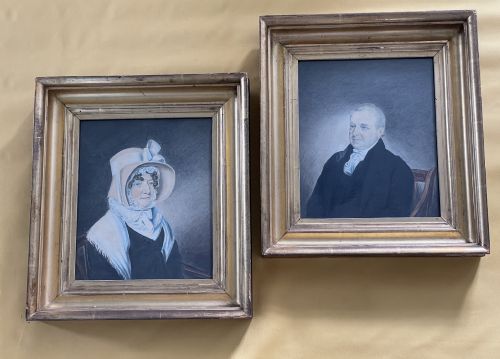
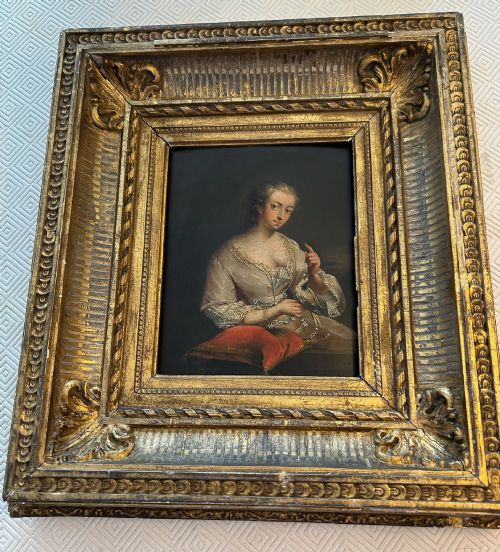
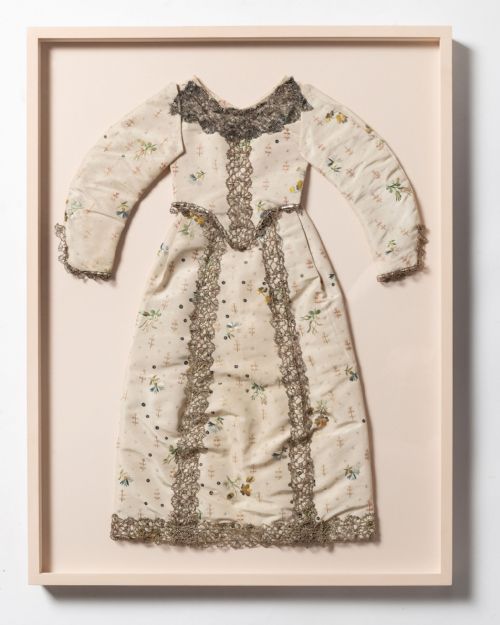
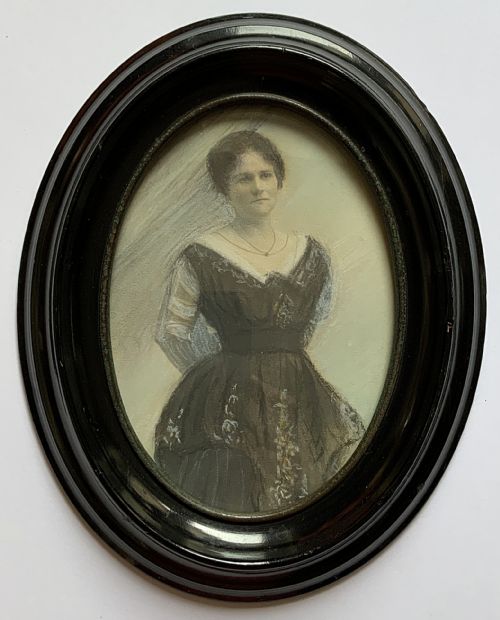
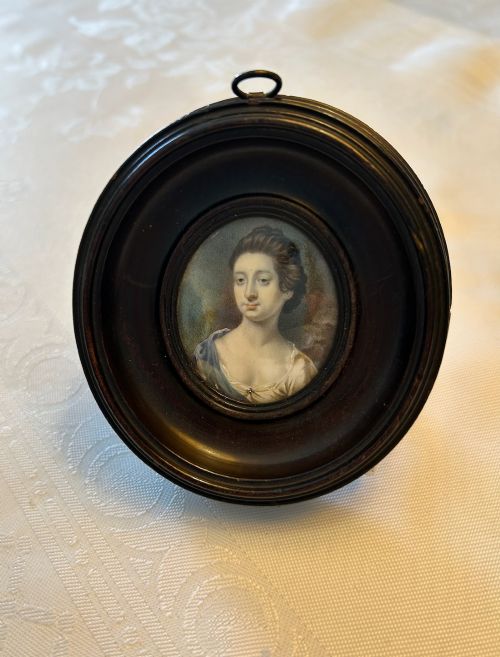
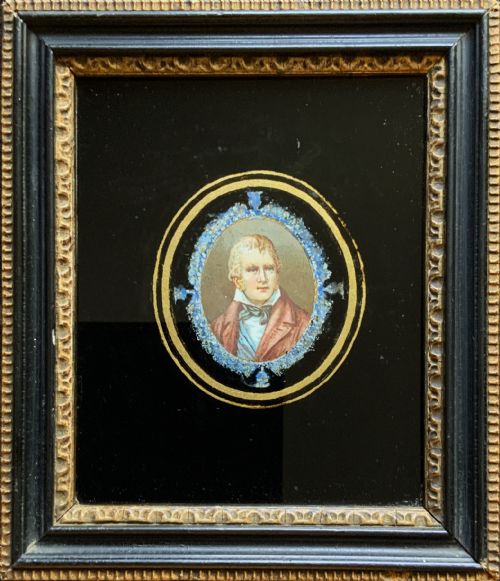
Framed miniature wall art encompasses small-scale portrait miniatures, painted plaques, silhouettes and watercolour studies created across the eighteenth, nineteenth and early twentieth centuries. These intimate pieces are most commonly encountered in oval or rectangular formats, reflecting the dominant framing conventions of the Georgian and Victorian periods. Collectors encounter diverse subjects ranging from historical figures and mythical scenes to detailed depictions of children, nobility and animals.
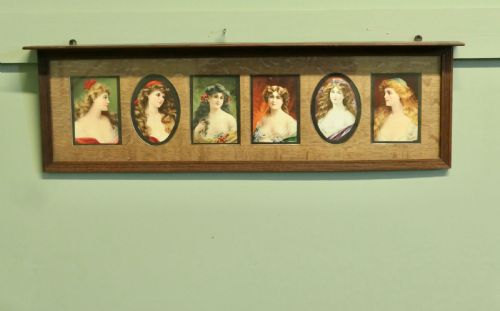
The selection ranges from single framed portraits to pairs and sets of multiple panels, including plumbago drawings and gouache paintings on paper or vellum. Regional variety appears through British, European continental, American folk art and Mughal school works, providing distinct stylistic approaches to small-format imagery. Pieces often arrive preserved in period enclosures such as ebonised wood, giltwood, brass or maple frames, retaining their original glazing and backing materials.
Materials and Techniques
Silhouettes were produced either by cutting black paper by hand or by drawing directly in ink and wash, frequently mounted against contrasting light grounds. Framing utilised precious materials such as gold leaf applied to carved wooden mouldings, alongside simpler ebonised wood and maple surrounds designed to complement the artwork without distraction.
Several silhouettes record historical pets, including a unique cut paper portrait of a dog alongside traditional human subjects.
Evaluating Quality and Execution
Quality rests upon the precision of the draughtsmanship and the artist's ability to render expression, proportion and texture within a severely restricted compass. Superior examples display confident brushwork and anatomical accuracy in the subject, whereas lesser works reveal stiff lines, flat tonal transitions or muddy coloration. The sophistication of the handling separates routine commemorative tokens from masterworks of miniature portraiture.
The relationship between the artwork and its housing also influences overall character, as period-correct frames with original gilding, glass and backings preserve the integrity of the object. Signed works by documented artists or established schools demonstrate higher artistic ambition and execution than anonymous commercial output from the same eras.
Henri Fradelle·Richard Cosway·Augustin Edouart·John Taylor·James Ferguson·Susie Lassam
The Framed Miniature Wall Art Glossary
- Plumbago
- A finely detailed drawing executed in graphite, taking its name from the Latin word for lead. These works are known for their monochrome precision and tonal subtlety.
- Silhouette
- A solid black profile portrait cut from paper or painted onto a pale ground. Originating in the eighteenth century, they captured likenesses swiftly before the invention of photography.
- Enamel Plaque
- A durable miniature painting fused onto a metal base through kiln firing. South Staffordshire and Limoges workshops produced notable examples of this technique.
- Ebonised Wood
- Timber treated with chemical stains or dark finishes to imitate costly ebony. It provided a stark, contrasting border popular for framing silhouettes and pale portraits.
- Giltwood
- Wood carved and coated with a thin layer of gold leaf or metallic paint. It added reflective brilliance to framing and decorative wall plaques.
Framed Miniature Wall Art: Frequently Asked Questions
How were portrait miniatures used?
These small portraits served as personal mementoes, tokens of affection or displays of lineage and status in domestic interiors. Owners hung them in clusters or placed them in private rooms.
They functioned as portable records of appearance before photography became widespread.
How do I date these miniatures?
Dating relies on costume, hair styling, framing materials and painting techniques characteristic of specific periods like the Georgian or Victorian eras. Signatures, inscriptions and exhibition labels on the reverse also provide chronological clues.
Changes in backing papers and mounting styles help narrow the decade of production.
How should I display miniatures?
Display miniatures away from direct sunlight to prevent the fading of watercolours, pigments and paper supports. Grouping several pieces together creates a traditional gallery effect on a wall.
Stable indoor humidity protects the delicate wood frames and prevents the warping of early backing boards.