
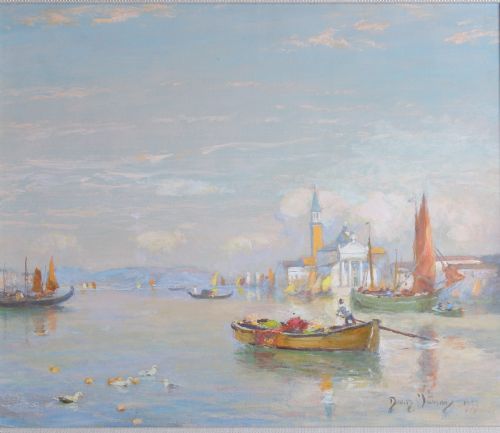
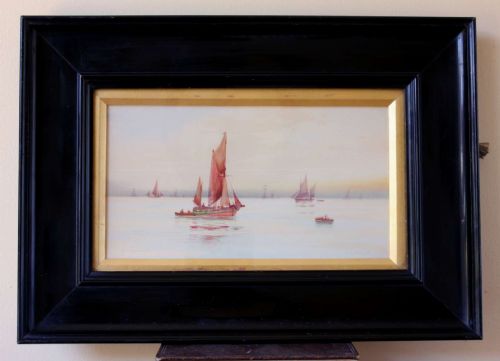
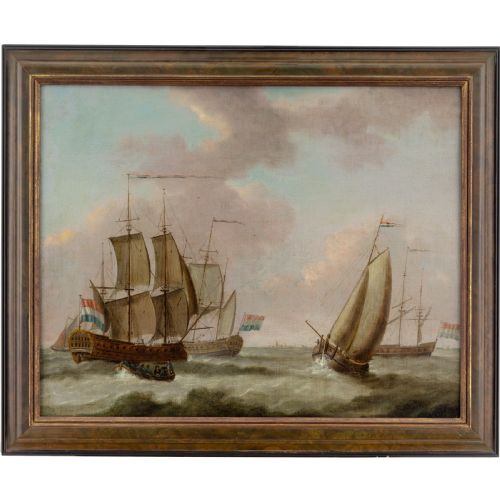
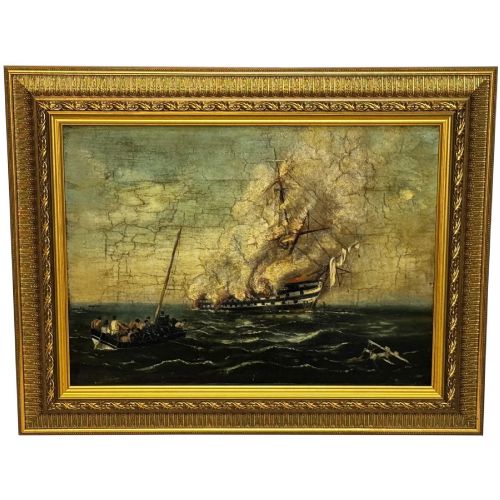



Framed Maritime Seascape Painting
These framed maritime seascape painting examples capture centuries of coastal light, naval action and harbour work across canvas, board and paper.
Framed Maritime Seascape Painting
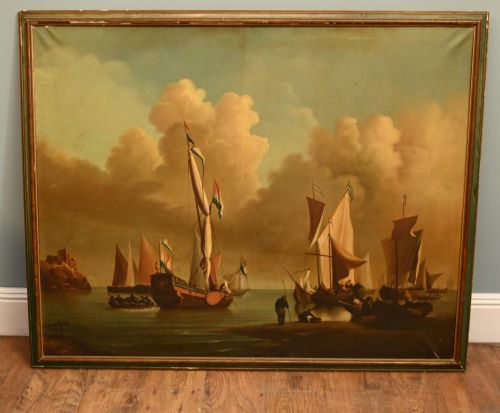
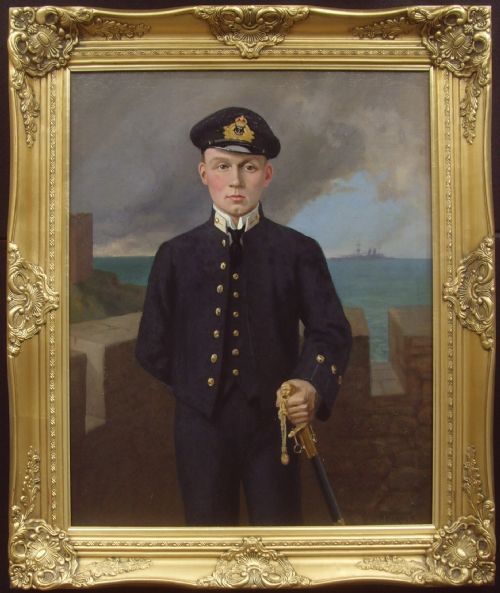
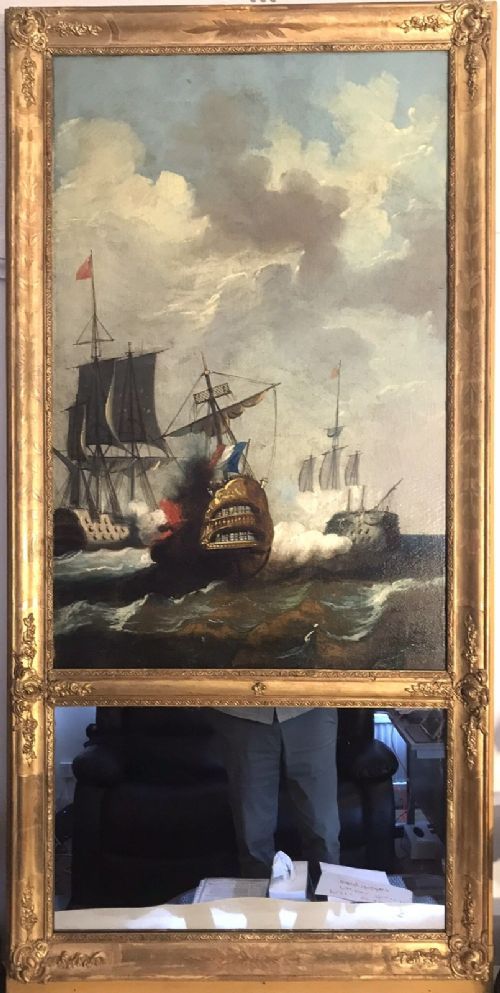
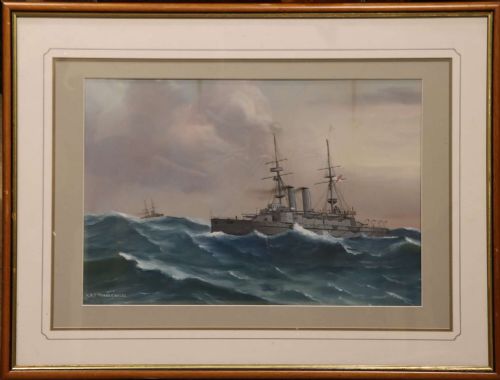
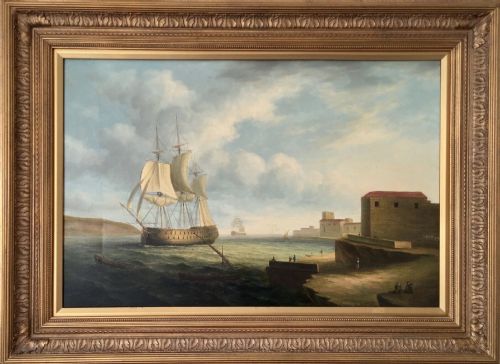
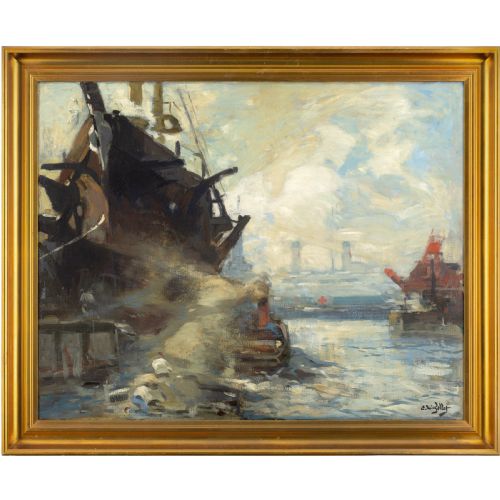
A framed maritime seascape painting encompasses works depicting coastal views, harbour scenes, naval vessels and open water. The selection spans nineteenth-century canvases to mid-twentieth-century watercolours.
Victorian and Edwardian pieces dominate the works available, frequently showing British and European coastal locations. Buyers encounter both detailed portrayals of named ships and atmospheric studies of water and sky.
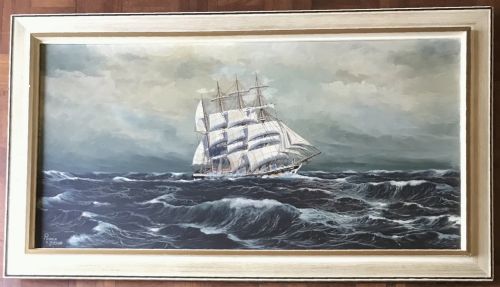
The subjects range from tranquil fishing boats in port to dramatic depictions of ships in heavy seas and gales. Most examples are presented in traditional wood or gilt wood frames suited to the period.
Materials and Technique
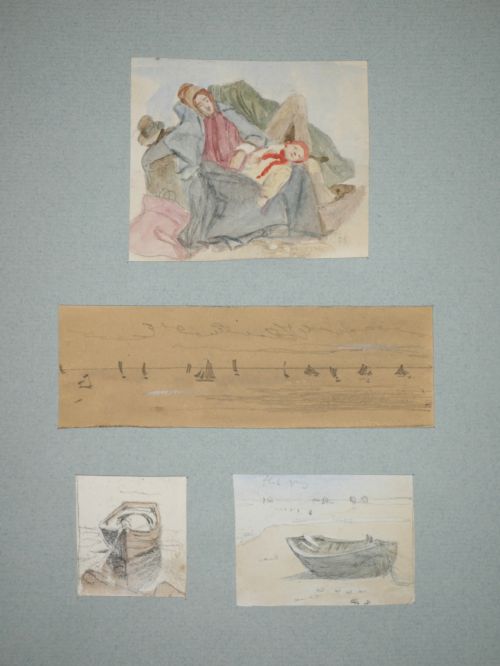
Artists relied primarily on oil paint applied to canvas or wood panel for substantial coastal and naval scenes. Watercolours and gouache on paper served for lighter maritime sketches and detailed harbour views.
Frames utilise wood, often finished with gilt or moulded detail, protecting the edges of the canvas or paper support. Glass frequently covers works on paper to prevent environmental damage.
Listings feature works spanning the nineteenth century through the Edwardian era into the nineteen-sixties.
Assessing Quality
Quality rests upon the artist's command of light, movement and maritime atmosphere, particularly in the rendering of restless water and stormy skies. The best works convey a convincing sense of weight in vessels and depth in the surrounding sea.
The handling of perspective in rigging, hull construction and shoreline architecture distinguishes accomplished academic painters from competent local recorders. Frame suitability and the preservation of the original surface further elevate a piece.
James Orrock·Eugène-Louis Gillot·William McAlpine·Charles Edward Dixon·William Banks Fortescue·James Kay·Frank Watson Wood·Bernard Gribble·Frank William Scarbrough·Francis Moltino·Thomas Creswick·Willem Bos·John Wilson Carmichael
The Framed Maritime Seascape Painting Glossary
- Oil on canvas
- Pigment suspended in drying oil applied to stretched fabric. This combination allows for rich blending of tone in marine skies and deep water.
- Watercolour
- Pigment ground in a water-soluble binder applied to paper. It creates luminous, transparent effects suited to calm coastal air and bright sea views.
- Gilt wood
- Wood carved or moulded and coated with fine gold leaf or metallic paint. It provides a reflective border that isolates the painting from the surrounding wall.
- Panel
- A flat piece of wood used as a rigid support for paint. It offers a stable surface favoured in nineteenth-century marine works.
- Seascape
- A painting depicting the sea or coastal views. It forms the core subject of maritime art across the nineteenth and twentieth centuries.
Framed Maritime Seascape Painting: Frequently Asked Questions
What subjects do these paintings show?
The works depict naval engagements, merchant shipping, coastal harbours and open ocean swells under various weather conditions. Scenes range from calm coastal retreats to turbulent storms involving named vessels.
Many pieces document specific British ports, Venetian canals, and international waters, capturing both the daily labour of fishermen and historic naval movements.
How should I hang a maritime painting?
Select a wall with stable humidity away from direct sunlight to protect both the canvas and the traditional wooden frame. Hang the piece at eye level to properly appreciate the perspective of the water and sky.
Ensure the wall fixings match the weight of the heavier oil paintings on canvas, while lighter watercolours require protection behind glass.
How do I identify the period of a piece?
Examine the style of the vessel rigging, the clothing of figures on shore, and the construction of the frame. Victorian and Edwardian works often feature detailed narrative elements and heavier gilt mouldings.
Signatures, artist biographies, and exhibition labels on the reverse provide definitive dates, supported by the type of canvas or paper support utilised.
Are these paintings original works?
The selection consists of original hand-painted works in oil, watercolour, gouache, and drawing rather than mechanical reproductions. Each piece carries the individual brushwork and technique of the artist.
Signatures, attributed maker details, and period materials confirm the authenticity of the historical marine art.