


Framed Maritime Oil Canvas
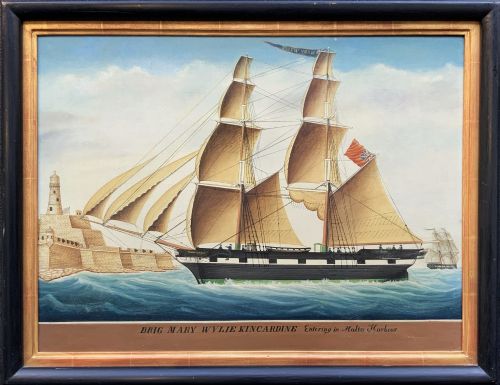
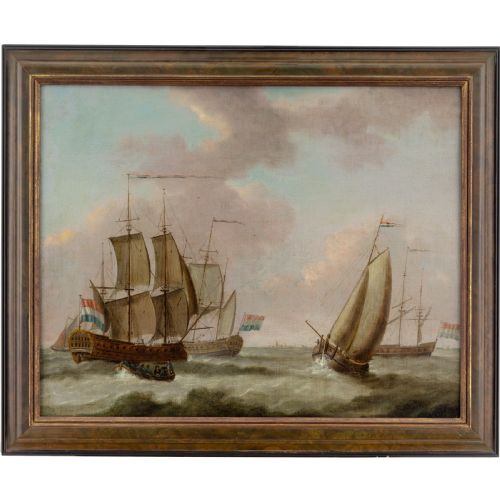
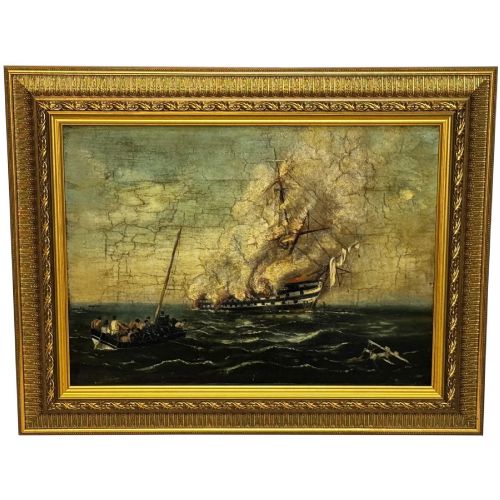
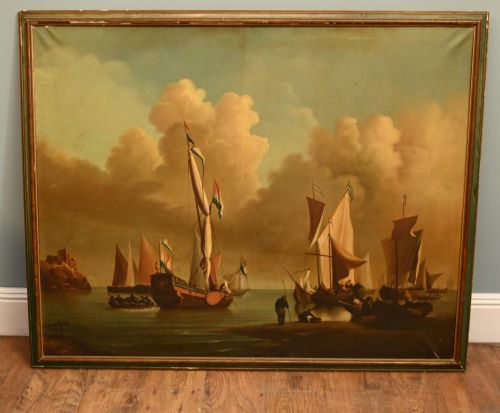
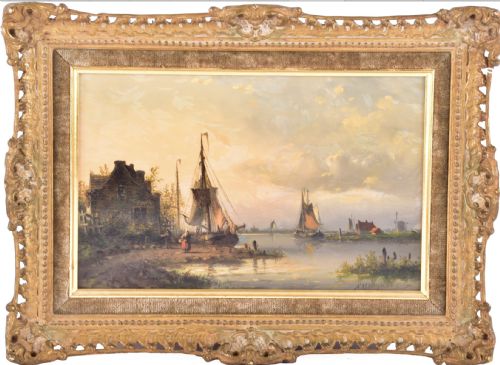
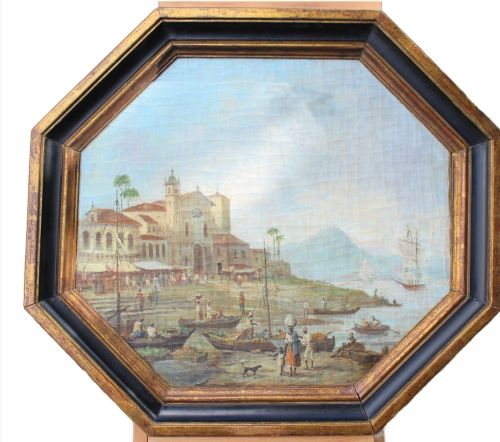
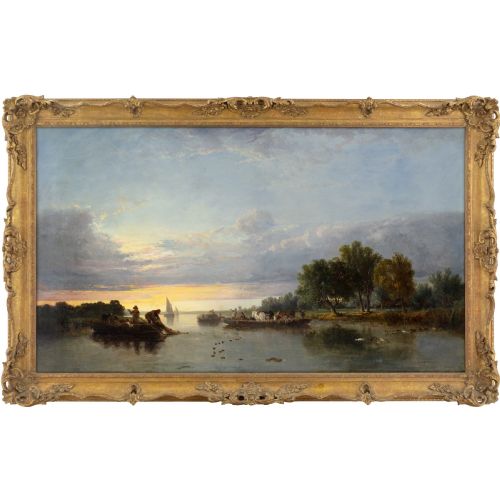
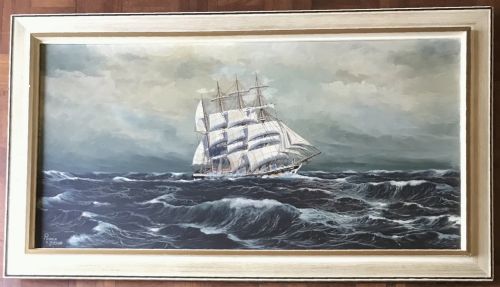
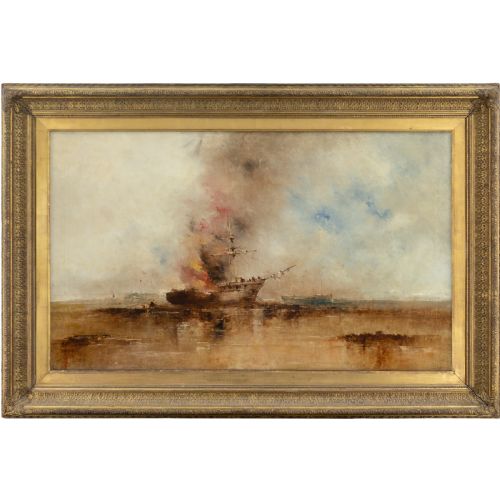
A framed maritime oil canvas captures the movement of water and sail across the centuries, bringing historical ships and coastal shores directly into a room.
Framed Maritime Oil Canvas
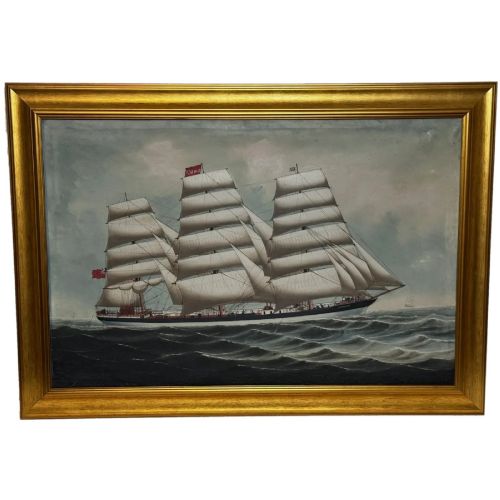
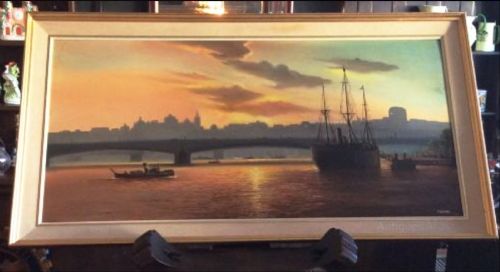
A framed maritime oil canvas captures naval battles, merchant vessels on high seas, and quiet coastal harbours from the seventeenth century onwards. These works range from early depictions of Dutch boats in gales to mid-nineteenth-century scenes of British merchant ships and later twentieth-century river views.
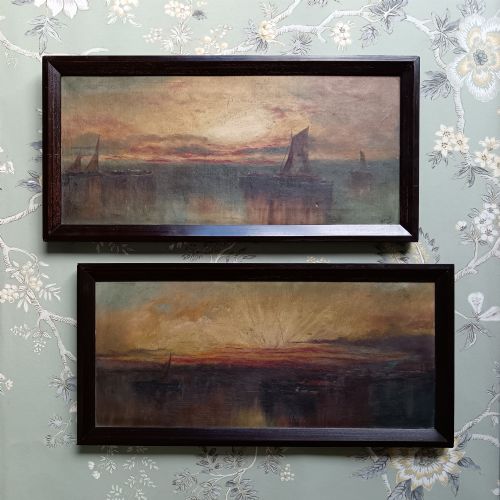
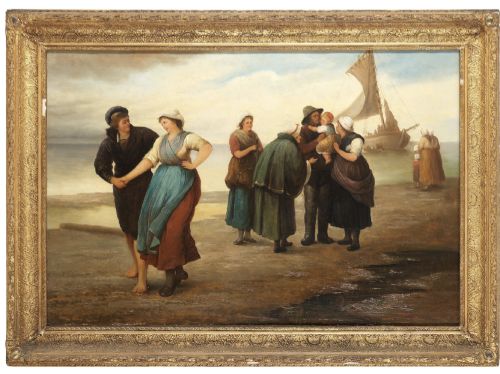
Buyers encounter subjects spanning the Thames at Waterloo Bridge, Venetian lagoons, and rugged coastal cliffs with fishing boats. The majority of pieces on this page originate from the nineteenth and early twentieth centuries, reflecting the period's intense engagement with maritime trade and naval power.
Formats vary from rectangular historical canvases to oval sea views and panoramic river layouts. Each piece relies on the interplay of oil paint to render the shifting atmosphere of sky, sea, and vessel.
Materials and construction
Artists painted primarily with oil paint applied to woven canvas supports, allowing for rich textures and deep tonal gradations in water and sky. These canvases were mounted onto wooden stretchers to maintain tension across the picture plane.
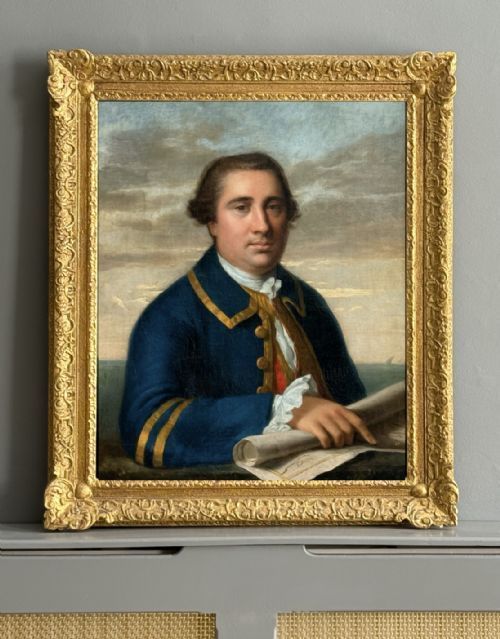
The framing utilised wood, often shaped into ornate profiles and finished with giltwood or gold leaf to isolate the painting from the surrounding wall. These frames were constructed to protect the edges of the canvas and provide structural rigidity.
The listings span from the 17th century to the late 20th century, utilising oil on canvas within giltwood frames.
Distinctions in quality
Quality rests upon the artist's command of atmospheric perspective and the convincing depiction of water in motion. Superior works convey the weight of three-masted schooners and the churning turbulence of heavy seas through confident brushwork.
The integrity of the original giltwood frame and the stability of the canvas ground contribute to the standing of a piece. Finer examples maintain their original pigment depth without heavy overpainting, preserving the artist's initial handling of light.
Eugène-Louis Gillot·William McAlpine·Lemuel Francis Abbott·Bonaventura Peeters·Francis Moltino·John Wilson Carmichael
The Framed Maritime Oil Canvas Glossary
- Canvas
- A heavy woven fabric, usually linen or cotton, used as the primary support surface for oil paintings. It is stretched tightly over a wooden frame before painting.
- Giltwood
- Wood that has been coated with a thin layer of gold leaf or gilt powder. This finish was standard for framing fine art throughout the nineteenth century.
- Marine painting
- A genre of art that focuses on ships, shipping, and coastal environments. These works document naval history, commercial vessels, and leisure sailing.
- Seascape
- A painting depicting the sea, distinct from inland landscapes. It often emphasises the vastness of open water and changing weather conditions.
- Stretcher
- The internal wooden frame that holds a canvas taut. Traditional stretchers feature corner joints that allow for minor adjustments to tension.
Framed Maritime Oil Canvas: Frequently Asked Questions
How do I date an old maritime painting?
Dating relies on the ship rigging, naval architecture, and costume details depicted within the scene. Clothing styles and vessel types changed predictably across decades.
Signatures, stretcher construction, and framing techniques offer further physical clues to establish the decade of creation.
What is the difference between a marine and a coastal painting?
Marine paintings focus primarily on open water, naval engagements, and deep-sea vessels under sail. The horizon usually dominates the composition.
Coastal paintings incorporate land elements such as cliffs, harbours, beaches, and local figures working near the shore.
How should I hang a framed oil canvas?
Choose a wall away from direct sunlight and strong heat sources to protect the oil paint and canvas from drying out. Stable indoor temperatures prevent warping.
Use secure wall anchors rated to support the combined weight of the heavy wooden frame and canvas.
Are these paintings cleaned professionally?
Many historical canvases retain older varnishes that have yellowed slightly over time, altering the original blue and grey tones of the sea. Conservation cleaning removes accumulated surface grime.
Buyers should examine each piece to understand whether the paint surface has received past restoration.