




Framed Italian Watercolour Painting
A framed italian watercolour painting brings the light of the Mediterranean and the grandeur of classical ruins directly onto a domestic wall.
Framed Italian Watercolour Painting
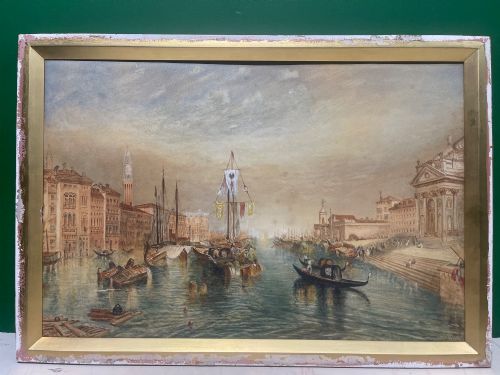
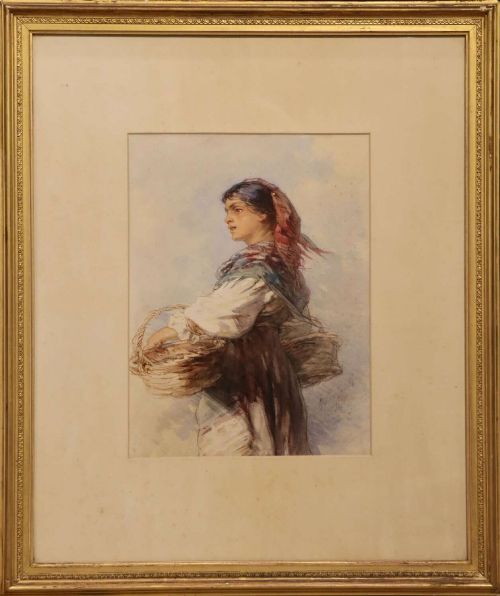
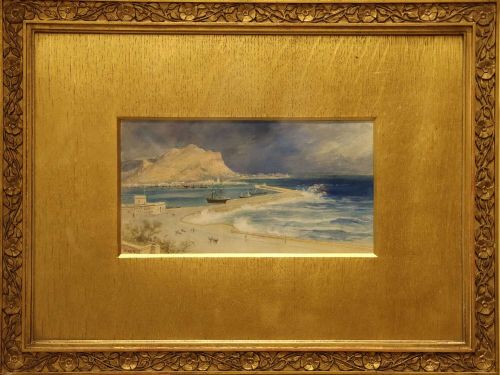
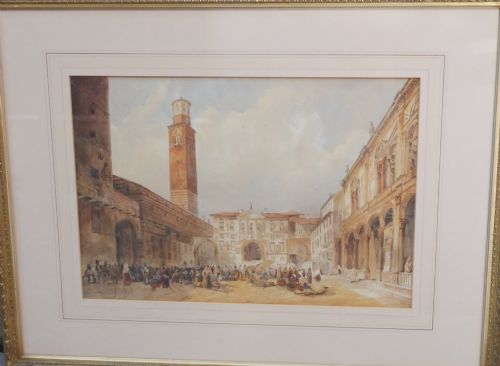
A framed italian watercolour painting captures landscapes, bustling ports, and intimate figural studies from periods spanning the Victorian era through the early twentieth century. Buyers encounter depictions of Venetian canals, Roman architecture, and Neapolitan fisherfolk executed by travelling artists and local masters alike.
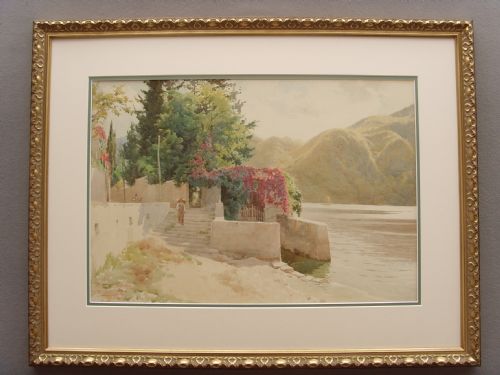
The subjects divide broadly between grand architectural views produced during the Grand Tour and intimate scenes of peasant life or quiet lakes. Many works record specific topographical sites such as Lake Como, the Spanish Steps, or the Bridge of Sighs.
Most surviving examples date from the nineteenth century, including works associated with Edwardian tastes and later nineteenth-century realism. These watercolours arrive ready to hang, often preserved within period wooden frames that complement the paper and pigment inside.
Materials and methods
Watercolour pigment applied to heavy paper forms the core of each composition, capturing subtle shifts in light and atmosphere across Italian skies and waters. Artists built washes from translucent tones to achieve luminous effects that oil paint rarely matches.
Wood and gilded wood frames protect the paper behind glass, preserving the delicate water-soluble pigments from atmospheric moisture and dust. These protective enclosures range from simple moulded mouldings to elaborate gilt frames suited to grand reception rooms.
Framed Italian Watercolour Painting Retail Price Guide 2026
Typical asking prices for framed italian watercolour painting among the pieces listed under this phrase on Sellingantiques today, from the lower quarter to the upper quarter. They describe what is for sale here now, not the wider market.
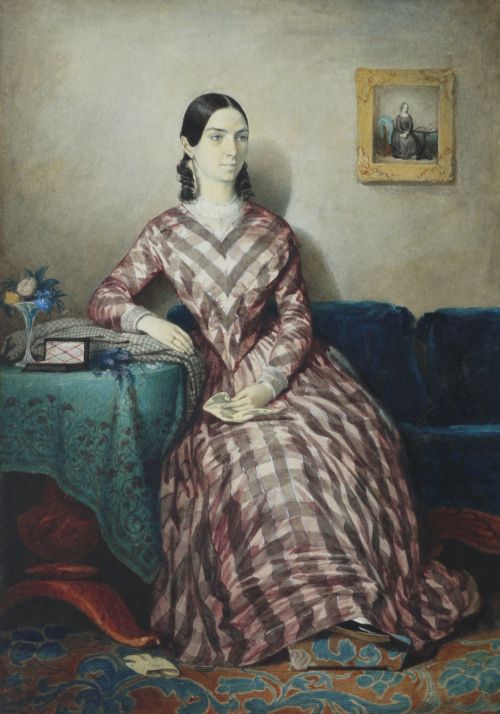
The selection spans Venetian canals, Roman ruins, and portraits of Italian peasant figures.
Assessing quality in these works
Quality rests upon the artist's handling of perspective, light, and anatomical proportion, distinguishing accomplished professional hands from amateur souvenir sketches. Strong compositions demonstrate confident brushwork and precise architectural draughtsmanship rather than stiff, mechanical reproduction.
The preservation of the paper and the vibrancy of the pigment determine the visual impact of the finished piece. Original framing that retains its authentic gilding and glass adds substantial character compared to modern replacements.
Alessandro Cittadini·Robert George Talbot Kelly·Guido Bach·Filipo Indoni·Vittore Zanetti Zilla·Hercules Brabazon Brabazon·Charles H Poingdestre·Arturo Orselli·David Law·Wilfred Knox·Ettore Ascenzi·Henry Wimbush·Belisario Gioja·Arthur Severn·Helen Donald-Smith·Thomas Brabazon Aylmer
The Framed Italian Watercolour Painting Glossary
- Grand Tour
- A traditional trip through Europe undertaken by upper-class young men to absorb classical antiquity and art. Works from this context focus on ruins and famous Italian vistas.
- Gilt Wood
- Wood that has been coated with a thin layer of gold leaf or metallic powder. This finish appears frequently on the decorative frames enclosing nineteenth-century watercolours.
- Topographical
- Depicting a particular place or landscape with accuracy and local detail. Many Italian watercolours record exact streets, harbours, and monuments.
- Wash
- A thin, fluid layer of watercolour pigment spread evenly across paper to create skies or water. Skilled layering of washes provides depth and luminosity.
Framed Italian Watercolour Painting: Frequently Asked Questions
How do I date an antique Italian watercolour?
Dating relies on signatures, artist exhibition records, stylistic clues, and framing characteristics typical of the nineteenth century or Edwardian period. Archival details often link specific views to dated travels or published portfolios.
Paper quality and watermarks also provide chronological markers, though many works remain securely attributed through the artist's known active dates.
Where should I hang a watercolour painting?
Watercolours require placement away from direct sunlight to prevent the pigments from fading over time. Interior walls with stable humidity and temperature offer the safest environment.
Pairing these paintings with traditional wooden furniture or placing them in hallways recreates the nineteenth-century domestic aesthetic suited to Grand Tour art.
What subjects are most common in these paintings?
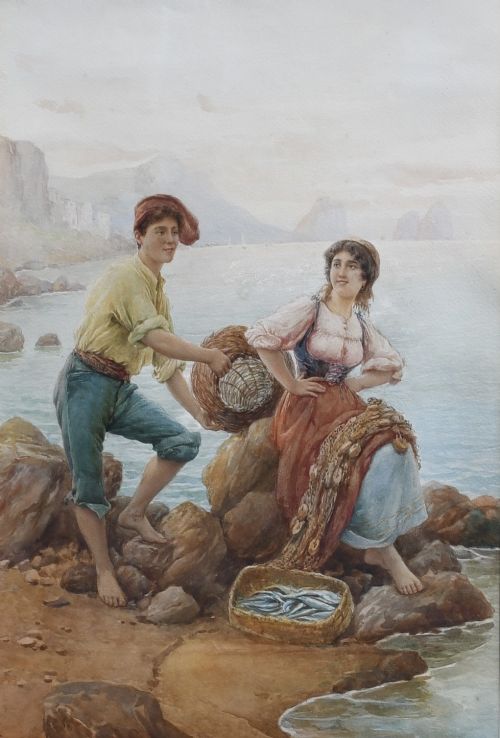
Venetian canals, Roman antiquities, and Neapolitan coastal scenes dominate the surviving output of this genre. Artists frequently painted local figures such as fisherfolk and peasants alongside famous architectural landmarks.
These subjects served as treasured mementos for travellers returning from Italy, preserving memories of sunlit squares and ancient ruins.
How are these watercolours framed?
Period pieces often retain their original gilt wood or simple dark wood frames, sometimes protected beneath early glass. The frame style usually reflects the prevailing taste of the Victorian or Edwardian eras.
Retaining the original framing preserves the historical integrity of the artwork, connecting the physical object directly to its period of creation.