


19th Century Cityscape Painting
A 19th century cityscape painting captures the bustling streets, canals, and monumental architecture of historical urban life.
19th Century Cityscape Painting
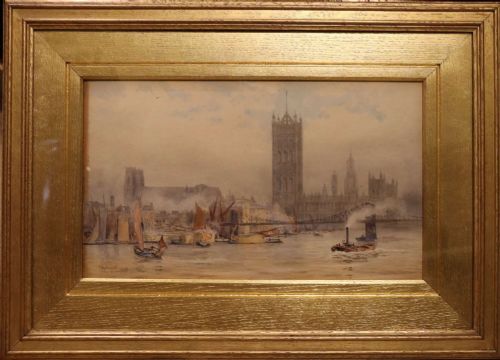
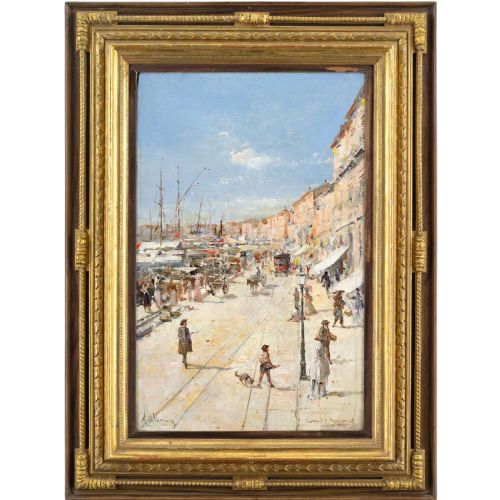
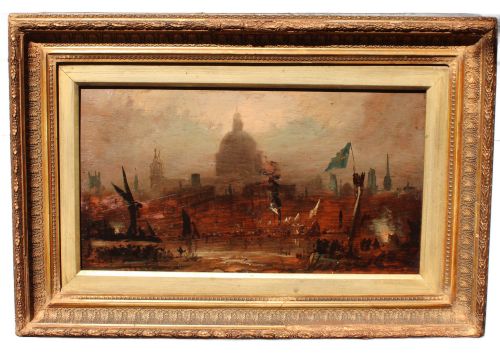
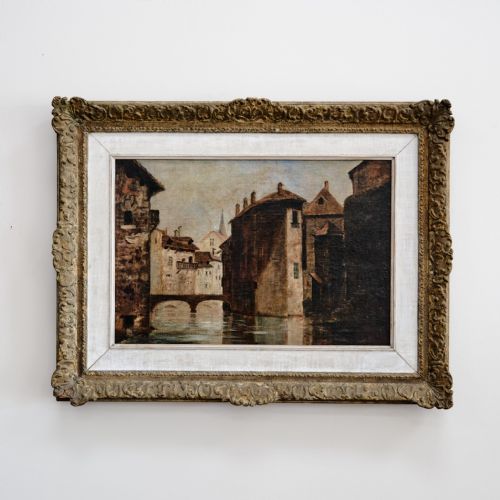
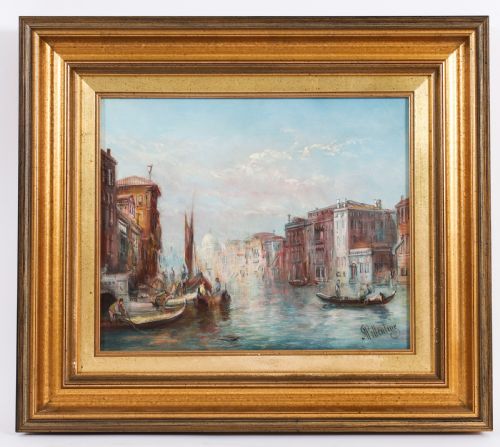
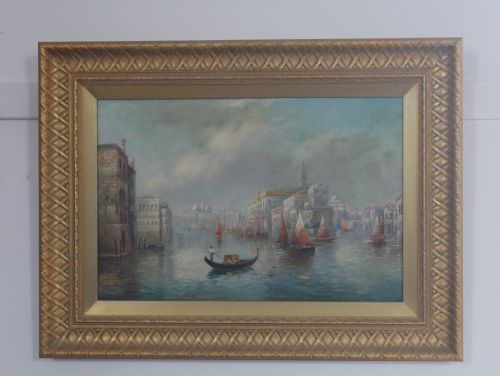
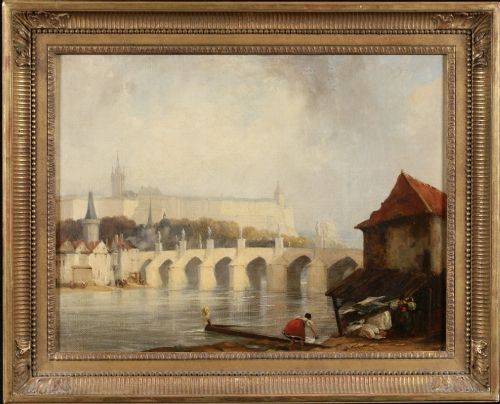
A 19th century cityscape painting depicts urban views ranging from busy canal scenes in Venice to historic English streets and continental market squares. These works document the architecture, river traffic, and daily life of European cities during a period of rapid development.
The selections available include both finished oil canvases and detailed watercolours on paper. Many examples focus on famous European destinations associated with the Grand Tour, while others record local British landmarks and domestic harbours.
How they were made
Artists painted primarily using oil on canvas, oil on board, or watercolour on paper, often framing the finished works in decorative giltwood and gesso frames. The handling of pigment ranged from tight, architectural precision in topographical views to looser brushwork capturing atmospheric mist and river light.
Listings feature works created across the nineteenth century, utilising oil, watercolour, canvas, paper, and giltwood.
What varies in quality
Quality rests on the precision of the perspective, the handling of light and atmosphere, and the condition of the original surface. Works that successfully capture the depth of architectural monuments and the movement of figures stand apart from simpler topographical sketches.
The preservation of the pigment and the presence of the original period frame also influence the overall standard. Intact surfaces free from extensive overpainting retain more of the artist's original touch.
Alfred Pollentine·Jane Vivian·William Raymond Dommersen·Cornelis Christian Dommersen·Frederick Tully Lott·Ludwig Hermann
The 19th Century Cityscape Painting Glossary
- Giltwood
- Wood carved and coated with gold leaf. This material frequently appears on the decorative frames enclosing period paintings.
- Topographical
- Representing a specific physical location with descriptive accuracy. Such views record exact streets, canals, and buildings of historical towns.
- Grand Tour
- A traditional trip through Europe undertaken by upper-class travellers for education and pleasure. Paintings from this context often feature Italian canals and Roman ruins.
- Gesso
- A plaster-like mixture applied to wood surfaces as a base for gilding. It forms the sculpted details found on traditional picture frames.
19th Century Cityscape Painting: Frequently Asked Questions
Where were these urban scenes painted?
Artists travelled across Europe to record recognisable landmarks, focusing heavily on Italian cities like Venice and Rome alongside British locations.
Views of London, York, and continental ports frequently appear in both oil and watercolour mediums.
How do I distinguish watercolours from oils?
Watercolours utilise translucent pigments applied to paper supports, typically displayed behind protective glass.
Oil paintings feature heavier pigment applied to canvas or board, presenting a textured surface without glass.
What subjects are most common?
Canal scenes featuring gondolas and historic palazzos dominate the Italian views, while British works often show rivers, bridges, and medieval streets.
Processions, markets, and architectural monuments provide the primary focus for the human activity within these urban settings.
How should I care for these paintings?
Keep works on paper and canvas away from direct sunlight to prevent the fading of watercolours and the yellowing of old varnish.
Maintain stable room humidity to protect wooden stretchers, panels, and delicate giltwood frames from warping.