
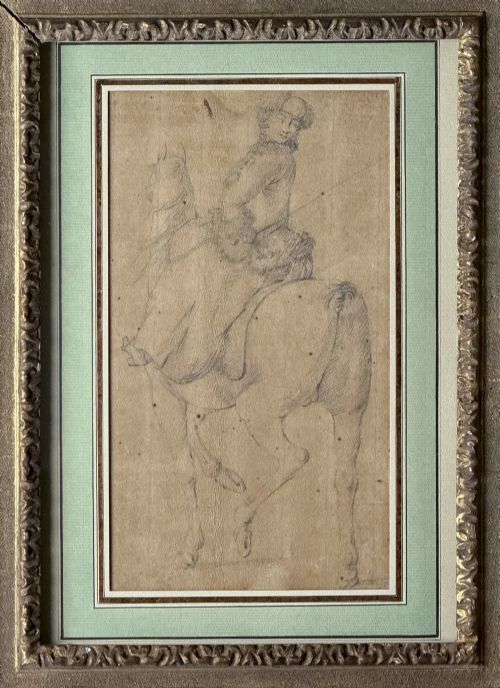
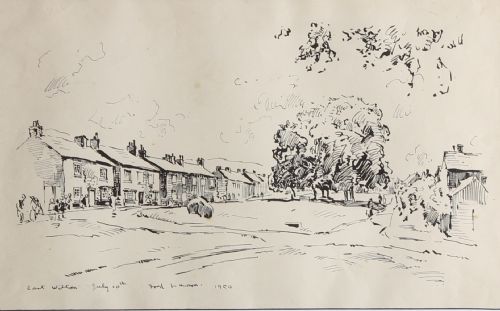
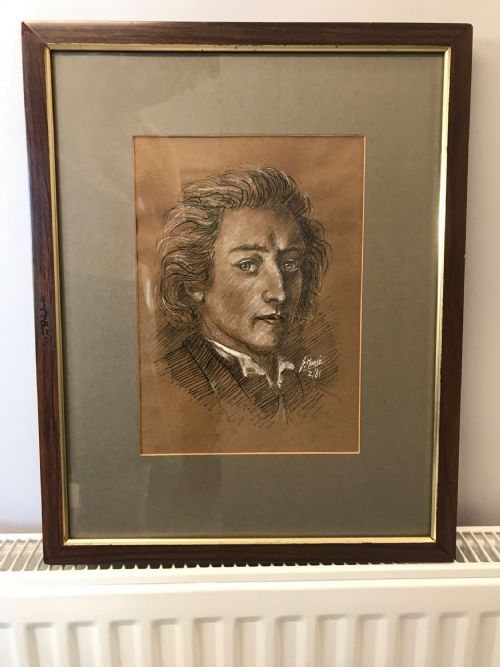
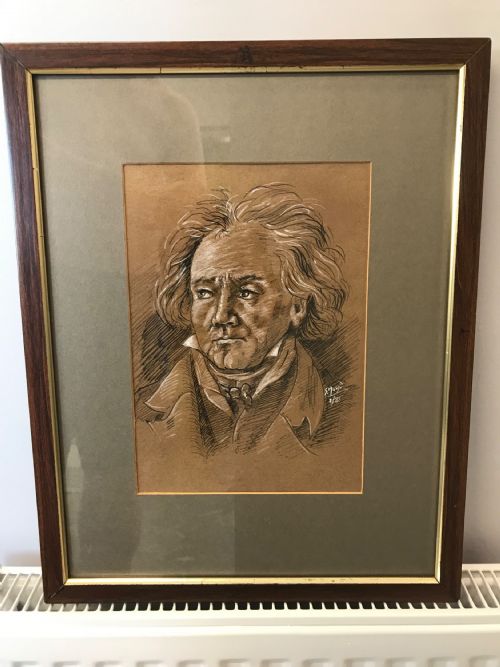
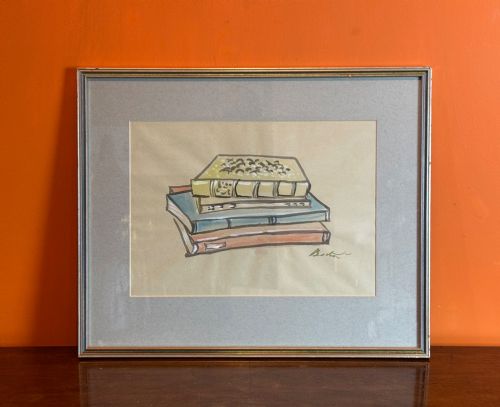


Framed Ink Illustration
When you search for a framed ink illustration, you are looking at works on paper held within wood and glass.
Framed Ink Illustration
A framed ink illustration comprises original drawings, wash paintings, and studies executed on paper using ink, often combined with pencil, watercolour, or gouache. These works span periods from the eighteenth century through to the mid-twentieth century and later, encompassing diverse origins such as British, French, and Northern European schools.
The subjects found within this selection vary widely, ranging from detailed architectural renderings and landscape townscapes to portraiture of composers and theatrical figures. Buyers will encounter works framed in wood behind glass, preserving delicate ink lines and washes across Victorian, Edwardian, and modern periods.
How they were made
Artists utilise pen and ink on paper, frequently building depth through monochrome ink wash, gouache, or watercolour highlights applied with fine brushes. Pencil sketches often lie beneath the ink as preparatory guidance for architectural subjects and character studies.
Protection and presentation rely upon wood frames fitted with glass, enclosing the paper works to shield them from environmental wear while keeping the ink and wash mediums visible.
Cats, clowns, and composers all share ink on paper.
What varies in quality
The precision of the line work and the sureness of the hand distinguish the draughtsmanship, particularly in architectural and portrait subjects where accuracy of proportion is paramount. Mastery of ink wash and the integration of secondary media such as gouache or watercolour create depth and tonal balance.
The preservation of the paper support, the clarity of the ink against potential fading, and the appropriateness of the wood frame contribute to the overall integrity of the finished framed work.
Fred Lawson·Cecil Beaton·Herbert Dicksee·Louis Wain·Lucien Freud·Dame Laura Knight·John Duncan Fergusson·Kees van Dongen·Theobald Chartran
The Framed Ink Illustration Glossary
- Gouache
- An opaque watercolour medium composed of ground pigments water-bound and mixed with a white filler, utilised to create solid areas of colour and highlight in works on paper.
- Wash
- A technique where diluted ink or watercolour is applied across paper in thin, semi-transparent layers to build shadow and tonal gradation.
- Etching
- A printmaking process where lines are bitten into a metal plate with acid before being inked and pressed onto paper, appearing alongside direct ink drawings.
- Monochrome
- Executed in a single colour or shades of one colour, most commonly black or sepia ink upon pale paper.
Framed Ink Illustration: Frequently Asked Questions
What periods do these drawings come from?
The selection spans multiple centuries, with pieces originating from the eighteenth century, the nineteenth century, the Edwardian era, and through the 1920s, 1930s, 1950s, and 1960s.
Styles range from early Northern European school studies and Gothic Revival architectural pieces to mid-century modern British works.
How should I hang framed ink works?
Because paper and ink are sensitive to strong light, these framed pieces should be hung away from direct sunlight to prevent the fading of ink lines and watercolours.
Keeping them in stable room conditions away from damp environments protects both the paper support and the wood frame.
What materials are used in these pieces?
The primary components are paper and ink, frequently augmented with pencil, gouache, or watercolour washes to add tone and colour.
These works are housed within wood frames and protected behind glass to ensure the delicate paper remains flat and secure.
How do I identify architectural drawings?
Architectural drawings often display precise geometric lines, perspective studies of buildings, and detailed depictions of structures such as cathedrals or royal palaces.
They may include handwritten notes or signatures relating to academic institutions or specific construction projects.