




Brown Framed Cat Artwork
Brown framed cat artwork brings together historical depictions of felines, offering a charming way to display period animalier subjects and prints in your home.
Brown Framed Cat Artwork
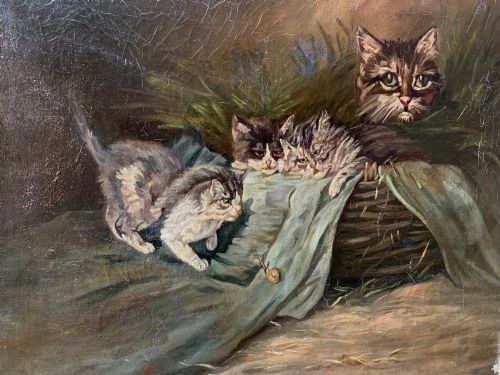
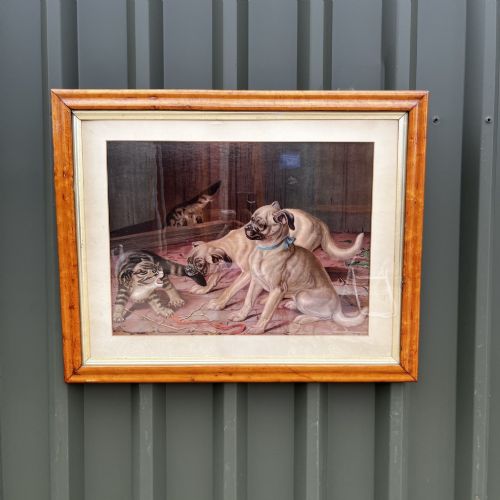
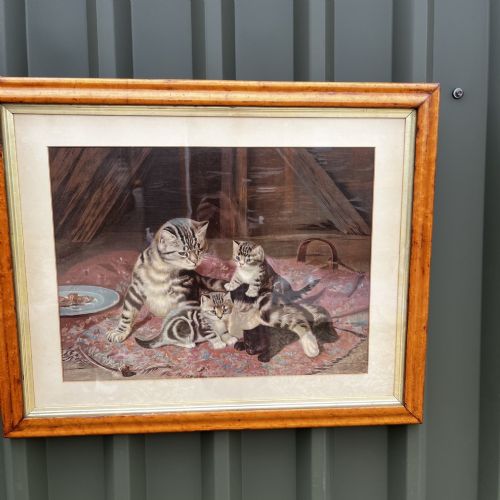
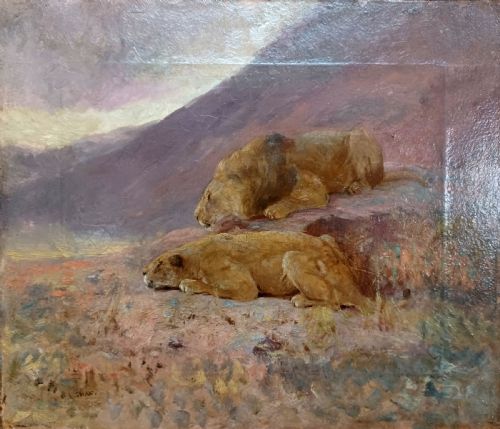
When searching for brown framed cat artwork, collectors encounter a diverse selection of oil paintings, original prints, and drawings spanning the nineteenth century to the mid-twentieth century. These pieces range from Victorian animalier studies to Edwardian prints and modern British etchings.
The subjects focus heavily on domestic cats and kittens, alongside related big cat compositions by notable nineteenth-century and early twentieth-century artists. Works appear in various formats including oil on canvas, oil on board, pen and ink drawings, chromolithographs, and colour etchings.
Victorian examples dominate the selection, often showcasing the characteristic sentiment and academic precision of the period. Later additions from the twentieth century introduce modernist etching techniques and distinct artistic interpretations of feline life.
What varies in quality
Quality rests upon the execution of the drawing and the fidelity of the medium, distinguishing finely detailed academic painting from mass-produced commercial printing. Hand-drawn ink works and original oil paintings display individual brushwork and draughtsmanship absent in standard reproductions.
The preservation of the underlying paper, canvas, or board directly influences the integrity of the piece. Strong pigment retention and minimal surface degradation elevate the visual impact of both nineteenth-century oils and later twentieth-century etchings.
Listings feature works spanning the nineteenth century, nineteen-hundred, Victorian era, and nineteen-sixty.
Horatio Henry Couldrey·Louis Wain·Cuthbert Edmund Swan·John Macallan Swan·Geza Vastagh·Deidre Borlase
The Brown Framed Cat Artwork Glossary
- Chromolithography
- A planographic printing process used to produce multi-coloured images. This technique allowed nineteenth-century publishers to replicate oil paintings and watercolours with high fidelity.
- Animalier
- A nineteenth-century artistic genre dedicated to the realistic portrayal of animals. Practitioners focused closely on anatomical accuracy and natural behaviour.
- Etching
- A printmaking method where lines are incised into a metal plate using acid before being inked and pressed onto paper. This process produces sharp, expressive linear details.
- Oil on Canvas
- A traditional painting medium consisting of pigments bound in drying oil applied to a woven fabric support. This combination provides rich colour depth and lasting durability.
Brown Framed Cat Artwork: Frequently Asked Questions
How do I date a cat painting?
Dating relies upon stylistic markers, costume details, framing conventions, and recorded artist biographical dates. Nineteenth-century works often feature academic realism, whereas twentieth-century pieces incorporate modernist techniques.
Examining the reverse of the canvas or board frequently reveals dealer stamps, signatures, or inscriptions that narrow down the exact period of creation.
What is animalier art?
Animalier art refers to the realistic depiction of animals, which gained immense popularity during the nineteenth century across Europe. Artists focused on capturing the true anatomy and behaviour of domestic and wild species.
This movement produced detailed oil paintings, bronzes, and prints that celebrated the character and physicality of creatures.
Are chromolithographs original prints?
Chromolithographs are considered antique reproductions rather than original hand-drawn works of art. They were created through a complex multi-stone lithographic printing process to replicate paintings.
Despite being reproductions, period chromolithographs hold collectible value due to their historical printing technology and age.
How should I display antique art?
Antique framed artwork should be hung away from direct sunlight and excessive moisture to protect the paper, canvas, and pigments. Maintaining stable room temperatures prevents warping in wooden frames and boards.
Proper wall placement ensures that delicate ink drawings and oil paintings remain preserved for future generations.